
27 August 2026
Heathrow Wake Vortex Roof Damage: A Hounslow Homeowner's Guide
Planes really can pull tiles off roofs around Hounslow. What wake vortex damage looks like, who pays for it, and how Heathrow's repair scheme works.
There aren’t many places in Britain where “a plane damaged my roof” is a sentence a roofer takes seriously. Hounslow is one of them. This borough sits directly beneath the final approach into the world’s busiest two-runway airport, with around 1,300 flights a day passing overhead when Heathrow is at full stretch - and once in a while, the invisible turbulence trailing behind a landing aircraft reaches the ground with enough force to strip tiles from a roof. It sounds like an excuse a dodgy builder would invent. It’s real, it’s officially recognised, and there’s a formal compensation scheme for it. Here’s what every homeowner under the approach should know - what a wake vortex actually is, how to recognise a strike, and how to make sure the airport pays for the damage instead of you.
What a wake vortex actually is
Every aircraft wing generates lift by creating a pressure difference, and that pressure difference spins the air behind the wingtips into two horizontal, counter-rotating spirals - the wake vortices. They trail behind every aircraft like invisible ropes, gradually sinking and weakening. It’s the same phenomenon that forces air traffic control to leave gaps between landing aircraft, because a light plane flying into a jumbo’s wake can be flipped.

Most of the time these vortices dissipate harmlessly in the air. But aircraft on final approach are low - over parts of Isleworth and Hounslow, low enough to read the livery - and in certain weather conditions a vortex can survive all the way to ground level. When one touches down on a pitched roof, it produces a short, sharp burst of suction and swirl that ordinary weather never quite replicates. Tiles that have sat happily through winter gales get plucked out in seconds. If the aftermath needs making safe quickly, our emergency roof repair service treats suspected vortex strikes as urgent precisely because an opened roof takes water from the next shower, whatever caused the opening.
Why Hounslow gets more of this than anywhere else
Heathrow operates in a westerly direction for roughly seventy percent of the year, because aircraft take off and land into the prevailing wind. Westerly operations mean every arrival descends over west London - over Brentford and Isleworth at height, then lower over Hounslow, Heston and Cranford in the final miles before the runways.
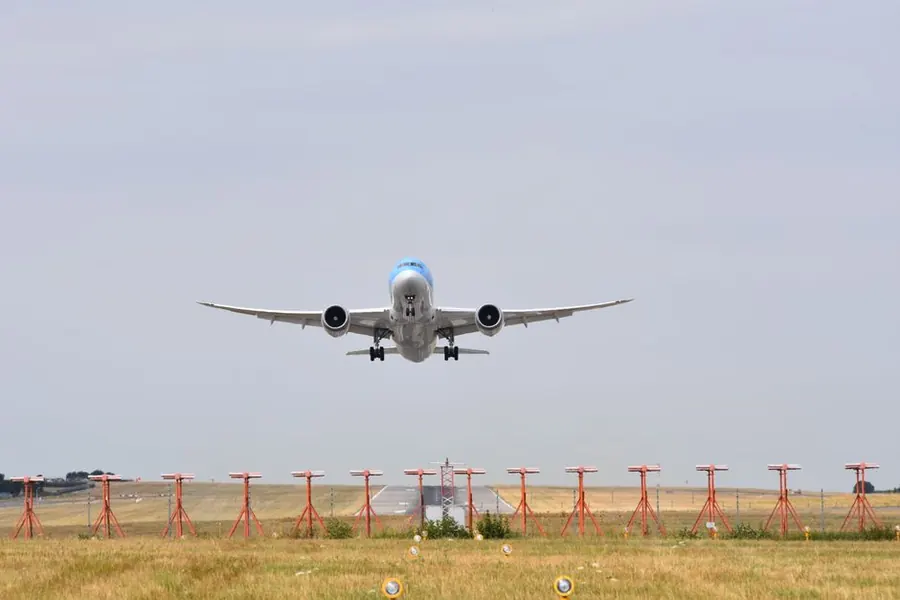
That geography is why the risk concentrates here. A vortex needs to reach the ground while it still has energy, which overwhelmingly happens close to the runway thresholds where aircraft are lowest. Heathrow’s own scheme recognises this with designated “blanket zones” extending roughly four kilometres from the ends of runways 27L and 27R - zones drawn from the verified history of where strikes have actually occurred. Cranford, Heston and a large slice of Hounslow proper sit inside them. Beyond the blanket zones, strikes are still possible and still claimable; they just take more verifying.
What vortex damage looks like
The signature is concentration without weather. A strike typically displaces a tight cluster or rough line of tiles on one slope of one roof - sometimes just three or four tiles, sometimes a patch the size of a dining table - while the neighbours’ roofs and the rest of your own remain untouched.

Contrast that with the two things it gets mistaken for. Storm damage arrives with a storm everyone remembers, tends to hit the predictable weak points - ridges, verges, corners - and usually affects several properties on a street at once. Wear and tear, like the mossy, delaminating tiles common on the area’s older roofs, announces itself gradually: rounded edges, slipped singles, debris accumulating over months. A vortex strike is sudden, localised and weatherless. If you woke up to tiles on the lawn and a calm forecast, under the approach path, you’re looking at a genuine vortex suspect.
How the Heathrow Vortex Protection Scheme works
Heathrow operates a standing Vortex Protection Scheme that repairs verified vortex damage to homes, schools, churches and hospitals at no cost to the owner. Strictly speaking, legal liability for vortex damage rests with the airlines - but Heathrow funds the repairs voluntarily as part of its community commitments, which spares homeowners the impossible task of working out which of the day’s several hundred arrivals was responsible.

The important word is “verified”. The scheme pays when the evidence supports a vortex strike, which makes your first hour after discovering damage the most valuable one. Photograph everything before it’s disturbed: the displaced tiles where they landed, the gap on the roof from ground level, the surrounding undamaged slopes. Note the date, the time you first noticed it, and what the weather had been doing. Then report it to the airport and get the roof made safe. One thing the scheme doesn’t cover is consequential damage to other property - a tile through a greenhouse or onto a car is a separate conversation - which is one more reason to get loose tiles dealt with promptly rather than waiting to see if they fall.
The repair itself: why fixing standards matter under a flight path
There’s a satisfying detail in how vortex repairs are specified: replacement tiles are expected to be firmly mechanically fixed, with clips and nails used as the guidance requires, rather than simply laid back into place. In other words, the repair standard assumes the vortex will be back eventually - and builds the roof to shrug it off next time.
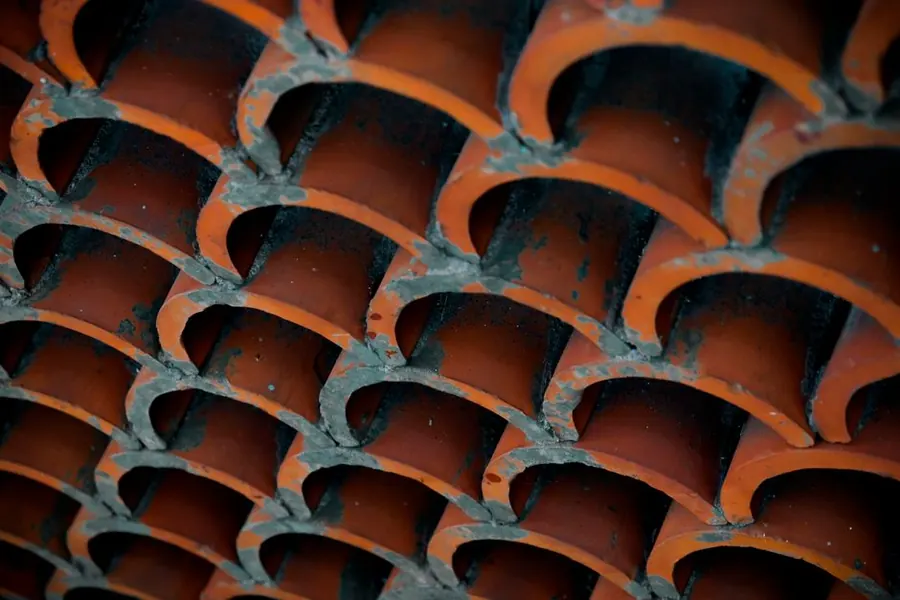
That principle is worth adopting for every roof under the approach, not just the ones already struck. Much of west London’s housing was roofed in the 1930s, when tiles were commonly bedded on gravity and goodwill; modern British Standard fixing requirements - every tile nailed or clipped according to the calculated wind exposure - exist precisely because suction events, whether from gusts or aircraft, exploit loose coverings. When we carry out storm damage repairs or re-roofs anywhere in the borough, the fixing schedule is specified for the location’s real conditions, and a flight path is a real condition.
Whose bill is it? Vortex, insurer or you
Roof damage around Hounslow lands in one of three pockets, and sorting out which - before spending anything - is worth real money. A verified vortex strike is Heathrow’s bill: free repair, no insurance claim, no excess, no premium consequences. Genuine storm damage is typically an insurance matter, worthwhile when the scale of damage clears your excess by a sensible margin. Wear and tear is yours - no scheme and no policy covers a roof simply reaching the end of its working life.
The traps are at the boundaries. Wear presented as storm damage is the classic rejected insurance claim, and vortex damage casually repaired as general maintenance is money the airport owed you, spent from your own pocket. The Met Office makes it easy to check what the weather was genuinely doing on any date, insurers’ loss adjusters certainly will, and an honest local surveyor can read the damage pattern and tell you which route fits before you commit to any of them.
The morning you find tiles on the ground
A short, practical sequence. First, keep everyone away from the drop zone - where some tiles have fallen, others may be loose. Second, photograph everything from the ground exactly as you found it, wide shots and close-ups both. Third, note the conditions: was it calm overnight, and were planes landing overhead? Fourth, ring a local roofer for a same-day make-safe, and say clearly that you suspect vortex damage so the evidence gets documented properly at roof level rather than tidied away. Fifth, contact Heathrow’s community team to start the verification process.
What you shouldn’t do is equally short: don’t go up to investigate yourself, don’t let anyone “pop the tiles back in” before photographs exist, and don’t accept a doorstep caller’s diagnosis of anything. The scheme exists, it pays for real strikes, and ten minutes of care on day one is usually the difference between a free repair and an argument.
Frequently asked questions
How common are wake vortex strikes on roofs near Heathrow?
Rare for any individual house, but a steady trickle across the area as a whole - enough that Heathrow runs a permanent scheme to deal with them. Homes in the blanket zones within roughly 4km of the runway ends, across Cranford, Heston and much of Hounslow, see the most verified strikes. Most homeowners under the approach will never experience one; a minority experience more than one, which is why the scheme also fits preventative tile fixing.
Does a vortex strike claim affect my home insurance premium?
No - that's one of the scheme's genuine advantages. A verified vortex repair is carried out at Heathrow's expense rather than through your home insurance, so there's no claim on your policy, no excess to pay and no effect on your no-claims position at renewal. It's worth establishing whether damage is vortex-related before defaulting to an insurance claim for that reason alone.
My roof lost tiles on a windy day. Could it still be a vortex?
It's much harder to establish, because wind gives the damage an alternative explanation and verification depends on the evidence pattern. Vortex claims are strongest when the damage is concentrated in a small area, the day was calm, and aircraft were landing overhead at the time. If a storm was in progress, the more realistic route is usually a storm damage repair, through insurance if the scale justifies it. An honest roofer will tell you which story your roof is actually telling.
Useful? The survey's even better
Free roof surveys across Hounslow and west London, with photographs and a fixed written quote to follow.