
27 September 2026
Roofs And Aircraft Noise In Hounslow: What Actually Cuts It, And What The Heathrow Schemes Cover
Most noise advice in Hounslow stops at the windows. The roof is the other half of the problem - what quietens one, what does not, and what Heathrow's schemes fund.
There are around 212,000 people living in the London Borough of Hounslow, and almost all of them have had the same conversation about the same noise. The usual answer is windows. Better windows, more windows, thicker glass. Nobody mentions the surface with the largest uninterrupted area facing the sky, the one directly beneath every aircraft on approach, which is the roof. Heathrow’s own Residential Insulation Scheme is aimed at roughly 20,000 homes, and the measures it funds include work inside the roof void, which tells you something about where the sound is getting in. So this is a guide to what reduces aircraft noise coming through a roof, what gets sold as a fix and is not, and what the airport’s schemes will and will not pay for.
How aircraft noise gets into a house through the roof
Sound travelling through a building is a mass problem before it is anything else. A partition resists airborne noise roughly in proportion to its weight, and the rule of thumb is that every doubling of mass buys you about five decibels. A brick cavity wall carries several hundred kilograms per square metre. A pitched tiled roof with a plasterboard ceiling under it carries a fraction of that, and the two skins are separated by a large, hard, echoing void that behaves like a drum.

Then there are the holes. Sound behaves like water in this respect: a small gap undoes a great deal of heavy construction. Open eaves where the felt stops short, unfilled verges at a gable end, an uninsulated loft hatch sitting in a ceiling with nothing but a strip of draught tape, twelve downlights punched through the plasterboard, a soil vent pipe boxed in loosely. Each one is a direct air path from the roof void into a bedroom. The other complication is frequency. Aircraft noise is weighted low, and low frequencies pass through light constructions far more easily than the hiss of traffic does, which is why a house can have excellent new windows and still rumble. If a roof is due a re-covering anyway, the full roof replacement is the one moment when the membrane, eaves and verge details are all open and can be sorted properly.
The Hounslow roofs that give up the most sound
Under the approach over Cranford, Hounslow West and Feltham, the dominant housing type is the interwar semi: 1930s brick, hipped or gabled, plain or interlocking concrete tiles on battens, and in the older stock no sarking felt at all. Nothing under the tiles means nothing between a bedroom ceiling and the open air but battens, tiles and a lot of gaps. Those roofs went up when the land at Heathrow was still market gardens, and nothing in the specification anticipated aircraft passing over every couple of minutes.
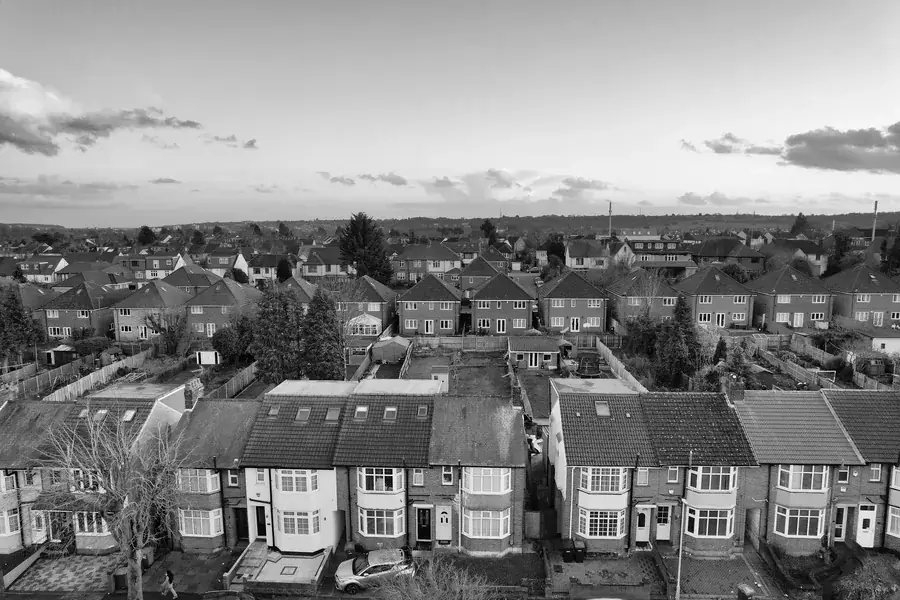
Converted flats are the second problem. A large slice of the borough’s Victorian and Edwardian stock has been split into maisonettes, and the top-floor flat inherits the entire roof with no loft buffer worth the name, often with the original lath and plaster ceiling still in place above the new one. Third comes the flat roof over a rear extension or a garage conversion: typically a deck, a layer of insulation and a membrane, which is light, wide and dead flat to the sky. Physical damage from above is a separate matter, covered in our guide to Heathrow wake vortex roof damage, but the roofs that suffer from one tend to be the same ones that suffer from the other.
Mass and decoupling: the only two things that work
Strip the marketing away and there are two mechanisms. Mass, because heavy things move less when sound hits them. And decoupling, because two separate leaves with a soft, absorbent gap between them perform far better than the same material bonded into one lump. Everything that works is some combination of those two. Everything that does not work is a product that offers neither.
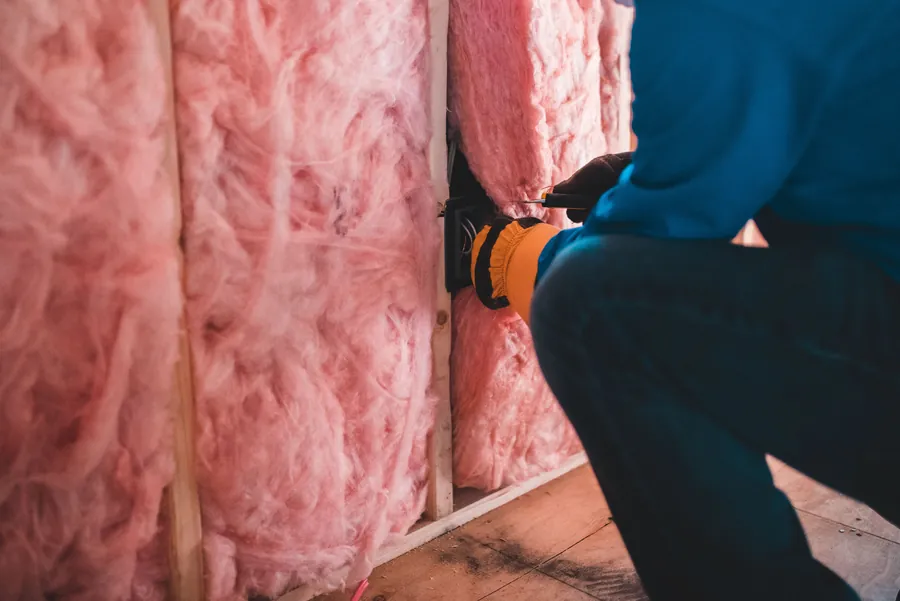
In a roof, the practical version reads like this. Dense mineral wool, 45 kg/m3 or better, cut tight between the ceiling joists so there are no slumped shoulders or missed corners. A second layer laid crossways over the joists, which also covers the timber bridges that would otherwise carry sound straight through. Absorbent material on the sloping underside of the roof where the void is shallow. Then a sealed, lined ceiling below it. Workmanship matters more here than product choice. A ten decibel improvement is heard as roughly half the loudness, and on a poor ceiling that is within reach - but not if a third of the quilt is bridged, slumped or missing over the landing.
The ceiling under the loft is doing most of the work
A single sheet of 12.5mm plasterboard weighs somewhere around eight or nine kilograms per square metre. That is the entire barrier between a Hounslow bedroom and the roof void on most houses in the borough, and on older properties it might be lath and plaster that has cracked its way loose from the joists over eighty years. Adding a second layer of board, with the joints staggered against the first and the perimeter sealed with acoustic mastic rather than filler, is the cheapest genuine improvement available on most ceilings.
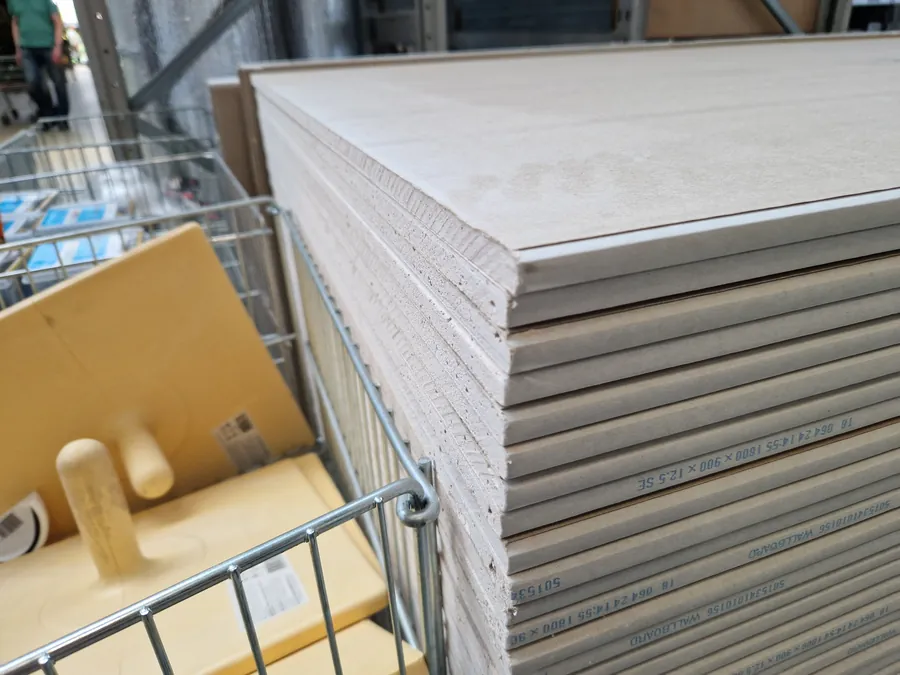
Better again is to hang the new layer on resilient bars, so the board is no longer screwed rigidly to the joists and the structural path is broken. This costs headroom, usually 30mm or so, and it is unforgiving of a careless fixer: one long screw through a bar into a joist short-circuits the whole thing. Where a ceiling is coming down anyway for rewiring or because of an old leak, this is the moment to do it. Where it is sound and freshly decorated, dense quilt above and a properly sealed hatch will get you a decent share of the benefit without redecorating the room.
What does not cut aircraft noise, whatever the leaflet says
Foam panels. The grey wedge tiles you see in a recording studio are acoustic absorbers - they tidy up the reverberation inside a room. They do nothing to noise arriving from outside. Glue them to a bedroom ceiling under the approach and you have changed the decor, nothing else. The same logic disposes of egg-box foam, carpet offcuts and most things described as a soundproofing panel that a person could lift with one hand.

Thin foil quilts are the next offender. A multi-foil that is 30mm thick has neither mass nor a meaningful cavity, and the acoustic figures quoted for them rarely survive contact with a real roof. Spray foam deserves its own paragraph: it is light, so it adds no useful mass, it glues itself to the tiles and rafters, it blocks the ventilation path the roof needs, and it is a recurring problem on mortgage surveys. Roof coatings do nothing for sound whatsoever. And triple glazing, while excellent in its place, will not fix a house whose ceiling is a single sheet of board - you cannot solve a roof problem at the window.
Loft conversions and dormers remove your buffer
A cold loft is an acoustic buffer. It is a large air gap between two separate leaves, and converting it removes that gap and replaces it with a habitable room whose ceiling is now the roof slope itself. Under the approach, that is the biggest change to their own noise exposure most Hounslow homeowners will ever make, and it barely comes up at the design stage.

The weak points are predictable. Dormer cheeks are frequently built as a single skin: studwork, a thin insulation layer and a cladding board, with almost no weight to them. The flat top of a dormer is light deck over joists. Rooflights sit in the plane that faces the sky most directly, and a standard unit in a roof slope will usually be the weakest element in the whole room. There is also a common misconception worth clearing up: Approved Document E of the Building Regulations deals with sound passing between dwellings and between rooms inside one, not with noise arriving from outside. Nobody is going to require your conversion to keep aircraft out. If you want that, you have to specify it yourself: dense quilt in the cheeks, two layers of board internally, acoustic-rated rooflights where the budget stretches.
You cannot just seal a loft up in Hounslow
The instinctive response to all of the above is to close every gap, and this is where people get into trouble. A cold pitched roof relies on air moving through it. Take that away and the moisture generated by an ordinary household - cooking, drying clothes, breathing - reaches the cold underside of the tiles and condenses there, dripping back onto the insulation and rotting the timbers. West London’s damp, still winter mornings are the worst conditions for it.
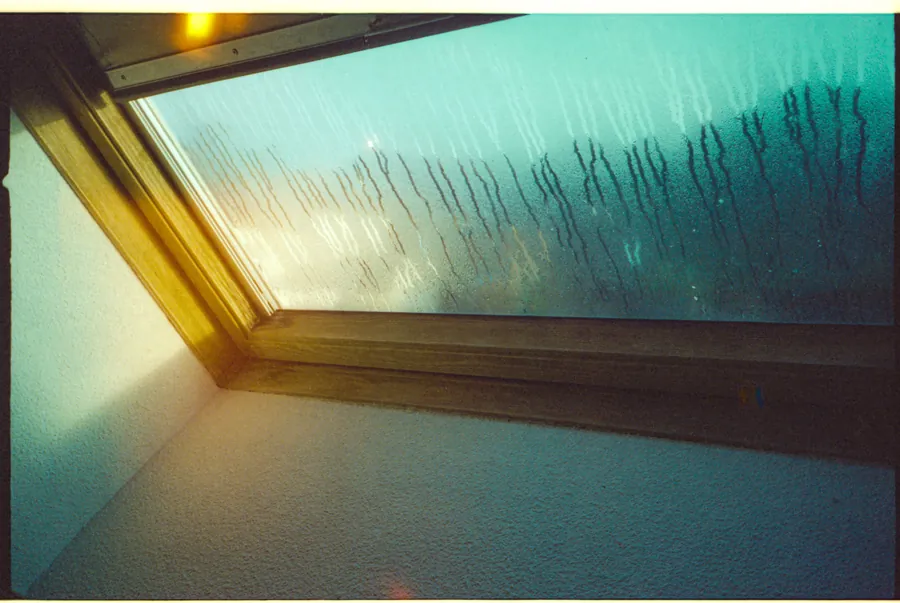
So the sealing has to be selective. Seal the plane between the house and the roof void - the hatch, the downlight penetrations, the service holes, the perimeter of the ceiling. Keep the ventilation above it: the continuous eaves gap a cold roof needs, high-level ventilation at the ridge where the design calls for it, and a breather membrane rather than old bitumen felt if the roof is being re-covered. Habitable rooms still need their own supply of fresh air, which is what Approved Document F on ventilation covers, and under a flight path that means acoustically attenuated vents rather than an open trickle vent that lets the noise straight back in. Ventilation and quiet are not opposites; they just have to be designed together.
What the Heathrow noise insulation schemes actually cover
Heathrow runs a group of community schemes, and the relevant one here is the Residential Insulation Scheme. Its published position is that it funds up to 100% of eligible insulation costs for qualifying properties, with around 20,000 homes in scope, and the eligible measures listed in the scheme’s own published FAQs include replacement primary windows or secondary glazing and external doors, acoustically rated ventilation in eligible rooms, acoustic quilt within the roof void, and upgrading of ceilings in eligible rooms. That last pair is exactly the work described above.
Eligibility is the part to be careful about. The scheme area is a defined boundary set against current UK noise policy, using measures such as the significant observed adverse effect level and the sound exposure level footprint of the noisiest aircraft, with an independent panel deciding which areas are prioritised and when. It is not a simple radius from the runway, no public contour figure will tell you whether your particular address qualifies, and the criteria have changed more than once over the years. Heathrow publishes a postcode checker for precisely this reason, and previously insulated homes are told they may still be worth surveying again. Check it directly rather than relying on what a neighbour got a decade ago. Hounslow Council also publishes its position and its monitoring work on air quality and aviation noise, which is worth reading if you want the local political context behind those boundaries.
One last thing, because it gets forgotten in all the talk of schemes and decibels. Whatever anyone else pays for, the roof over your head is still your roof, and none of the acoustic work counts for much if the fabric under it is loose: tight verges, sound eaves detailing, a membrane that laps properly, no gap left open at the top of a party wall. That is roofing rather than acoustics. It is also the thing everything else gets fixed to, so it is worth knowing the condition of yours before you spend money on anything that hangs off it.
Frequently asked questions
Does loft insulation reduce aircraft noise in a Hounslow house?
Standard loft roll helps a little, but it was designed to slow heat, not sound. Lightweight 10-12 kg/m3 rolls absorb some energy in the loft void and do almost nothing about the low-frequency rumble that carries furthest from an aircraft. Dense acoustic mineral wool at 45 kg/m3 or higher, laid between and then over the ceiling joists, performs noticeably better - and it only reaches its potential if the loft hatch and the gaps around downlights and pipe runs are sealed at the same time.
Will a new roof make my Hounslow house quieter?
A re-covering on its own rarely transforms the noise, because the tiles were never the weak link. What a re-roof does give you is a one-off chance to fix things that are otherwise sealed shut: a proper breather membrane across the rafters where there was no sarking at all, closed verges and eaves details, and tight junctions around dormer cheeks. Done alongside a ceiling and loft upgrade from inside, the two together make a real difference. Done alone, expect a modest improvement.
Does Heathrow pay for roof or loft noise insulation?
Heathrow's Residential Insulation Scheme funds up to 100% of eligible insulation costs for qualifying homes, and its published list of measures includes acoustic quilt within the roof void and upgrading of ceilings in eligible rooms, alongside glazing, external doors and acoustically rated ventilation. Eligibility is set by a defined boundary based on current UK noise policy rather than by distance from the runway, so the only reliable answer for your address is Heathrow's own postcode checker.
Is spray foam a good way to soundproof a roof in Hounslow?
No. Open-cell foam is light, so it adds almost no mass, and it is the wrong tool for low-frequency aircraft noise. It also bonds to the underside of the tiles and the rafters, which blocks the roof void ventilation you need and creates a condensation risk, and many lenders take a dim view of it on survey. If you want mass in the roof plane, dense mineral wool between rafters with a lined and sealed board finish below it is the route that does not cause three new problems.
Useful? The survey's even better
Free roof surveys across Hounslow and west London, with photographs and a fixed written quote to follow.