
22 October 2026
Bird-Proofing Hounslow Roofs: Pigeons Under Solar Panels, Parakeets, Sparrows And What It Costs
Pigeons under your solar panels or sparrows in the eaves? Bird-proofing for Hounslow roofs: what the law allows, which fixes work and typical 2026 prices.
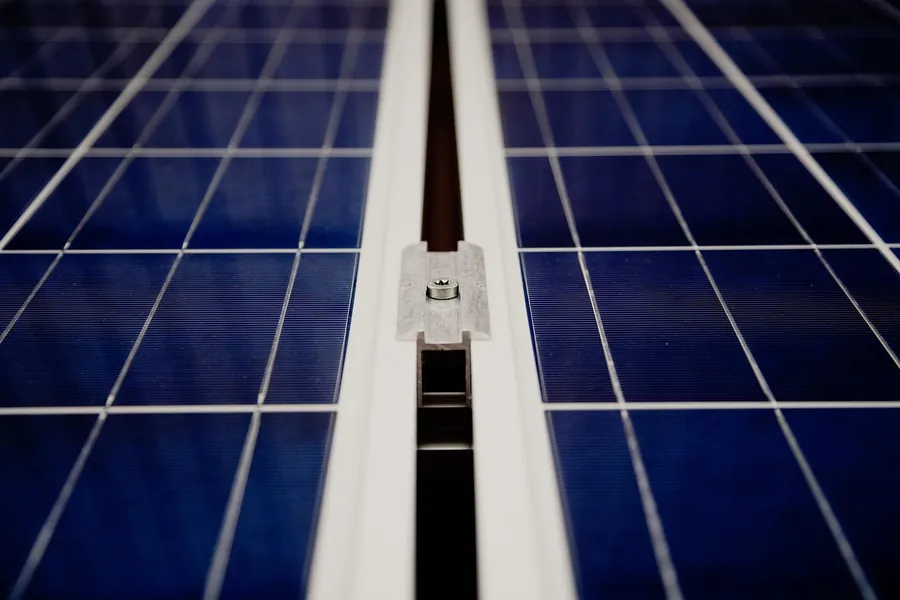
Autumn is usually when people notice the pigeons. A lot of Hounslow semis had solar panels fitted over the last few years, especially the interwar houses in Heston, Cranford and Hounslow West, where a hipped roof faces south and has plenty of space for a dozen panels. That gap of 100mm or so between the panels and the tiles is dry, warm and sheltered from the wind. Feral pigeons find it within a season. By the time the leaves drop, the owner has found droppings all over the patio, there’s cooing from above the bedroom ceiling at five in the morning, and the gutter is full of twigs. This guide covers bird-proofing in Hounslow: what each kind of bird does to a roof here, what the law lets you do and when, which fixes work, and what you can expect to pay.
Pigeons under solar panels: the Hounslow bird-proofing job we see most
A pigeon pair under an array is rarely alone for long. Feral pigeons breed all year round, they lay two eggs at a time, and the young tend to come back to where they hatched. One nest under the corner panel can turn into five across the whole array by the next autumn. Each nest is a heap of twigs and droppings that keeps getting bigger, and it sits on your tiles where rain should be running off freely.
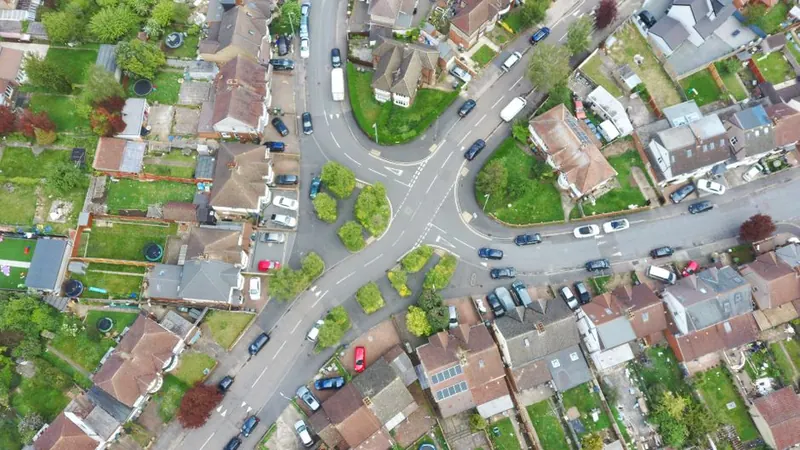
The roof damage is slow, which is why people put it off. The nesting material traps water against the tiles and the felt beneath. It also blocks the channel the rain should follow down the slope, so water starts spilling sideways at the panel edges. When the build-up drops into the gutter, the gutter overflows and soaks the fascia. A damp patch on the bedroom ceiling below an array is easy to blame on the solar fixings. Sometimes that’s right. Just as often it’s a tile that has sat in wet nest debris for two winters. If water is already getting inside, our roof leak repairs page explains how we trace it before we quote.
Ring-necked parakeets: loud, green and mostly not your roofer’s problem
Anyone who has lived in Hounslow for a few years knows the screeching flocks of bright green birds over the parks and back gardens. They’re ring-necked parakeets, the UK’s only naturalised parrot, and west London has a lot of them. People sometimes ring us expecting them to be the culprit when a roof starts making noises. Usually they aren’t.
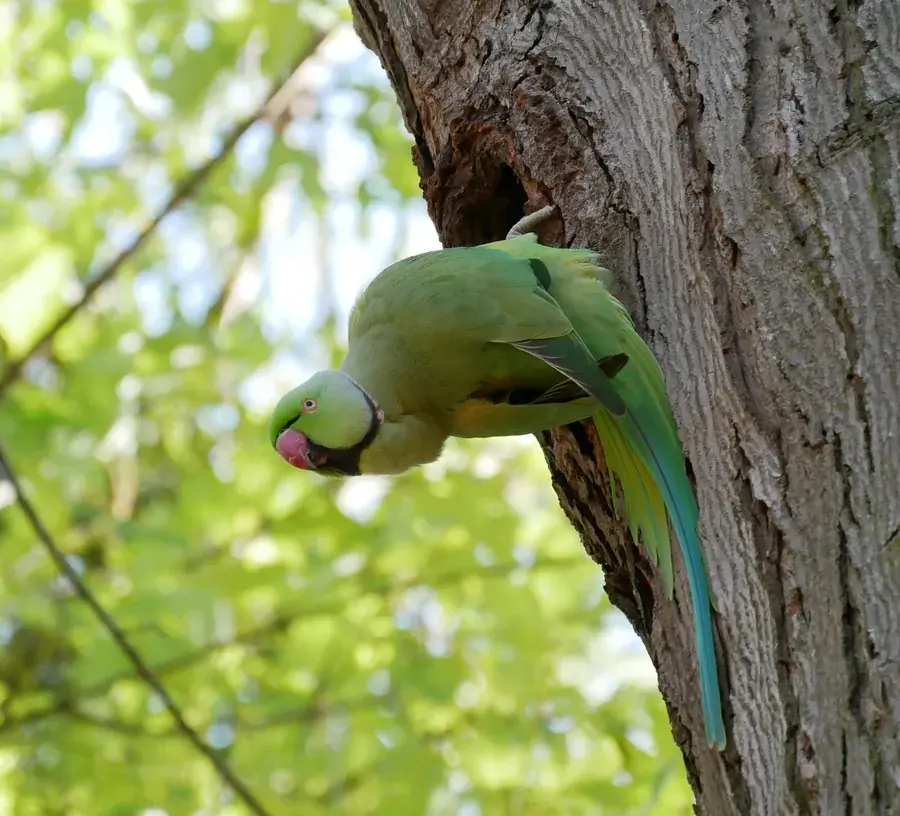
Parakeets mostly nest in holes in mature trees, so the big old trunks in the local parks suit them far better than a tiled roof. Occasionally a pair will chew into a soft spot on a house, usually a fascia that has gone rotten at the corner or a hole left by an old cable. When that happens, the repair is a carpentry job and the timing is the same as for any other bird: wait until the nest is empty, then cut out the rotten timber and close the hole. Parakeets do appear on Natural England’s general licences, but under the GL40 conservation licence and the GL42 serious damage licence. Neither one covers damage to a house.
Starlings, sparrows and swifts in the eaves
Small birds get into Hounslow roofs at the eaves, where the bottom course of tiles meets the gutter line. On a 1930s semi that was never re-roofed, the eaves often have no comb or filler, so there’s a gap behind the gutter about the width of two fingers. Starlings and house sparrows only need that much to get in. Once inside, they nest on top of the wall plate or push into the loft insulation. Where soffit boards have rotted or come loose, the opening gets bigger still.
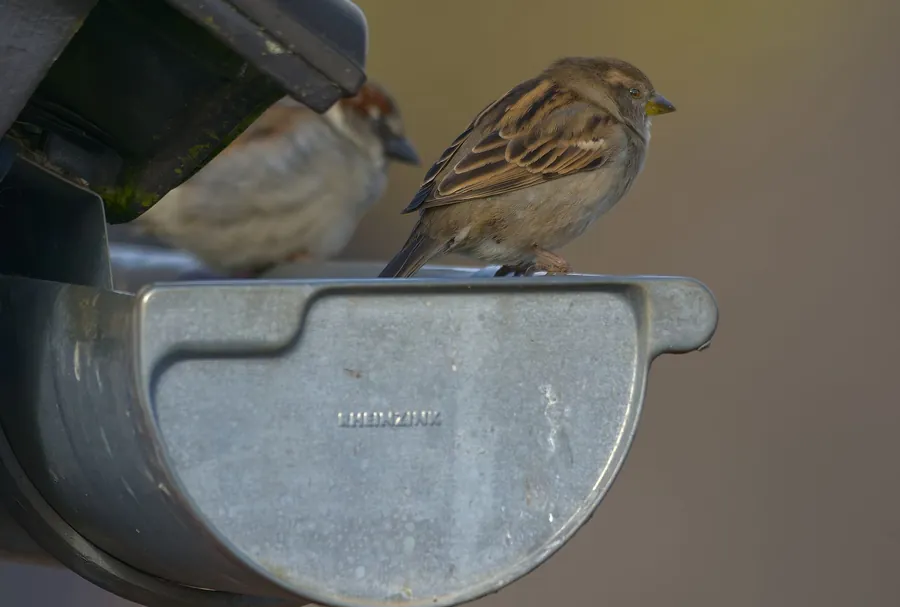
These are the birds where you need to be most careful. House sparrows and starlings are both red-listed, which means they’re on the UK’s list of highest conservation concern, and their numbers have fallen by more than half in recent decades. Swifts, which come back to the same eaves gaps every May, are red-listed too. None of them has a general licence that a homeowner can use against them. In practice you let the young fledge and then fit combs, repair the soffit, or both, during the autumn. Our guide to repairing or replacing gutters, fascias and soffits in Hounslow covers the timber side of that job. Some owners also put up a sparrow terrace or a swift box nearby so the birds have somewhere else to go. It costs little, and it’s the decent thing to do.
What birds actually do to a roof
The damage depends on the bird and where it’s living. Here’s what we tend to find around Hounslow:
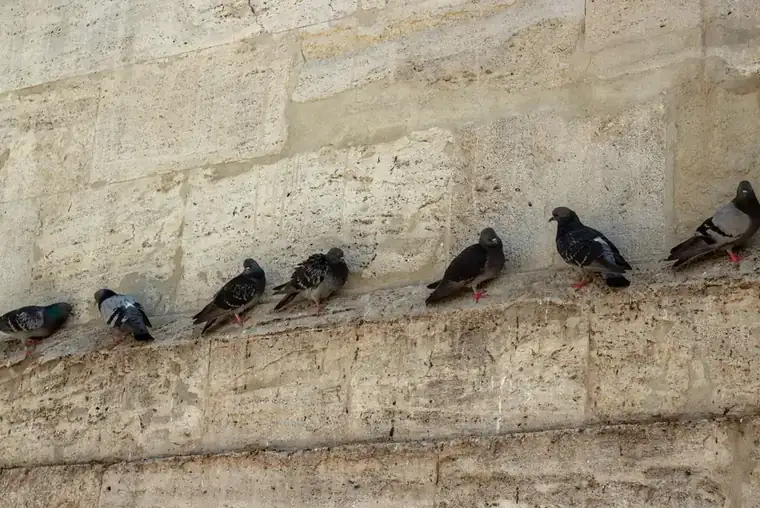
Gutters and outlets go first. Twigs, feathers and droppings wash off the roof and settle at the outlet, and the parapet gutters and flat roof outlets on the terraces around Lampton and the town centre block quickest, because they have one small outlet and no overflow. Our gutter repairs and clearing page covers that fix.
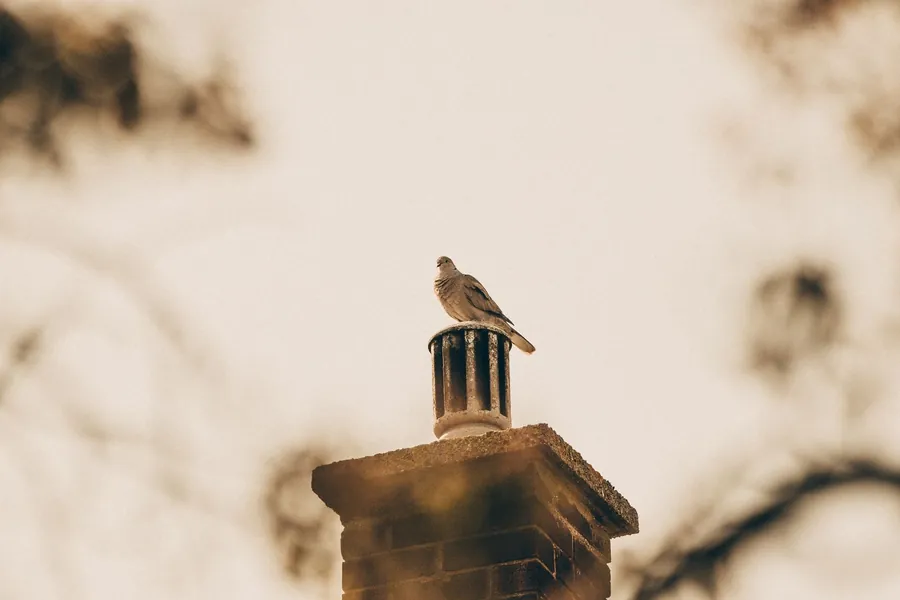
Chimney pots are the one to take seriously. Jackdaws and pigeons drop sticks down open pots until the flue is blocked solid, and on a gas fire or boiler flue that’s a carbon monoxide risk. Don’t light anything underneath until it has been checked.
Then there are the slower problems:
- Ridge and hip gaps, where the old mortar has fallen out and left a hollow. Pigeons settle in, and their weight and scratching loosen the tile until it slides off in the next gale.
- Droppings on ledges, dormer tops, flat roofs and patios. Big deposits carry bacteria and fungal spores, so a heavy build-up in a loft or under panels gets cleared with masks and gloves on.
- Birds living in the loft itself, which bring in mites and fleas, spoil the insulation and are very loud in spring.
The law: when you can and can’t touch a nest
The rule that matters most is section 1 of the Wildlife and Countryside Act 1981. It’s an offence to intentionally take, damage or destroy the nest of any wild bird while it is in use or being built, or to take or destroy its eggs. Feral pigeons count as wild birds for this purpose. So do sparrows, starlings, jackdaws and parakeets. Breaking the rule can bring a fine, and a roofer who rips out an active nest to finish a job on schedule is taking that risk on your behalf.
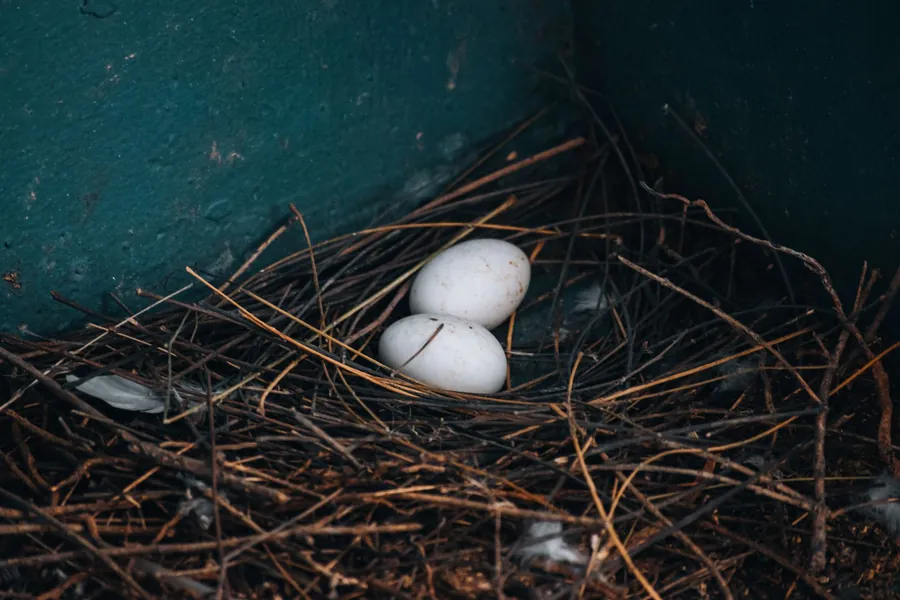
The exceptions are the general licences, which Natural England has issued since January 2026, each valid for one calendar year. General licence GL41 allows action against feral pigeons, including removing nests and eggs, but only to preserve public health or safety: slips and falls, the spread of disease to people, or safety problems caused by nesting. You don’t apply for it, but you do have to meet its conditions, and “they’re noisy” isn’t one of the purposes it lists. For most houses the simple route is the right one. Check the nest, let any young leave (pigeon eggs hatch in about two and a half weeks and the squabs leave around a month later), then proof the roof the same week so the next pair can’t move in.
Bird-proofing that works on Hounslow roofs
Most bird-proofing is simple. The products are cheap. The hard part is getting up there safely and fitting them properly.
For solar arrays, the answer is mesh. It’s galvanised or PVC-coated wire that runs right round the array and clips to the panel frames, so nothing gets drilled through the panels or the roof. It has to reach down to the tiles and follow their profile. Leave it loose at the bottom and the pigeons will simply shove their way under.
At the eaves, a plastic eaves comb fixed under the first course of tiles keeps starlings and sparrows out while still letting air into the loft. Any proper re-roof should include one, and they can be retrofitted to an existing roof as well.
Open chimney pots get a mesh guard or a cowl clamped on top. That keeps birds and sticks out and still lets the flue draw, though on a working flue the cowl has to suit the appliance. A stack that’s no longer used can be capped and vented instead. Our chimney repairs page covers the rest of the stack.
Spikes are for flat perching spots: ledges, ridge ends, dormer copings and parapets. They’re polycarbonate or stainless strips, glued or screwed down, and they don’t hurt the birds. Netting is for light wells, inner courtyards and flat roof areas behind parapets, where birds come to roost rather than nest.
What we’d skip: plastic owls (the pigeons stop noticing within a week or two), hanging CDs, ultrasonic boxes and sticky gels, which can trap smaller birds. Fixing the roof itself helps more than people expect. A re-bedded ridge or a repaired soffit takes away the gap the birds were using in the first place.
Bird-proofing costs in Hounslow
These are rough guide prices for west London in 2026. Access makes the biggest difference. A two-storey semi in Heston with its array within reach of a roof ladder costs far less than a tall Victorian house in Isleworth that needs scaffold on two elevations.
| Job | Typical price |
|---|---|
| Solar panel mesh, typical 10-14 panel array | £350 - £800 |
| Clearing nests and droppings from under an array | £100 - £300 |
| Eaves comb retrofitted, front and back of a semi | £250 - £600 |
| Chimney bird guard or cowl, first pot | £150 - £350 |
| Each extra pot on the same stack | £40 - £90 |
| Bird spikes on ledges or ridge ends, per metre | £15 - £35 |
| Netting over a light well or flat roof area | £400 - £1,500 |
| Ridge or hip re-bedded after pigeon damage | £450 - £1,300 |
| Scaffold, per elevation (where needed) | £500 - £1,200 |
It’s worth getting the proofing done while someone is already on the roof. If you’re having the ridge re-bedded or the gutters renewed, adding combs and pot guards costs very little extra, because the access is already paid for. Whatever the job, the survey is free, and we’ll show you photos of what’s living on your roof before we quote.
Frequently asked questions
Can I remove a pigeon nest from under my solar panels in Hounslow?
Not while it has eggs or chicks in it, or while the birds are still building it, unless you are acting under Natural England's general licence GL41, which covers feral pigeons only for specific public health and safety reasons such as slips, falls or the spread of disease. Most homeowners never need the licence. You check the array, wait for any young to leave if there is an active nest, then clear the old nests and fit mesh straight away. Feral pigeons breed all year, so the check is needed whatever the month.
Are ring-necked parakeets damaging roofs in west London?
Rarely. Ring-necked parakeets are noisy and very visible around Hounslow, but they nest mostly in holes in mature trees, not in roofs. Now and then a pair uses a cavity behind a rotten fascia or a gap in brickwork. They appear on Natural England's general licences GL40 and GL42, but those cover conserving other wildlife and serious damage to things like crops and livestock, not damage to a house. The answer for a house is the same as for any bird: seal the gap once the nest is no longer in use.
How much does it cost to bird-proof solar panels in Hounslow?
As a rough 2026 guide, clip-on mesh around a typical 10 to 14 panel array on a Hounslow semi costs about £350 to £800 when the roof can be reached safely from a ladder or roof ladder. Clearing out old nests and droppings first usually adds £100 to £300. If the array is on a high or steep roof that needs scaffold, budget another £500 to £1,200 per elevation. A good mesh clips to the panel frame, so nothing is drilled through the panels.
When is the best time of year to bird-proof a roof?
Autumn and winter. Most wild birds nest roughly between March and August, and once a nest is in use the law stops you from blocking or removing it. Between October and February the eaves and chimney pots are usually empty, so combs, cowls and mesh can go on without waiting. Pigeons are the exception because they breed all year, so solar arrays still need checking for eggs or chicks before work starts.
Useful? The survey's even better
Free roof surveys across Hounslow and west London, with photographs and a fixed written quote to follow.