
15 September 2026
Chimney Stacks On Hounslow Roofs: Repoint, Reflaunch, Cap Or Take It Down?
Most west London roof leaks start at the stack. How to read a failing chimney from the ground, what each repair involves, and what to do with a redundant one.
If a roof around Hounslow is letting water in, the chimney is the first place worth looking. Stacks stand higher than anything else on the house, take the weather from every direction at once, and are built from the two materials that age fastest up there: lime or cement mortar and soft London stock brick. Most of them also stopped doing their job decades ago, when central heating arrived and the fires went out for good. That leaves the better part of half a tonne of brickwork sitting above your bedroom with no heat running through it, no reason for anyone to look at it, and roughly 615mm of rain landing on it every year at the Heathrow gauge down the road. Nobody looks at it. That is the whole problem. Here is how to read a failing stack from the ground, what each repair actually involves, and how to decide between keeping a redundant chimney and losing it.
Watch: reading a stack from the street, and choosing between the four fixes.
What a tired stack tells you from the pavement
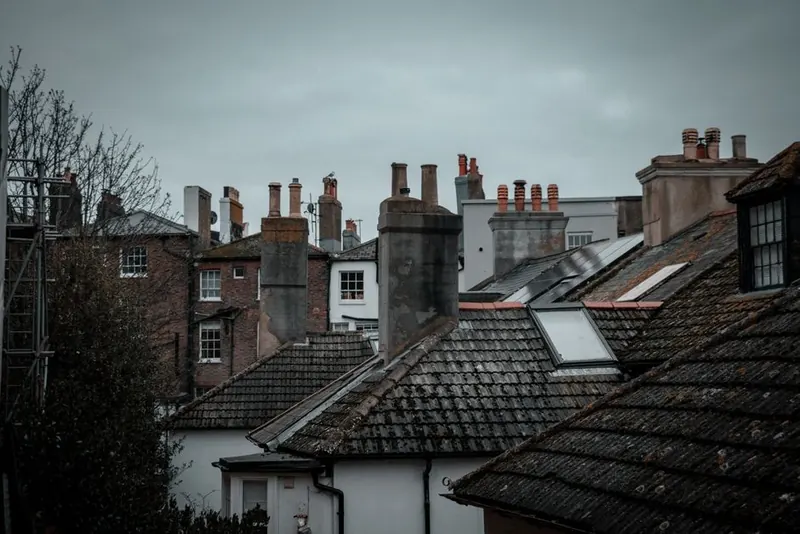
You can learn most of what you need with binoculars and ten minutes in the street opposite. Start at the top and work down. The mortar collar the pots sit in, called the flaunching, should be a smooth sloping cap with no cracks running across it; if you can see a dark line through it, or a pot that has tilted, water is already going somewhere it should not. Next, the joints between the bricks. Sound pointing sits slightly proud or flush and looks uniform; failing pointing is shadowed and recessed, and on a sunny afternoon you will see it as a dark grid against the brick. Then the bricks themselves. A brick that has lost its face and gone crumbly at the edges has been frozen while wet, and once one goes its neighbours tend to follow.
Finally, step back far enough to see the stack against a vertical line, a downpipe or the corner of the house opposite, and check whether it stands true. Not every lean is an emergency, but every lean needs explaining. If two or more of those signs are showing on your roof, that is the point to get a chimney inspected properly rather than waiting for the ceiling to tell you.
The order a chimney gives up
Chimneys fail in a predictable order, which is handy. Catch the first stage and the rest never happens.
Flaunching, then pointing
The flaunching goes first almost every time. It is a thin bed of mortar with no protection above it, exposed on all sides, and on a stack built in 1932 it may well be the original mix. It cracks, water runs down the outside of the pot into the top of the stack, and the brickwork starts soaking from the inside as well as the outside. The joints follow. Once mortar loses its binder it behaves like compacted sand, and rain that used to run off the face starts sitting in the wall.
Spalling, leaning, and the flashing at the bottom
Saturated brick plus a hard frost equals spalled faces, and Hounslow gets just enough of both. A leaning stack is a different animal. Some lean because the London clay under the borough has moved with wet and dry summers and the chimney recorded it decades ago. Others lean because sulphates from old flue gases have expanded the mortar on whichever face takes the most driving rain, tipping the stack gently away from the weather. That second type is live, and it is the one that needs assessing quickly rather than at leisure. Right at the bottom, the flashing where stack meets roof does more waterproofing work than any other detail on the house, and a stack in reasonable order can still leak steadily because 1930s lead has split along a fold.
Repoint, reflaunch, rebuild: what the words mean in practice
Repointing means raking the old mortar out of the joints to a decent depth, usually two to three times the joint width, and filling them with a fresh mix. The mix matters more than most homeowners are told. A hard cement mortar on soft Edwardian brick cannot move, so the brick takes the strain instead and erodes faster than the joint ever did. On the older terraces around Brentford and Isleworth a softer, lime-based mix is the right call; on interwar stacks in Heston or Whitton a weaker cement gauge is usually fine.
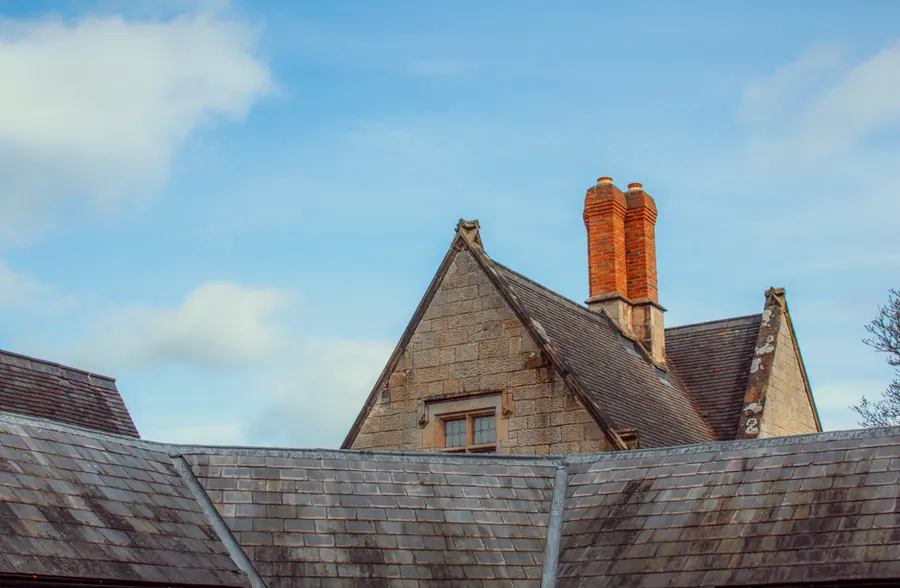
Then there is reflaunching, which means cutting the old mortar cap off the top, lifting and re-bedding the pots, and forming a fresh sloping cap so water runs off instead of sitting. Half a day’s work with the right access. It heads off most of what follows.
When the brickwork itself is finished, the answer is a rebuild above the roofline. The stack comes down course by course to a sound level, usually just above the flashing, and goes back up in reclaimed brick chosen to match. Done well it is invisible from the street within a couple of winters.
New flashing means lead, cut into the brickwork rather than smeared over it. A proper detail has a front apron on the downhill side, stepped cover flashings up both cheeks chased into the joints, small soakers interleaved with the tiles or slates underneath, and a back gutter behind the stack where water collects. Mortar fillets and self-adhesive tape do the same job for about two summers.
Why the damp shows on the chimney breast
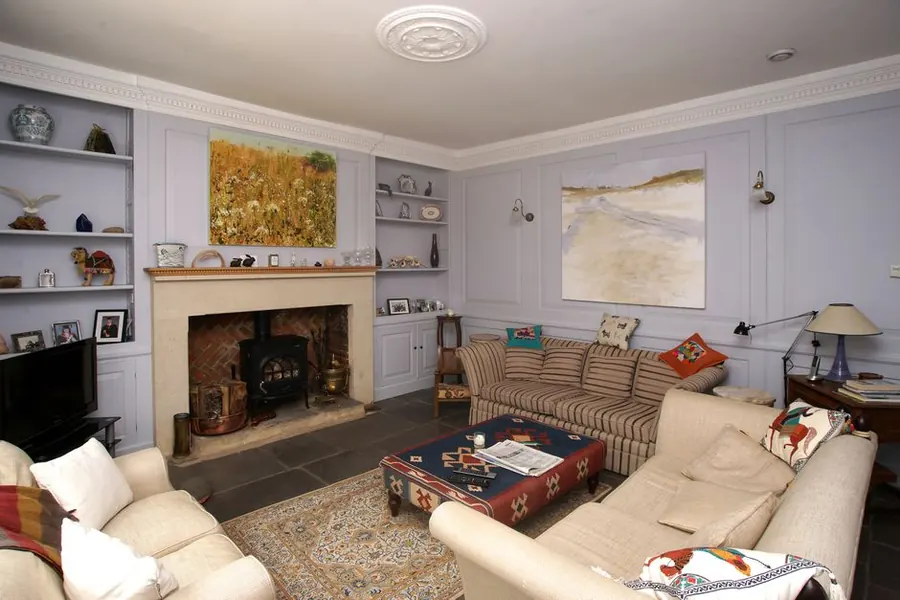
Chimney damp almost never appears where the water gets in. It enters at the top or at the flashing, tracks down inside the flue or through the masonry, and emerges as a patch on the breast in a bedroom or the front room, often a full storey below the fault. That is why so many of these leaks get blamed on rising damp, on the windows, or on a neighbour’s extension. A useful tell is timing: rain-related damp on a breast darkens during or just after wet weather and fades between spells, while a patch that sits there unchanged all year is more likely to be salts or condensation.
A sealed-up fireplace makes everything worse. Old flues are lined with decades of soot and salt, both of which pull moisture out of the air and hold it. Take away the airflow that used to dry the flue out and the brickwork stays wet, the salts migrate through the plaster, and no amount of redecorating fixes it. This is the single most common reason a perfectly sound-looking chimney ruins a wall inside.
The redundant stack: cap it and vent it, or take it down

Almost every chimney in the borough is redundant, and there are only two honest options: keep it and look after it, or remove it properly.
Keeping it means capping the flue in a way that keeps rain and birds out while still letting air move. A vented cap or a clay hood at the top, paired with a small vent at the bottom in the blocked-up fireplace, sets up a slow current that carries moisture away instead of trapping it. Sealing both ends solid is the mistake that turns a dry chimney into a damp one. The government’s Approved Document J on combustion appliances and flues also sets out what has to happen if you ever want that flue back for a stove, which is reason enough not to make the chimney unusable in the meantime.
Removing it is a legitimate answer for a stack that is genuinely beyond economic repair. Be clear about what you are buying, though: the same scaffold as a repair, a demolition, the rubble coming down by hand, then battens, felt, matching tiles and usually a new ridge section across the gap. Ring the council before anyone books a skip, too. The London Borough of Hounslow lists 29 conservation areas across the borough, some with Article 4 directions that pull ordinary permitted development rights back in, and a chimney visible from the street in one of them is not something to remove on a Tuesday because the scaffold happens to be up.
Shared stacks, terraced streets and the conversation next door
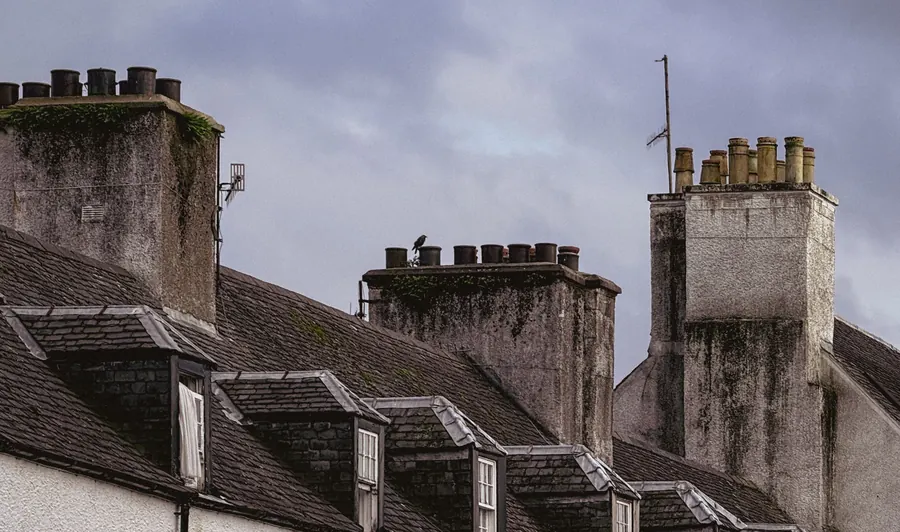
On the Victorian and Edwardian terraces running through Brentford, Isleworth and the Chiswick fringe, the stack on your roof is very often half your neighbour’s. It sits on the party wall, it carries flues from both houses, and neither owner can sensibly repair their half on its own.
Cost is usually shared, and the fairest starting point is a survey with photographs that both households can look at, rather than an invoice arriving through a letterbox. One contractor and one scaffold is cheaper for everyone than two firms turning up in separate months. If the work touches the party structure itself, and taking a shared stack down certainly does, the government’s guidance on the Party Wall etc. Act 1996 explains the notices involved, including the two months’ notice normally required for work to a party structure. Most of these situations never get that far. They get resolved because somebody knocked, showed a photograph of a cracked flaunching, and offered to split a quote.
The awkward version is the neighbour who has already removed their half, or who capped their flue with concrete years ago and cannot see why yours matters. That is a conversation to have with evidence, and before the winter rather than during it.
What it costs, and why the access is most of the bill
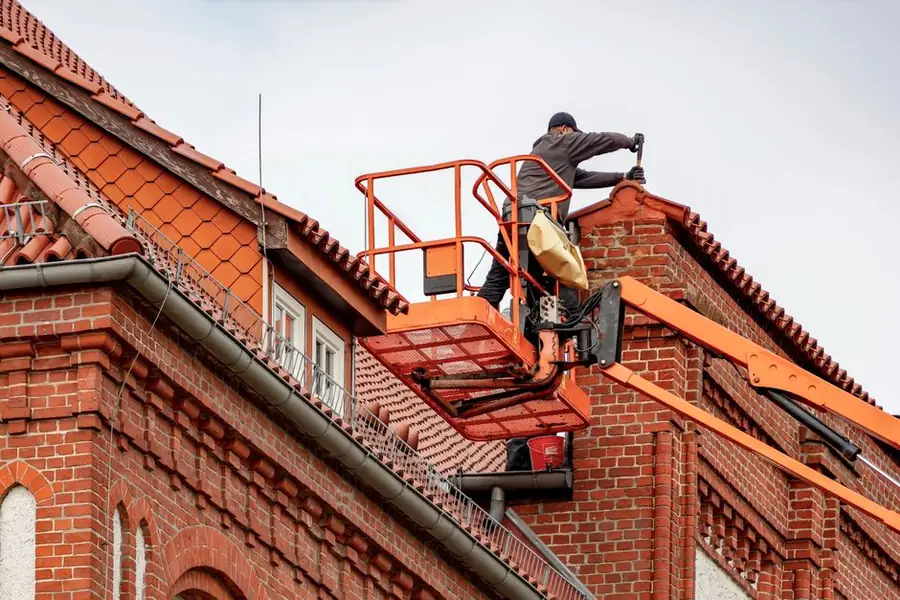
Chimney work is priced oddly compared with the rest of roofing. The trade element is often the smaller half of it. Getting a person safely to the top of a stack on a Hounslow street can cost as much as the masonry once it is there, particularly where the scaffold has to stand on a public footway or a bay has to be suspended. Our post on what a new roof costs in Hounslow goes through those access charges in detail, and they apply in exactly the same way to a single chimney.
As a rough guide to the quotes we write around here: reflaunching and re-bedding pots tends to land in the low hundreds, a full repoint of a domestic stack somewhere between four hundred and a thousand for the masonry, new lead flashings in a similar bracket, and a rebuild above the roofline comfortably into four figures. Access is usually a separate line, and on a terraced street it is rarely under a few hundred pounds. Removal costs much the same as a rebuild once making good is included, which surprises people who assume knocking something down must be the cheap option.
The one genuine saving available is timing. Scaffold that is already standing for a chimney can serve the gutters, the fascias, the ridge and the top courses of tile at no extra cost for access. Anything up there that will need doing within five years is worth doing while the tower is up, because the second visit will cost more than the work.
If your stack is showing any of the signs above, get it looked at before the clocks go back. A cracked flaunching in September is a modest job. The same crack in February, after three months of rain has been running down the inside of the brickwork, is a rebuild and a ceiling.
Frequently asked questions
How do I know if my chimney needs repointing or rebuilding?
The rough test is how deep the damage goes. If the brick faces are sound and only the joints have gone soft and sandy, the stack is a repointing job. If bricks have lost their faces, courses have moved, or a screwdriver pushes into the joints more than about 20mm without effort, the masonry above the roofline usually has to come down and go back up. A roofer should be able to show you photographs of the joints and the brick faces rather than asking you to take their word for it from the pavement.
Can I just cap a chimney I never use?
Yes, and it is usually the right answer, but the cap has to let air through. A flue that is sealed solid at the top and blocked at the fireplace has no way of drying, so the moisture already in the brickwork sits there and comes out through the plaster on your chimney breast. A vented cap or a hood at the top plus a small vent at the bottom keeps a gentle current moving through the flue, which is what stops the damp rather than causing it.
Who pays for repairs to a shared chimney on a terraced house?
Normally both owners, in proportion, because a stack sitting on the party wall usually belongs to both houses. In practice the conversation is easier if you start with a survey and photographs rather than a bill, and agree a single contractor so one scaffold covers both halves. If your neighbour will not engage and the work involves the party structure itself, the Party Wall etc. Act 1996 sets out the notice procedure, though most terraced stacks in Hounslow get sorted out over the fence long before anyone reaches for the legislation.
Is removing a chimney stack cheaper than repairing it?
Rarely, once everything is counted. Removal needs the same scaffold as a repair, plus demolition, getting the rubble down and off site, new battens, felt and tiles across the hole, and often a new ridge section. The bill lands in much the same place as a rebuild, and you have permanently lost a feature that buyers in west London notice. Removal earns its keep when the stack is genuinely beyond saving, when the roof around it is being replaced anyway, or when nobody will ever want a fire in the house again.
Useful? The survey's even better
Free roof surveys across Hounslow and west London, with photographs and a fixed written quote to follow.