
12 September 2026
What A New Roof Costs In Hounslow, And Why London Prices Are Different
Re-roofing in west London costs more than the national average, and most of the gap is not tiles. Licences, suspended bays, tipping, ULEZ and honest totals.
Type “cost of a new roof” into a search box and you will have a national average within seconds. It will be wrong in Hounslow, and it will be wrong in a specific direction. The borough sits inside the M25, inside the emission zone and inside a housing market of roughly 290,000 people whose streets were laid out long before anyone needed to park a scaffold lorry on them. A quote here carries a set of costs that simply do not exist in a Midlands market town: a licence to occupy the pavement, suspended bays at £25 a space a day, tipping charges pushed up by landfill tax now running past £100 a tonne, and a van that has to meet an emissions standard before it turns a wheel. None of it shows up in a national average. All of it shows up in your price. Here is where the money actually goes on a west London re-roof, and what the honest totals look like street by street.
Why the quote starts higher before anyone mentions tiles
The roof itself is not a London roof. A 1930s semi in Heston has the same rafters, the same concrete interlocking tiles and the same square metreage as its twin in Nottingham. What differs is the site, and in west London the site is expensive to occupy. Four things drive that: permission to use the street, the waiting time attached to that permission, the cost of taking waste away, and the cost of running vehicles inside the zone. A full roof replacement here is priced around those constraints rather than in spite of them.
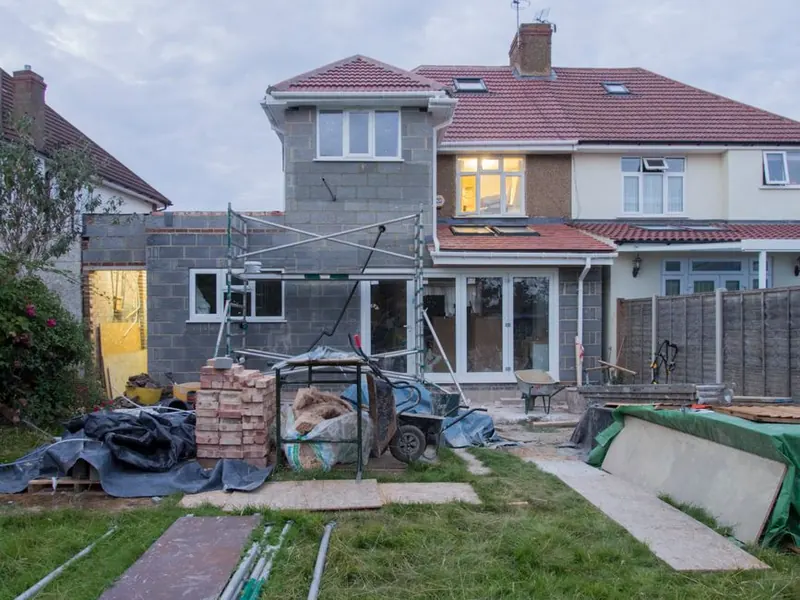
Put a number on it and people are usually surprised. On a straightforward Hounslow semi with a driveway, access and disposal might be a fifth of the bill. On a Brentford terrace with a bus route out front, no side return and a controlled parking zone, the same two categories can reach a third before a single tile has been bought. That is the gap between a national figure and a local one, and no amount of haggling over the tile price closes it.
Materials and labour, the part that behaves normally
Merchants price nationally, so this is the boring section. Concrete interlocking tiles still land somewhere around £12 to £20 a square metre to supply, clay plain tiles run roughly £35 to £55, and natural slate sits higher again at £45 to £70 depending on origin and thickness. Battens, breathable membrane, ridge and verge systems, nails and lead add their usual slice. Delivery into west London costs a little more than a rural drop, but it is pennies next to everything else on this page.

Labour is where London asserts itself. A roofer working in the capital is competing for their own time against extension work, loft conversions and commercial contracts that pay well, and day rates follow. Expect a meaningful premium per person per day over what the same trade earns in the regions, on a job that takes a two-man team most of a week for a semi and longer for anything with valleys, a hip, or a chimney that needs rebuilding on the way past. The skill is identical. The opportunity cost of the roofer’s week is not.
The scaffold licence, and the diary it quietly controls
Anything that stands on a public footway in the borough needs permission, and the council treats scaffolding, hoarding, stored building materials, crane operations and skips as one family of highways licences administered by Hounslow Council. The application is not a formality. It has to arrive with a current public liability insurance certificate and a full method statement, and anything missing those documents is not processed at all. A firm that treats the paperwork casually loses a week, then blames the council for it.
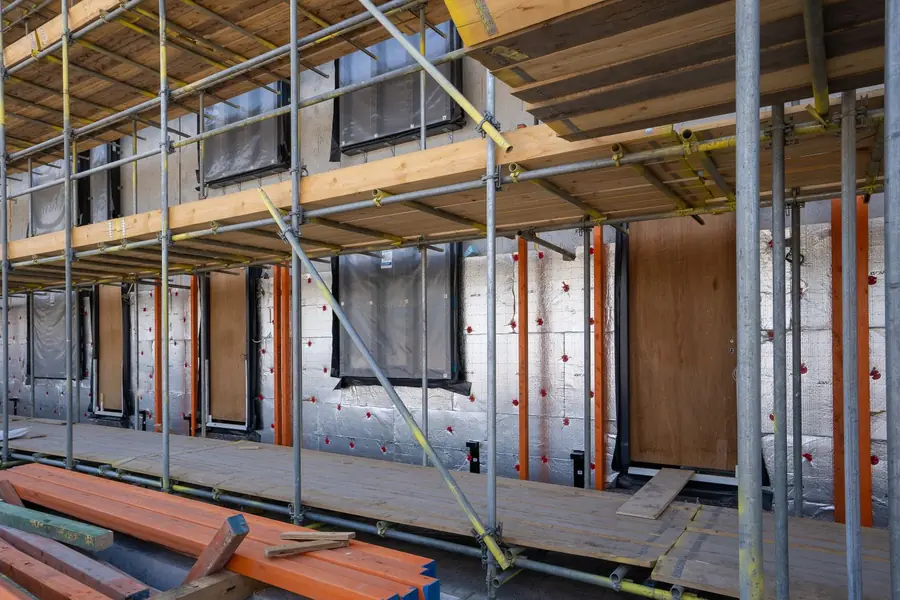
The licence fee is modest set against the scaffold itself, and the scaffold is where the real variation sits. A semi with a driveway takes a simple front and rear run. A terrace with a narrow footway needs a pavement gantry so pedestrians can still get past, sometimes lighting, sometimes a fan to catch debris, and always a longer erect and dismantle. That is the difference between roughly £1,400 and £2,600 on houses that look, from the street, about the same size. Hire periods matter too: scaffold is billed for a period, and a job that overruns into a second period costs money nobody budgeted for.
Suspended bays, at £25 a space a day
Most Hounslow streets have cars parked nose to tail along them, and a scaffold lorry, a tile delivery and a skip all need kerb space that is already occupied. That means a parking bay suspension, and Hounslow publishes the numbers plainly: on-street suspensions are charged at £25 per space per day plus a £40 administration fee, with applications needed at least ten working days before the space is required.
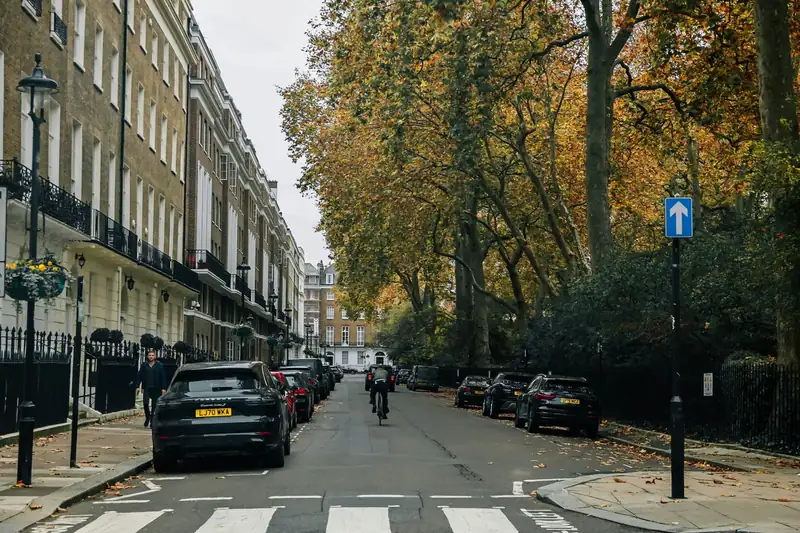
Work the arithmetic through on a real job. Two spaces held for four days is £240 all in, and that is before the skip needs its own footprint alongside. Stretch the same job to eight days because the weather turns, and it doubles. The variation across the borough is real: parts of Chiswick and Brentford sit in controlled zones where every metre of kerb is spoken for, while streets around parts of Cranford and Feltham have enough off-street parking that the question never arises. Two identical roofs, two different bills, decided entirely by the road outside.
Skips, tipping, and getting rubbish out of west London
Stripping a semi produces more weight than people expect. Concrete tiles run around 45 to 50 kilos a square metre on their own, and once you add mortar bedding, old felt, battens and nails, a modest re-roof puts four to six tonnes on the back of something. It all has to go somewhere, and in west London somewhere is further away and dearer than it used to be.
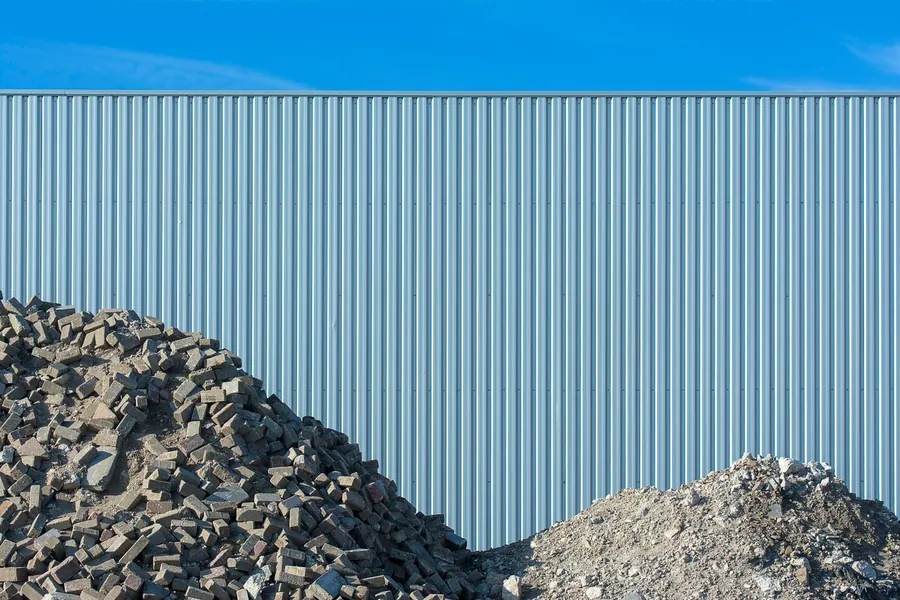
Three things stack up. Transfer station capacity in this part of London is thin, so the round trip to tip eats driver hours that get billed back. Landfill tax on the residue has climbed past £100 a tonne, and it is charged by weight, which is unkind to a material as dense as roof tile. And skip hire itself carries a London premium, with an eight-yard skip that might be £250 in a county town commonly landing between £350 and £500 here, more again if it needs a permit to sit on the carriageway rather than a driveway.
There is a legal edge to this as well. Whoever takes your waste away has to be a registered waste carrier, and the Environment Agency keeps a public register you can search for nothing. A roofer who cannot tell you where the strip-off is going, or whose disposal cost looks suspiciously light, has earned a second question. Fly-tipped roofing waste gets traced back to the address it came from surprisingly often.
The ULEZ line that never appears on the quote
Every roofer working in Hounslow is working inside the Ultra Low Emission Zone, which has covered all London boroughs since the 2023 expansion. For a non-compliant van that is £12.50 a day under TfL’s rules for vans and similar vehicles, charged for every day the vehicle is driven in the zone, with no weekly cap and no trade exemption.

Most local firms dealt with this years ago by replacing vans, so the cost sits in their overheads rather than on your invoice. That is the bit people miss. A compliant van costs more to buy and finance than the fifteen-year-old tipper it replaced, and that feeds into everybody’s day rate whether it is itemised or not. The firms still paying the daily charge are usually the ones travelling in from outside the zone, adding £12.50 per vehicle per day to a job they are already driving an hour to reach.
It also explains something homeowners notice and misread. Quotes from further afield are not reliably cheaper in London, and when they are, ask what has been left out before you assume you have found a bargain.
No rear access, and the roof that goes through the house
Hounslow’s Victorian and Edwardian terraces, particularly around Brentford, Old Isleworth and the Chiswick boundary, were built shoulder to shoulder with no side return and often no back alley at all. Every tile, every batten and every bag of muck goes in through the front door, along the hallway and out through the kitchen, or it goes over the roof on a hoist. Both cost time, and one of them costs floor protection and a dust screen as well.
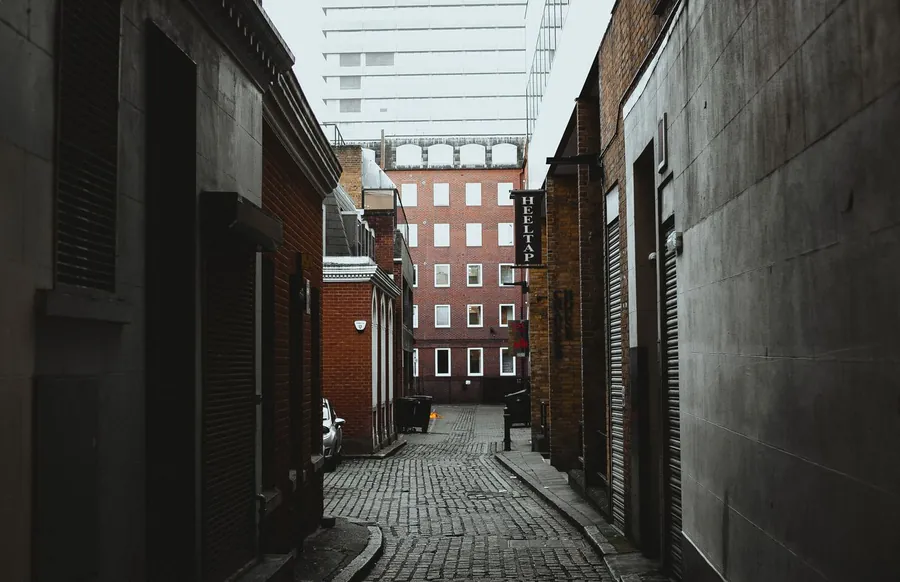
Two more constraints bite in places. Noisy work is generally held to weekday daytime hours with a short Saturday morning and nothing on Sundays, which is fine until a house sits beside a school gate or a main road where deliveries have to be timed to avoid the school run entirely, stretching a four-day job across a week. And the borough’s conservation areas, including parts of Chiswick and Old Isleworth, can require like-for-like materials rather than the cheapest equivalent, which is the difference between fibre cement and natural slate on a front slope.
Conversions add their own layer. A mansard or a flat-topped rear dormer is a different job from a plain pitched roof, with more detailing, more junctions and more that can be hiding underneath. If your house has been altered, read up on it before you invite anyone to quote. Our guide to mansard and dormer roofs around Hounslow covers what to look for.
What it comes to, and which lines you can actually move
Honest ranges for Hounslow, including scaffold, strip-out, disposal, breathable membrane, new battens, standard ridge and verge work and VAT. A two or three bedroom Victorian terrace, front and rear slopes, typically lands between £9,500 and £15,000. A 1930s semi with a hipped roof and concrete tiles usually runs £11,000 to £17,000, the hip and the extra area doing most of that. A mansard or flat-roofed conversion element is the widest band of the three at £7,000 to £16,000, because what sits under a thirty-year-old conversion is genuinely unknown until it is opened up.

Some of those lines you can move. Offering a driveway or front garden for the skip and the materials removes a suspension and a permit at a stroke. Doing both slopes in one visit rather than one now and one in three years pays for a single scaffold instead of two. Booking outside the autumn rush, when every roofer in west London is quoting storm work, buys you a better slot and a calmer price. Talking to the neighbour whose roof is the same age can occasionally split a scaffold run across two houses.
Some you cannot. The licence fee is the licence fee, the suspension is £25 a space a day whoever applies, tipping is charged by weight, and the emission zone does not care who is driving. Those are the costs of re-roofing a house in London, and the only thing that changes them is a firm pretending they do not exist. A quote that itemises the street as carefully as it itemises the roof is the one to trust, and if you want that conversation started, the contact page is the quickest route.
Frequently asked questions
Why does a new roof cost more in Hounslow than outside London?
Because the roof is only part of what you are buying. Tiles and slate are priced nationally and barely move between Hounslow and Hull. What moves is everything around the roof: permission to stand scaffold on a public footway, suspended parking bays at £25 per space per day, skip and tipping charges that run well above regional rates, a compliant van for the emission zone, and London labour rates that reflect what a roofer can earn on other work in the capital. On a typical semi those items together can account for a quarter to a third of the total.
Do I pay for the scaffold licence and the parking suspension, or does the roofer?
You pay either way, because both end up in the price. The difference is whether you can see them. A roofer applies for the highways licence and the bay suspension in their own name, since the council wants the insurance certificate and method statement from whoever is occupying the street, then recovers the fees through the quote. Ask for them as separate lines rather than folded into a single access figure. A quote that shows nothing for either on a terraced street has probably not looked at the address yet.
How much time does the council paperwork add to a Hounslow re-roof?
Plan on two to three weeks between agreeing the job and the scaffold going up. A parking bay suspension needs at least ten working days' notice, and highways licence applications are refused outright if the insurance certificate or method statement is missing, which costs another week if the firm sends it in half finished. None of this is time anyone is working on your roof, so start the paperwork the day you accept a quote, not the day the materials land.
Can I bring the price down by hiring my own skip?
Rarely, and it often backfires. Roofing waste is heavy, wet and mixed, so a skip that looks cheap online gets weighed and surcharged, and a skip on the carriageway needs its own council permit anyway. The saving people do make is the one that costs nothing: if you have a driveway or a front garden the crew can use, say so at the quote stage, because it removes the suspension and the skip permit from the job in one go.
Useful? The survey's even better
Free roof surveys across Hounslow and west London, with photographs and a fixed written quote to follow.