
2 September 2026
Parapet Gutters On Hounslow's Older Terraces: The Leak Nobody Sees From The Street
Gutters hidden behind parapets flood inwards, not over the edge. How to spot the problem in a Hounslow terrace, and what a proper repair actually costs.
Most roof leaks announce themselves logically. A tile slips, the ceiling underneath it gets wet, and the two are more or less above each other. Parapet gutter leaks do not behave like that at all. They appear in the middle of a front bedroom on a house where the roof looks perfect from the pavement, they get blamed on the windows for a couple of winters, and by the time anyone climbs up to look, the timber under the lining has been damp long enough to go soft. Hounslow has a lot of these gutters, largely in the older terraces around Brentford, Isleworth and the Chiswick edge of the borough. With Heathrow’s climate station logging a little over 600mm of rain a year, a modest 60 square metre roof pushes something like 37,000 litres through its drainage annually - and on a parapet house, every litre of it has to find one small outlet.
The gutter that runs behind the wall
On a standard interwar semi in Heston or Cranford, the roof slope stops at a fascia board and a plastic gutter hangs off it. Everything is visible, and a blockage spills harmlessly over the front garden. Older terraces built in brick with a raised front wall work the other way round. The brickwork continues up past the roof and finishes in a stone or tile coping, and the drainage sits in a trough behind it - a long, narrow channel, usually somewhere between 200mm and 300mm wide, running the length of the house and falling gently towards an outlet at one end.

The trough is lined, traditionally in lead, and the lining is the only thing between the water and your ceiling joists. There is no overflow, anywhere along it. Everything that goes wrong with these gutters follows from that, and it is why parapet work sits in a different category from the ordinary gutter and downpipe repairs we do most weeks. An eaves gutter that fails makes a mess in the front garden. A parapet gutter that fails puts water inside the house.
Why the older parts of the borough have so many
Hounslow’s building history is unusually layered for a west London borough, and the roof forms follow it. The Georgian and early Victorian streets - The Butts in Brentford, the older lanes of Old Isleworth, the grander villas around Spring Grove - were built when a flat-fronted parapet was simply what a decent house looked like. Later Victorian speculative terraces kept the detail because it was cheap to build and it hid the roof, which was considered untidy.
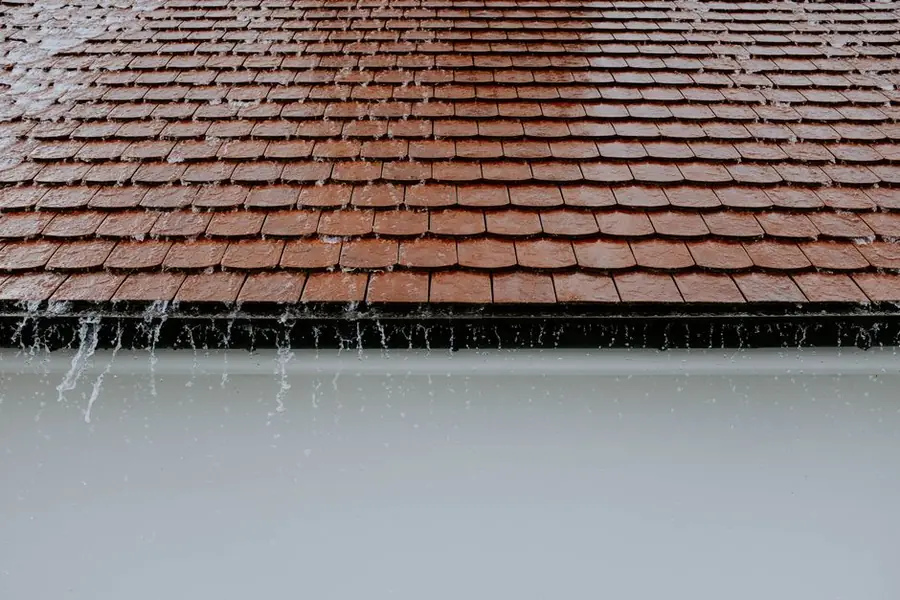
Then the borough stopped building them. Almost nothing put up in Hounslow after about 1930 has a parapet gutter, which is why so few homeowners here have ever heard of one - and why plenty of general builders working the newer estates around Feltham and Hanworth have never had to line a trough in their lives. If your house is in one of the older pockets, you are in a minority of the borough’s stock, and you need someone who has been in that minority before. Our Brentford roofing page goes into the local roof types in more detail.
Four ways a parapet gutter fails
They fail in a small number of predictable ways, and knowing them saves a lot of guesswork. The first is a blocked outlet. Leaves, moss washed down off the slope, a dead pigeon, a tennis ball - the outlet is often no wider than a fist, and it does not take much. The second is a split in the lining, usually at a joint, usually caused by thermal movement over decades rather than by anything dramatic.
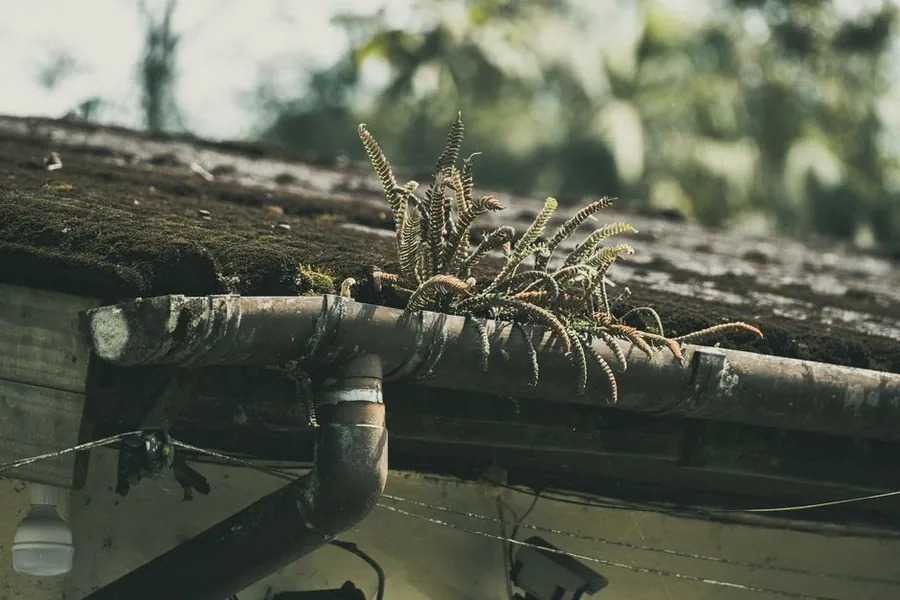
Third, and the sneakiest of the four, is a failed upstand. That is the point where the lining turns up against the wall and is tucked into a mortar joint, and when the tuck opens up, water runs behind the lining rather than over it. Nothing you can see from above looks wrong at all. The last one is standing water, caused by the falls flattening out as the roof structure settles over a century or so. Water that never drains will find a weakness eventually, and it corrodes the lining while it waits.
What it looks like from inside the house
The classic presentation is a damp patch on a front bedroom ceiling, close to the external wall but not touching it, appearing during long steady rain rather than during a downpour. That timing is diagnostic: a slipped tile leaks hardest in heavy rain, whereas a parapet gutter needs time to fill before it overtops, so it often stays dry through a summer thunderstorm and then wets through on a grey November afternoon.

Other signs worth taking seriously: a tide mark on the inside face of the front wall in the loft, salts blooming on bedroom plaster, a soft or springy patch of ceiling, and paint lifting on the top of the front elevation outside. Blown render or spalled brick below the coping stones tells you the wall is saturated, which usually means it has been for years. The point is not to panic at the first brown ring on a ceiling. It is to get someone up there while the problem is still a lining, before the boarding and bearers underneath it start to go.
What a proper repair involves
The first job is always to find out which of the four failures you have, and that means clearing the trough and looking at it dry. A roofer who quotes for a full reline before the gutter has been cleaned out has guessed, which is one of the tells in our guide to choosing a roofer in Hounslow. Once it is clean, the fix scales sensibly. A blocked outlet and a local patch to a lining might be an hour’s work. A tired but sound lead lining can sometimes be repaired at the joints and the upstands re-dressed and pointed back in.

A full reline is the bigger option, and it is where the choice of material matters. Lead is the traditional answer, lasts the longest and is expected in conservation areas. Where lead is not appropriate or affordable, a high-performance single ply or a liquid-applied system can work well, provided it is detailed properly at the upstands and the outlet rather than simply painted over the old surface. The National Federation of Roofing Contractors publishes guidance on how these details should be formed, and a roofer who can talk you through their approach at the upstand is telling you something useful about the rest of their work.
What the work costs around Hounslow
Clearing and inspecting a parapet gutter, with photographs and a written report, is typically the cheapest useful thing you can buy for this kind of roof, and on many houses it is all that is needed. Localised repairs - a patched joint, a re-dressed upstand, a rebuilt outlet - generally sit in the low to mid hundreds. A full reline is a four-figure job on most terraces, and the range is wide because the length of the run, the material chosen and the access all move the number substantially.

Two things distort quotes more than anything else. One is access, covered below. The other is what is found under the lining: if the boarding and bearers below have rotted, they have to be replaced before any new lining goes down, and no honest roofer can price that with certainty until the old lining is lifted. Good quotes handle this by pricing the known work firmly and stating a clear rate for timber replacement if it is needed. Our roof repair cost guide sets out how we itemise that kind of unknown rather than burying it.
Scaffold, access and the house next door
Parapet gutters are almost always on terraces, which makes access the awkward part. You cannot work safely off a ladder in a 250mm trough three storeys up, so scaffold is normal rather than an upsell, and on a narrow street it may need a licence from Hounslow Council if any part of it stands on the pavement. That takes time to arrange, so it belongs in the conversation early.

There is often a neighbour question too. On many terraces the trough runs continuously across the party wall, so the water in your gutter has been in theirs, and relining half of a shared run rarely makes sense. Work at or near a party wall can also bring the Party Wall etc. Act 1996 into play, and the practical version of that is straightforward: talk to next door before the scaffold arrives, not after. Shared jobs frequently come in cheaper per house anyway, because the scaffold and the setup are paid for once.
Keeping one alive between repairs
A parapet gutter that gets looked at twice a year rarely becomes an emergency. Autumn is the important visit, because most of what blocks these outlets arrives between October and December, and Hounslow has plenty of mature street trees to supply it. A spring check catches anything that has taken root over winter - moss, buddleia and grass all germinate happily in a damp trough.

Beyond clearing, three habits help. Keep the roof slope above free of heavy moss, since that is where most of the debris originates. Take a photograph of the trough each time it is cleared, so you can see the lining ageing rather than discovering it has aged. And when a leak does appear inside, resist the urge to treat the ceiling - the plaster is the symptom, and the only thing worth spending money on is the 250mm of lead or membrane that let the water in.
Frequently asked questions
How do I know if my house has a parapet gutter?
Stand across the road and look at the top of the front wall. If the brickwork carries on past the roof slope and finishes with a flat stone or tile coping, rather than an eaves gutter clipped to a fascia board, there is drainage hidden behind it. Confirm it from the loft: parapet gutters usually leave a low crawl space against the front wall, and on a wet day you can hear water running through it. If you can see a plastic gutter along the front of the house, you almost certainly do not have one.
Why does my parapet gutter leak into the bedroom rather than outside?
Because the wall is holding the water in. An ordinary eaves gutter is the lowest point of the roof, so a blockage simply spills over the front. A parapet gutter sits in a trough between the roof slope and the wall, and when the outlet blocks the trough fills like a bath. Once the water rises above the upstand of the lining it has only one direction left, which is inwards over the wall plate and down the inside face of the brickwork - typically appearing in the front bedroom ceiling.
Can a parapet gutter be replaced with a normal plastic gutter?
Almost never, and not because roofers want the bigger job. The parapet is structural and it defines the front elevation, so removing it changes the look of the house and, on a terrace, the look of every house in the row. In a conservation area that alone will stop the work. The realistic options are relining the existing trough properly and improving the outlet, or in rare cases reforming the falls so water reaches the outlet faster - both of which keep the wall exactly as it is.
Useful? The survey's even better
Free roof surveys across Hounslow and west London, with photographs and a fixed written quote to follow.