
8 September 2026
Replacement Roof Tiles In Hounslow: Why Your Repair Looks Wrong And What To Do About It
Most Hounslow roofs wear a tile that is no longer made. How roofers match replacements on interwar semis and older terraces, what reclaimed tiles cost, and when to stop patching.
Hounslow has a tile problem and most homeowners only find out about it after the first repair. The borough grew fastest between the wars, when the tube reached Hounslow West and the Great West Road opened up the land either side of it. Whole streets in Heston, Cranford, Hanworth and Feltham went up inside a few years, and nearly all of them were finished with the same thing: a machine-made clay plain tile from a works that stopped trading decades ago. The later council estates and the 1960s infill took concrete interlocking tiles instead, from ranges that have since been withdrawn. So when a roofer turns up to swap six broken tiles on a Cranford semi, the honest answer to “can you get the same ones?” is nearly always no. What separates a good repair from a bad one is what the roofer does about that.
Watch: why a patch stands out, and how a roofer should handle it.
The three ways a replacement tile can fail to match
Start with colour, because it is the one you will notice from the pavement. A clay tile fired in 1934 has spent ninety winters losing its glaze, growing lichen on its north-facing edge and picking up soot from a century of coal fires and Heathrow traffic. It is not one colour any more. A new tile in a similar shade is exactly one colour, and it will stay that way for a decade before it starts to soften. Patch a roof with six of them and you have drawn a rectangle on it.
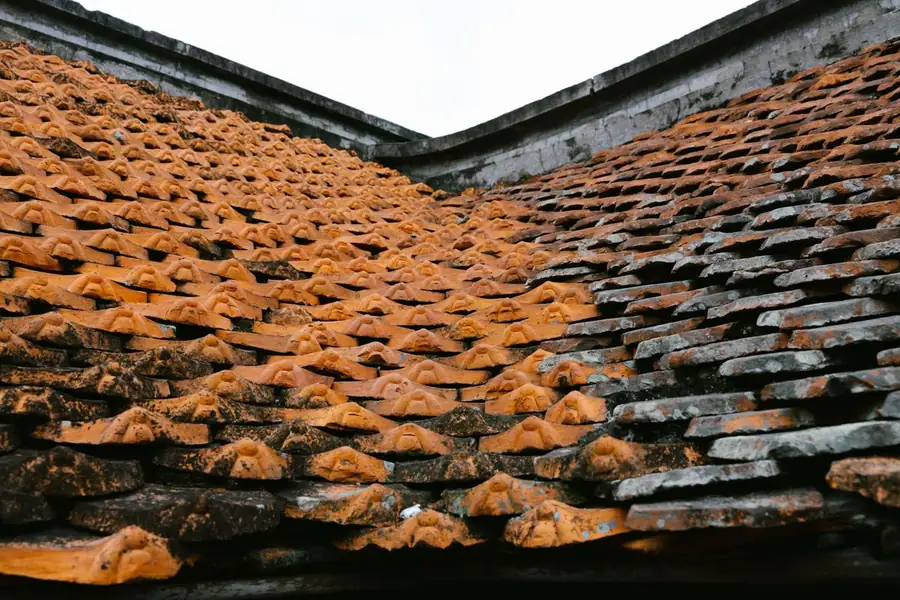
Then size. British plain tiles were made to imperial dimensions until the industry went metric, and the current standard tile at 265mm by 165mm is close to the old size but not identical, and thickness varies more than most people expect. A new tile among old ones either sits slightly proud or leaves a sliver of daylight at the side lap, and both are visible in low sun. Third is profile, which only bites on interlocking roofs: the shape of the roll along the edge of the tile has to marry exactly with its neighbour, and when a manufacturer discontinues a range, the replacement is rarely a drop-in. We see every one of these on the roof leak repairs we attend, because a badly matched patch that lets water past the side lap is a leak waiting for the next storm.
Which tile is on your house
You can work most of this out from the street. If the tiles are small, roughly the size of a paperback, laid in a dense pattern with a lot of overlap and a slightly uneven surface, they are plain tiles, and on an interwar house in Hounslow they are almost certainly clay. If they are much bigger, with a pronounced roll or a flat face and a visible step where each row overlaps the next, they are interlocking, and on anything built after about 1950 they are almost certainly concrete. Slate is the third possibility, thin and flat and blue-grey, on the Victorian streets around Hounslow town centre, Brentford and Isleworth.
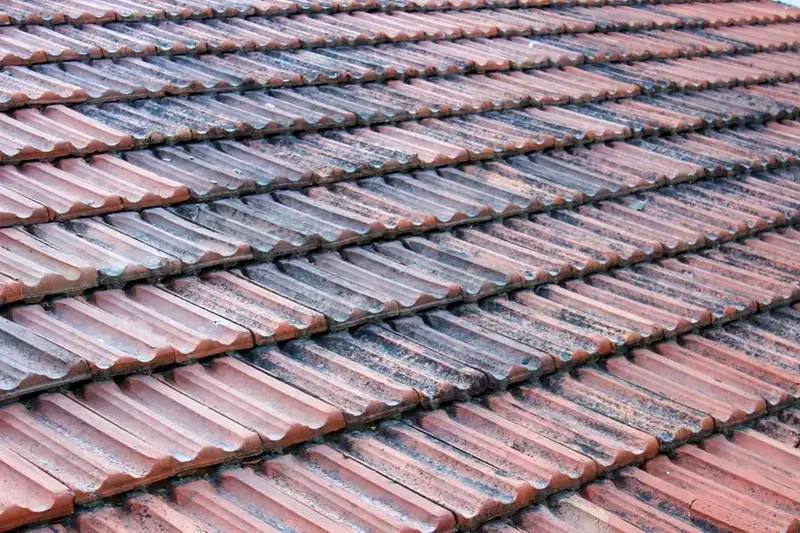
Concrete tiles have a specific ageing pattern worth knowing about. The coloured face is a thin layer applied over a grey body, and after fifty or sixty years of frost it erodes, leaving a pale roof with a faint tint where the colour used to be. New concrete tiles in the “same” colour will be dramatically darker. Clay, by contrast, is coloured through, which is why a reclaimed clay tile from another roof can pass for the original and a reclaimed concrete one often cannot.
Why the interwar estates are the hardest to match
There is a reason Hounslow suffers more from this than a town with a mixed housing stock. The borough’s growth happened in a short burst, so an unusually high share of its houses have roofs of the same age, laid with tiles that all ran out of production together. A roofer in a Victorian town can find slate anywhere. A roofer in Heston is looking for a specific 1930s clay tile that has not been made since before the war, on a street where every house needs the same one.
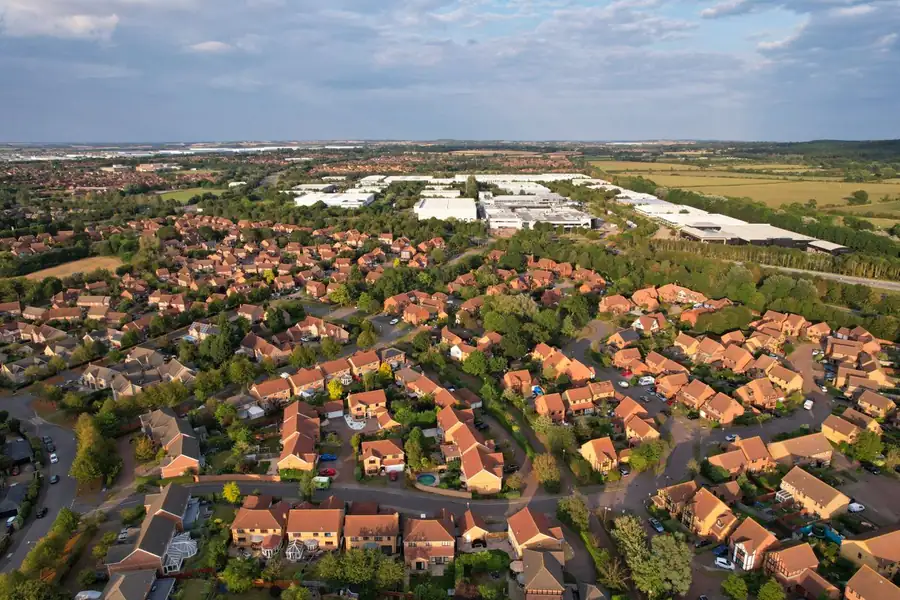
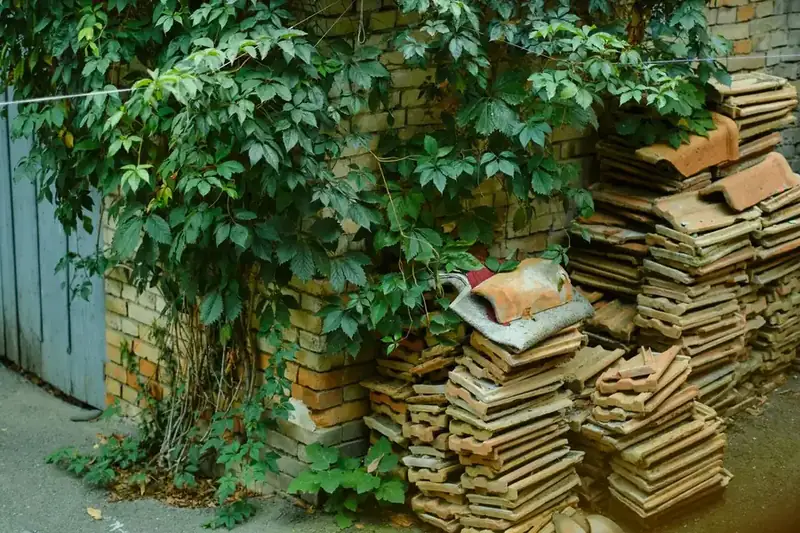
The good news is that the very uniformity that makes new tiles hard to match makes reclaimed ones easy. Every house pulled down in west London over the last thirty years shed thousands of the same tile, whether it went for a road scheme, for redevelopment along the Great West Road or for an estate regeneration, and a fair proportion of them ended up in salvage yards. Based on the tile repairs Watertight has priced across the borough, well over half involve a tile that is out of production, and in most of those a reclaimed match was found. Our Feltham roofing page covers the local estates in more detail.
The honest options, from cheapest to dearest
The first option is the one most roofers reach for, and it works far better than it sounds: rob the back. Take sound original tiles from the rear slope, where nobody can see them, and use those for the repair on the front. Fit new tiles at the back in their place. The visible roof stays entirely original, the new tiles are hidden behind the ridge, and the only cost is a little extra labour. It is limited by how many tiles the back can spare, but for a repair of a dozen or two it is nearly always the right answer.

The second option is reclaimed tiles bought in. A yard will sell a sound plain tile for a modest sum each, and the roofer’s job is checking them: tapping each one to hear the clean ring of an unfrosted tile, rejecting anything with a dull note or a spalled face. Reclaimed concrete is a poorer bet because of the colour problem above. The third option is new tiles in the closest available shade, accepted as a visible repair. Fine on a rear slope or a garage. Harder to live with on the front. The fourth is re-covering the whole slope, which is a different conversation and a much bigger bill, and we look at when it is justified below.
How much of a patched roof is too much
There is no magic percentage, whatever a salesman on the doorstep says. The question is what is under the tiles. A roof that has lost a few tiles to wind or to a passing aircraft has a tile problem, and tile problems are patched. Our guide to Heathrow wake vortex damage explains why the aircraft part happens more here than anywhere else in the country. A roof where tiles keep slipping because the nibs have worn or the battens have rotted has a structure problem, and every patch on it is borrowed time.
The tell is the pattern of failures. One repair every few years in different places is normal wear on a ninety-year-old roof. Three repairs in two winters, spread across the same slope, means the fixings or the battens have reached the end, and the money you are spending on matching tiles would be better spent on new battens with the same tiles put back on top. Interwar roofs in Hounslow were laid without an underlay, so once the battens go there is nothing else holding the weather out. A proper survey from inside the loft settles it in ten minutes, which is why our surveys start there rather than on the ladder.
Re-covering a slope: what changes when the tiles come off
Once you strip a slope, you are no longer repairing a roof; you are building one, and the rules change with it. The Approved Document L building regulations guidance treats a roof as a thermal element, and re-covering a large proportion of it can require the insulation beneath to be brought up to the current standard where that is practical. On an interwar semi with a bare loft that is usually a straightforward job of topping up the insulation, but it needs to be in the quote, not discovered afterwards.
A strip also gives you a choice you did not have before. You can put the original tiles back on new battens and a breathable underlay, keeping the look and gaining a modern roof underneath - the best outcome for a plain-tiled house, and the one we recommend where enough tiles survive. Or you can go to a new tile across the whole slope, in which case matching stops mattering because there is nothing left to match. What you should not do is mix the two on one slope. A roofer who proposes to re-cover the top half in new tiles and leave the bottom half original is proposing a roof with a line across it, and a joint that will need attention for the rest of its life.
Planning, conservation areas and the paperwork
For the great majority of Hounslow homes none of this touches planning. The Planning Portal’s guidance on roof work is clear that repairs and re-covering in similar materials fall under permitted development. The exceptions are the borough’s conservation areas (The Butts in Brentford, Old Isleworth and Spring Grove among them), where a change of material can need an application, and listed buildings, where it certainly will. Hounslow Council handles both, and a phone call to its conservation team before ordering tiles is cheaper than an enforcement letter afterwards.
There is also the matter of who does the work. Tile matching is a judgment job. The roofers who do it well tend to belong to a trade body that checks their work. The National Federation of Roofing Contractors vets its members’ competence and insurance, which is a reasonable minimum to ask for. Beyond that, ask the simple question: where will the tiles come from? A roofer who can name the yard, or who explains the back-slope method without prompting, has done this before. One who says “we’ll get some from the merchant” on a 1930s plain-tiled roof has not.
Frequently asked questions
Can you still buy the tiles that are on my 1930s house in Hounslow?
Usually not from a factory, but very often from a yard. The machine-made clay plain tiles fitted across Heston, Cranford and Hanworth between the wars were produced by works that have long since closed, and the same goes for most of the concrete interlocking tiles laid on the postwar estates. Reclamation yards across the Home Counties hold stock stripped from demolished houses of the same era, and for a plain-tiled roof a sound reclaimed tile is a better match than anything new because it has already weathered. The profile, the size and the colour all have to be checked before anything is ordered.
Why do new tiles look so different from the rest of the roof?
Three reasons, and they stack. New tiles are one flat colour, while a tile that has sat on a roof since the 1930s has faded, darkened and grown lichen in an irregular pattern that no factory finish reproduces. New tiles are also slightly different in size and thickness, because the standards changed when the industry went metric, so a new tile among old ones sits proud or leaves a visible gap. And on interlocking roofs the actual profile - the shape of the roll - has changed as ranges were discontinued and replaced. A close match on one of those three counts is easy. A match on all three is the skill.
Is it worth re-tiling just the front slope of my house?
Sometimes. If the front slope has had repeated repairs, the battens are known to be tired and the rear slope is in noticeably better condition, re-covering the front alone is a legitimate way to spend the money where it is needed. The catch is that any new covering will never match the surviving old one, so the two slopes will look different from the ridge line down. On a semi in Hounslow that is rarely a problem, because you cannot see both slopes at once from the street. On a detached house with a visible side elevation it can look odd, and it is worth walking round the property before deciding.
Does replacing roof tiles in Hounslow need planning permission?
Like-for-like repairs do not. Swapping a handful of broken tiles for matching ones, or re-covering a roof in the same material and colour, falls outside planning in almost every case. It changes if the house is in one of Hounslow's conservation areas and you want to move to a different material - concrete instead of clay, say - or if it is listed, in which case even a repair may need consent. Hounslow Council is the planning authority, and its conservation officers will confirm what applies to a specific street. Separately, re-covering a large proportion of the roof can bring building regulations into play regardless of where the house is.
Useful? The survey's even better
Free roof surveys across Hounslow and west London, with photographs and a fixed written quote to follow.