
8 September 2026
What A Heathrow Heatwave Does To A Hounslow Roof
Heathrow logged the UK's first 40°C. Nobody checks their roof after a heatwave, but heat splits lead, blisters felt and cracks mortar. What to look for in Hounslow this autumn.
Every roofing guide written for British homeowners is about winter. Wind, rain, frost, moss, the lot. That made sense when the country’s hottest day was a pleasant 33 and a heatwave meant a week of sunburn. It makes less sense in Hounslow, where the weather station at the end of the road has spent the last decade rewriting the record books. Heathrow recorded 37.8°C in July 2020, 36.7°C in July 2015 and, on 19 July 2022, a reading of 40.2°C that made it the first station in the country to pass 40. We spent that autumn and the following spring repairing damage that had nothing to do with rain, on roofs whose owners had no idea the summer had touched them. This is what heat does to a roof, and what to look for before the clocks go back.
What forty degrees means on the tiles
Air temperature is not roof temperature. A dark tile in full sun has no shade, no airflow beneath it and nothing to shed the energy it absorbs, so on a 40°C afternoon the surface of a Hounslow roof can climb well past 60°C. The Met Office’s own report on the July 2022 heatwave lists Heathrow and St James’s Park jointly at 40.2°C, and records a new UK overnight minimum of 25.8°C at Kenley, in south London, the same night. That overnight figure is the one that matters for roofs. A material that gets hot and then cools right down has a chance to recover; one that stays warm all night simply keeps stretching.
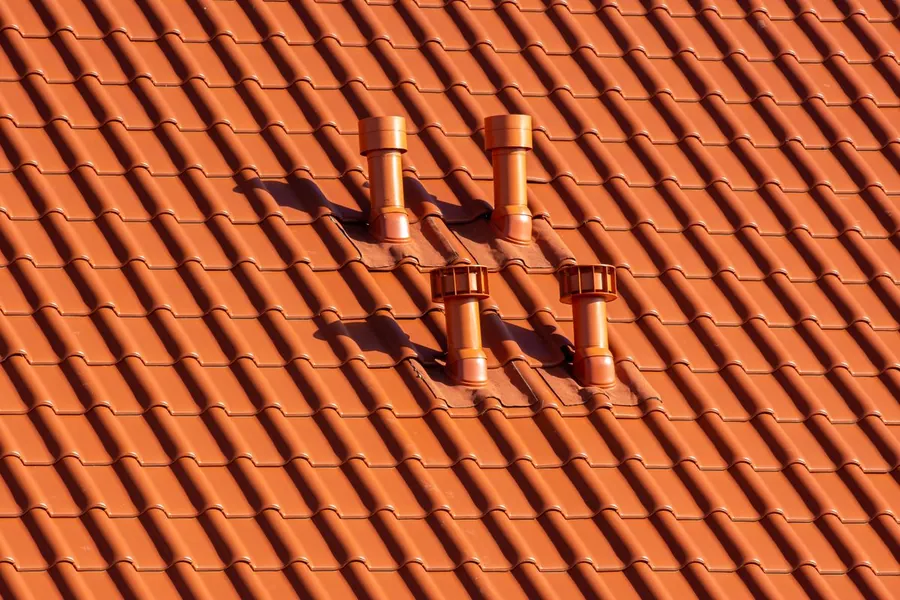
Clay and concrete tiles themselves are fine with heat; they were fired at temperatures that make a heatwave look like a cool morning. What suffers is everything holding them in place and sealing the joins between them. The problems below are all about the seams of a roof, not the covering, and on the flat roof repairs we do across the borough the same rule holds: the field of the roof survives, the edges and upstands do not.
Lead: the material that never stops moving
Lead is the best flashing material ever used on a British roof and it has one flaw, which is that it moves more than the brick and tile around it. The Lead Sheet Training Academy publishes maximum lengths for every lead detail precisely because a long piece expands so much in heat that it cannot shrink back evenly; it creeps downhill a fraction each cycle, thins at the top and eventually splits. A one-and-a-half metre length of flashing swinging between a January frost and a July roof surface grows and shrinks by a couple of millimetres every year, and it does that for decades.
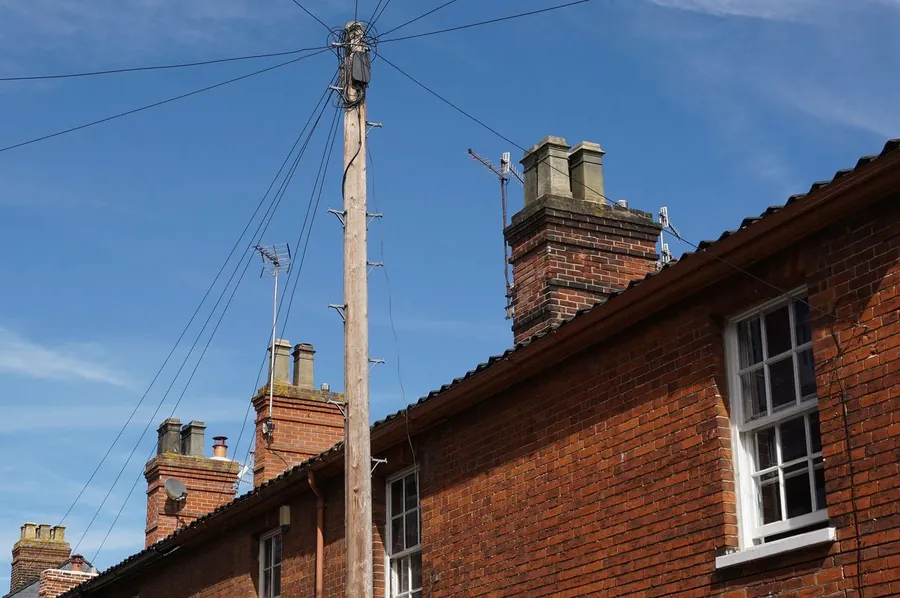
In a normal summer that is survivable. In a summer with a 40°C day and a fortnight of nights above 20, the cycle is far wider than the lead was sized for, and the details most at risk are the long ones: the back gutters behind chimneys on Hounslow’s interwar semis, the step flashings running down the party wall of a terrace, and the linings of the hidden gutters we described in our post on parapet gutters on the borough’s older terraces. A split in any of them is invisible from the ground and leaks only when it rains hard, which it will.
Flat roofs: felt, bitumen and the blister problem
Bitumen felt was designed for a climate that no longer quite exists. It softens noticeably in the mid-thirties and on a 60°C deck it becomes almost plastic, which is when two things happen. Any moisture trapped beneath the surface layer, whether from a lap that was never fully bonded or from a leak that has been sitting there quietly, turns to vapour and lifts the felt into a blister. And the bitumen at the laps and upstands flows very slightly under its own weight, so the sealed edges that keep water out of a rear extension open by a hair.

Hounslow has a great many flat roofs for a borough its size, because the interwar semis lend themselves to single-storey rear extensions and the kitchen-extension boom of the last twenty years covered thousands of gardens in felt. Most were laid by general builders rather than roofers, on decks without much fall, in a colour that absorbs every watt of sun. Mineral felt does better than plain, and light-coloured or reflective coatings measurably lower the surface temperature, but the material that shrugs off heat is EPDM rubber, which stays flexible from minus forty to well above anything Heathrow will manage. If a felt roof has blistered twice, replacing it in EPDM beats patching it a third time.
Ridge mortar, hip mortar and the ground beneath
Mortar hates drying out fast. The cement bedding under ridge tiles, and along the hips on the hipped roofs that most of the borough’s semis have, was mixed with a certain amount of water and cured slowly. Bake it and it shrinks, cracks along its length, and lets the ridge tiles rock. That is a winter leak in the making, and it is the single most common thing we find on a post-heatwave survey. Dry-fix ridge systems, which hold the tiles mechanically without mortar, exist largely because of this, and we recommend them on any ridge we rebed.

The ground has a part to play too. Much of Hounslow sits on gravel terraces, which are stable, but the clay that lies beneath and surfaces in parts of the north of the borough shrinks when it dries. A very dry summer lets the soil pull away from foundations, and the first place a house shows it is often at the top: a chimney stack that has moved a fraction, a crack opening in the render at the verge, or a ridge line that is no longer quite straight. If a stack looks different from the road than it did in spring, get it looked at before the winter winds test it.
Plastic roofline: fascias, soffits and gutters
Timber fascias barely react to heat. The uPVC that replaced them on most of the borough’s houses in the 1990s and 2000s reacts a great deal, because plastic has a thermal expansion rate several times that of wood. A long run of white fascia along the front of a semi gains a few millimetres on a hot day, pushes against its joints, and over enough summers works its fixings loose. Dark-coloured plastic - the popular anthracite grey - runs hotter and moves more, and we see more distortion on grey roofline than on white for that reason alone.
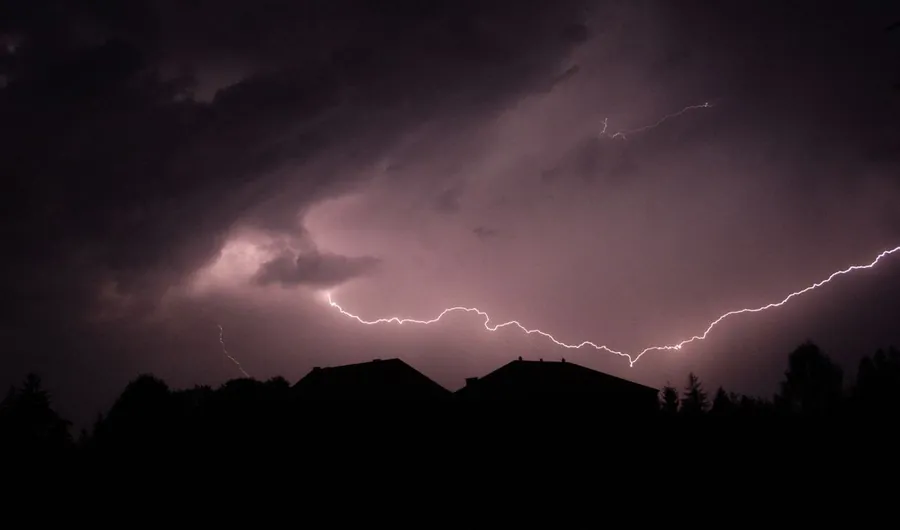
Gutters suffer in the same way. A plastic gutter that has crept in its brackets during a heatwave no longer falls evenly towards the outlet, and its joints, which rely on rubber seals under compression, may have lost their grip. Then comes the storm. British heatwaves tend to end in convective downpours. The July 2021 flash floods across west London are the local example everyone remembers. A gutter that has spent a fortnight distorting is then asked to carry more water in an hour than it saw all June. The overflow lands on the fascia, the wall and, if the gutter has pulled clear of the tiles, straight down the cavity.
What the loft is doing while you sleep
The one place a heatwave is visible from inside the house is the loft, and it is worth going up with a torch on the first cool evening. A poorly ventilated roof space can run 15°C or more above outside temperature by mid-afternoon and hold it long into the night, which is why upstairs bedrooms in Hounslow semis are unbearable in a heatwave. That trapped heat cooks the roof from underneath as well as above. Bitumen-backed sarking felt, where it exists, goes brittle and tears at the laps; older roofs without any underlay simply bake their battens.
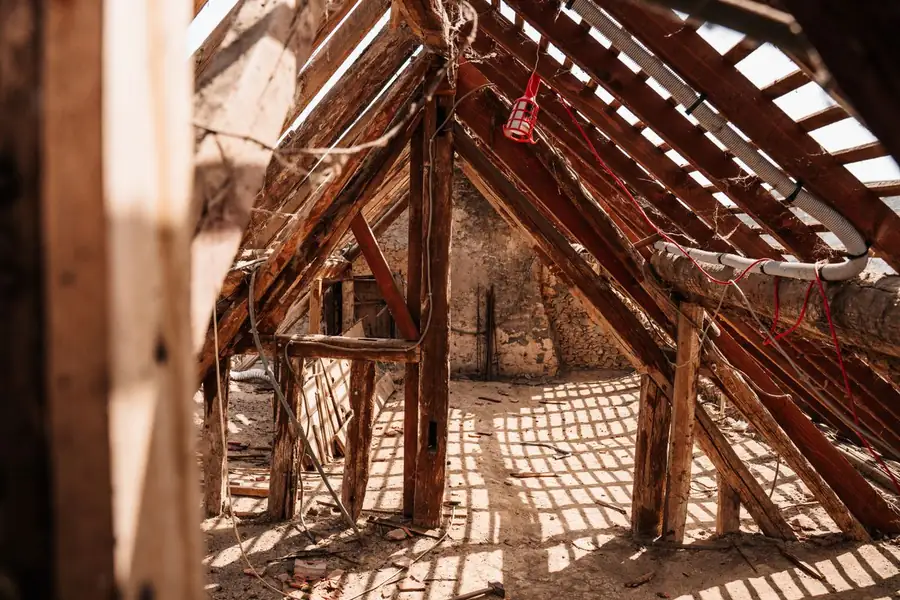
The fix is ventilation, and it is the same fix that solves the winter condensation problem at the other end of the year. Eaves vents and a ridge or tile vent let air move through the roof space, taking heat out in summer and moisture out in winter. Loft insulation, sold as a way of keeping warmth in, also keeps summer heat out of the rooms below - though it needs a clear gap at the eaves so it does not block the airflow it depends on. The Met Office’s explanation of heatwave thresholds sets the bar by region, with London’s the highest in the country, and even that bar is cleared most summers now. A couple of eaves vents and a tile vent cost less than one wet-ceiling callout.
The September check
None of the damage above shows up in August. It shows up in October, when a storm rolls up the Thames valley and finds every gap the summer opened, and it gets blamed on the wind. The sensible time to look is now, in the gap between the heat and the rain. From the ground: is the ridge line straight, are the chimney stacks where they were, has any fascia bowed or any gutter dropped at a joint? From the loft: any daylight at the ridge, any tears in the underlay, any sign the battens have cupped? On a flat roof: blisters, open laps, and pooling that was not there in spring.
Based on the surveys Watertight has carried out in the months after the borough’s hottest summers, cracked ridge and hip mortar turns up on a majority of the pitched roofs we look at, and most owners had no idea until we showed them the photographs. Our surveys are free, they take under an hour and they come with pictures of anything we find. If your roof went through a heatwave this summer, a look before the autumn rain is the cheapest thing you will do all year.
Frequently asked questions
Can hot weather actually damage a roof?
Yes, though it works slowly and rarely announces itself. Heat does not blow tiles off or pour water through a ceiling. It moves things: lead flashings stretch and creep, bitumen softens and blisters, ridge mortar dries out and cracks, plastic gutters and fascias lengthen and pull at their fixings. None of that leaks on the hot day itself. It leaks when the first autumn storm finds the gap the summer opened, which is why heat damage is so consistently blamed on the wrong weather.
Why is Hounslow hotter than the rest of the country?
Two things overlap here. Heathrow's weather station sits on the western edge of the borough, and it is one of the warmest and driest recording sites in Britain - it registered 40.2°C on 19 July 2022, the first time any UK station passed 40°C, and it appears again and again in the Met Office's tables of the country's hottest days. On top of that, Hounslow is on the edge of London's urban heat island, so summer nights here stay several degrees warmer than in the countryside beyond Slough, and roofs never get the overnight cooling that would let materials relax.
Should I get my roof checked after a heatwave?
Not necessarily after every warm week, but yes after a genuinely extreme summer, and ideally before the autumn rain rather than after it. The check is quick - lead flashings at chimneys and abutments, the ridge and hip mortar, the surface of any flat roof, and the gutters and fascias for movement - and it costs nothing with a firm that offers free surveys. Catching a split flashing in September is a small repair. Finding it in November via a bedroom ceiling is not.
Useful? The survey's even better
Free roof surveys across Hounslow and west London, with photographs and a fixed written quote to follow.