
4 October 2026
Flat Roofs On Hounslow Extensions And Garages: Patch, Overlay Or Rebuild?
Felt, EPDM or GRP on a Hounslow kitchen extension or garage? Ponding, the wall joint, Part L when you re-cover, and what each option costs.
Walk down the garden of an ordinary semi in Heston, Cranford or Hanworth and turn round. The chances are good that what you are looking at is not the house the builder put up in the 1930s but a single-storey box bolted to the back of it - a kitchen extension, a widened dining room, a utility knocked through from an old lean-to - with a flat roof sitting just under the first-floor windows. Further down, past the lawn, there is often a second one: a brick or concrete garage with a felt roof of its own. Between them, these two roofs generate a good share of the leak calls we take across the borough, and almost all of them come down to the same four questions: what it is covered in, whether water can get off it, how it is joined to the house, and whether it is worth saving.
The flat roof behind almost every Hounslow semi
Interwar estates were built with long, narrow back gardens and a kitchen squeezed into the rear corner of the house. That layout practically begs for a single-storey rear extension, and over the last forty years Hounslow homeowners have obliged in their thousands. Plenty went up quickly, built by general builders to a tight budget, and the roof came last: three layers of felt on chipboard, a strip of lead pushed into the wall, done by teatime.
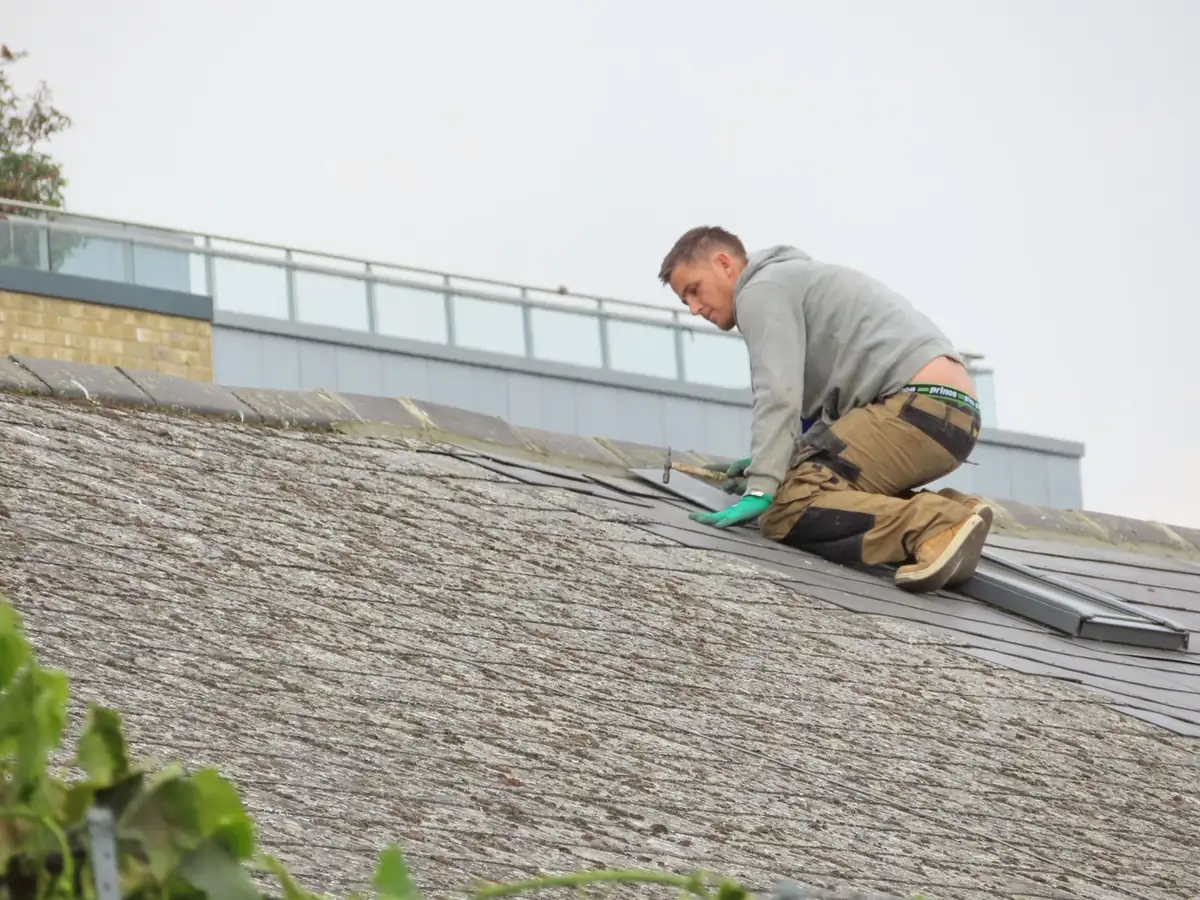
That is not a criticism of the people who paid for them. It is just the reason so many of these roofs reach the end of their life at roughly the same moment, which is now. A rear extension put up in 1995 with standard felt has done well to see thirty winters. If yours is that age and you have never had it looked at, treat our flat roof repair service page as background reading and book a look before the wet season rather than during it.
Felt, EPDM or GRP for a kitchen extension
Three materials cover nearly every domestic flat roof you will be quoted for in Hounslow. Modern felt is not the stuff on your neighbour’s shed. Torch-on and cold-applied reinforced bitumen membranes are laid in two or three layers, finished with a mineral cap sheet, and handle foot traffic for maintenance better than either alternative. They suit awkward roofs with lots of pipes and upstands because they can be patched by any competent roofer.
EPDM is a single sheet of synthetic rubber, bonded to the deck, with no seams across the middle of a typical extension. It copes with temperature swings without cracking, which matters in a borough that recorded 40.2°C at Heathrow in July 2022, and it goes down without a naked flame - a real point in its favour when the roof sits directly under a bedroom window and next to a uPVC fascia. GRP is a fibreglass laminate built up on site over an OSB deck. It gives the neatest edge detailing and the hardest surface, which is why people choose it for a roof they plan to step onto, but it cures poorly in cold or damp weather and it will show every movement crack if the deck beneath it flexes.
None of them wins outright. On a busy roof with a soil stack, an extractor and a rooflight, felt or GRP is often easier to detail; on a plain rectangle over a kitchen, EPDM is hard to beat for the money.
Ponding: why water sits on your extension roof
A flat roof is not supposed to be flat. It should fall towards a gutter or an outlet, and the usual design target is about 1 in 40, steep enough that the finished surface still drains after the joists settle and the deck moves a little. When the fall was skimped at the start or the timbers have sagged in the middle, rain gathers in a shallow pool and stays there.

The rule of thumb roofers use is forty-eight hours: if there is still water up there two dry days after rain, the roof is holding it. Standing water is heavy - a pool 2 metres across and 25mm deep weighs close to 80kg - and it bakes, freezes and grows algae in the same spot until the surface fails. It also turns a hairline crack that would have let in a cupful into one that leaks for days. You cannot fix ponding with a coat of paint. The cure is new firrings or tapered insulation to rebuild the fall, which is one of the strongest arguments for stripping a tired roof rather than covering it over.
Where the extension meets the house
Ask us where an extension roof leaks and, as often as not, the answer is “not on the roof”. It is at the abutment, the line where the flat roof turns up against the back wall of the original house. The covering should rise at least 150mm up the brickwork, and a separate lead or proprietary cover flashing should be tucked into a mortar joint above it and dressed down over the top, so that the two pieces can move independently.
They need to move, because the extension and the house are different buildings sitting on different foundations. The house has had ninety years to settle; the extension has had twenty or thirty, and it shifts a little with every dry summer and wet winter. Felt run straight up the wall and stuck on with mastic splits along that line sooner or later. There is a second culprit as well. Many 1930s houses were built with cavity walls, and rain driven into the outer leaf above the extension can run down the cavity and come out on the kitchen ceiling unless a cavity tray was built in when the extension went on. Strip the roof, re-cover it beautifully, and it will still drip if the water is arriving through the wall. A good roofer checks for this before blaming the membrane.
Patch it, overlay it or strip it to the joists
You have three realistic routes, and the right one depends on what is under the surface rather than what is on it. A patch is right when the covering is mostly sound and there is one fault you can put your finger on: a split lap, a blister, a torn corner where someone dragged a ladder. If the rest of the roof is crazed like an old teapot, patching just delays the bill.
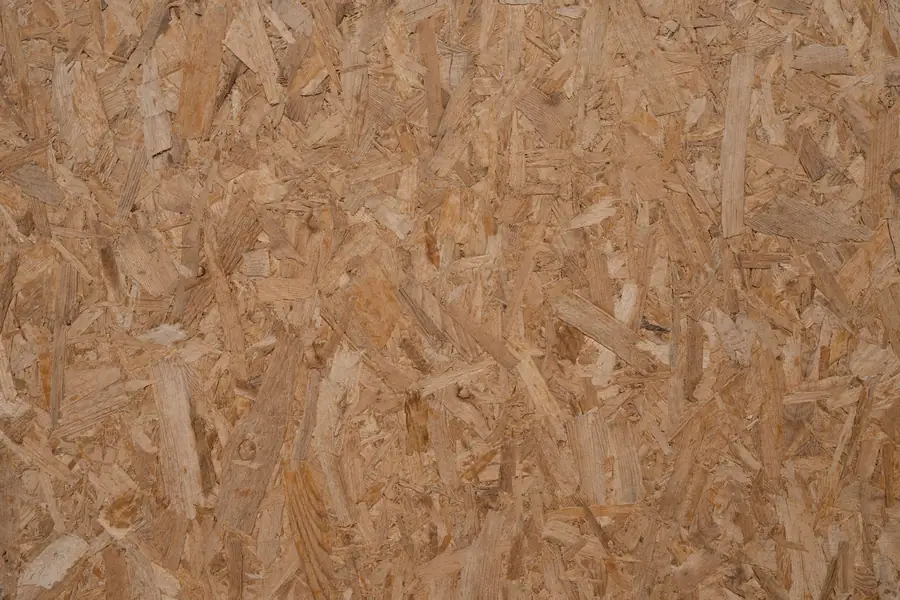
An overlay means laying a new covering on top of the old one. It saves the cost and mess of stripping, and on the right roof it is perfectly respectable. The right roof has a dry, firm deck, has never been overlaid before, and has enough height at the wall that the new layer will not swallow the flashing or sit above the house’s damp-proof course. Many extension roofs in Hounslow flunk the deck test. Chipboard that has been wet even once swells, softens and never recovers, and a new membrane laid over it simply traces the dips.
Strip-and-replace takes everything back to the joists, replaces the deck, rebuilds the falls and starts again. It costs the most, and it is the only route that lets you deal with ponding, rotten timber and insulation at the same time. If your roof has had two patches in five years, assume you are here.
Part L, warm roofs and Hounslow building control
Most quotes skip this bit entirely. Under Approved Document L of the Building Regulations, replacing the waterproof membrane on a flat roof counts as renovating it. Once more than half of the roof over a heated room is renovated, the whole roof should be brought up towards an improved U-value of 0.16 W/m²K - unless that is not technically feasible or would not pay for itself within 15 years, in which case you go as far as is sensible. A brand-new extension roof is held to 0.15.
In practice that usually means a warm roof: rigid insulation boards laid on top of the deck, a vapour control layer beneath them and the waterproof covering above, so the timber stays on the warm side and condensation has nowhere to form. It also lifts the roof by 100mm to 150mm, which is fine on most rear extensions and awkward where the roof already sits tight under a window sill. That height question is worth raising at the quote stage, not on the morning the boards arrive. Old cold-roof extensions, with insulation stuffed between the joists and no ventilation, are notorious for rotting their own decks from the inside - so the upgrade often cures a fault nobody had spotted yet.
The work can be notified to London Borough of Hounslow building control, or self-certified by a roofer registered with one of the government-authorised competent person schemes. Either way you should end up with a certificate, and you will want it when you sell. The council will also run a property history search if you want to know whether your extension was signed off when it was built. Detached garages are mostly the exception: a roof over an unheated garage is not separating warm space from cold, so the insulation requirement does not bite and a straight re-cover is normally fine. If the garage has been turned into a gym or an office with a heater in it, that changes.
What flat roof work costs in Hounslow
Our own figures for the borough, which match the roof repair cost guide, put a genuine patch repair at £220 to £700 and a straight re-cover of a garage or extension roof at £1,700 to £4,800. The single garage in felt sits at the bottom of that band; a 20 square metre kitchen extension in EPDM with a new deck and fresh edge trims sits near the top.

A warm-roof rebuild typically adds somewhere in the region of £1,000 to £2,000 on a roof that size, for the insulation, the vapour control layer, taller upstands and new trims to suit the extra depth. Things that push the price around: access through a terraced house with no side passage, a rooflight or lantern to work round, rotten joists discovered once the deck is up, and whether the abutment needs a new cavity tray. A fair quote prices the known work firmly and gives you a rate for timber in case it is needed. If you are weighing up a roof that has already been through a heatwave or two, our earlier piece on what Heathrow’s summers do to roofs is worth reading alongside this one, and if the flat roof is on top of a loft conversion rather than at ground level, the mansard and dormer guide covers the differences.
Frequently asked questions
How long should a flat roof on a Hounslow extension last?
It depends far more on the build-up than the brochure. Traditional built-up felt laid on a chipboard deck with barely any fall often gave up within 15 years. A modern torch-on system, EPDM rubber or GRP fibreglass on a decent deck with a proper fall can reasonably be expected to manage 25 years or more. If your extension roof is from the 1990s or early 2000s and still on its original felt, it is living on borrowed time whatever it looks like from the bedroom window.
Can new felt be laid over my old flat roof?
Sometimes. An overlay only works if the deck underneath is dry and solid, there is no trapped water in the old layers, the roof has not already been overlaid once, and the extra height will not bury the flashing or the damp course on the house wall. Most extension roofs in Hounslow that reach us fail at least one of those tests, usually the deck. A roofer should cut a small test hole or core before recommending it, not after.
Do I need building regulations approval to replace my extension's flat roof in Hounslow?
If you are replacing more than half of the covering on a roof over a heated room, yes in principle - Approved Document L counts replacing a flat roof's waterproof membrane as renovating it, and the roof should then be insulated up towards the current standard where that is technically feasible and pays back within 15 years. The work can be notified to London Borough of Hounslow building control, or self-certified by a roofer registered with a government-authorised competent person scheme. An unheated detached garage is generally outside the insulation requirement.
Why is there always a puddle on my extension roof?
Because the roof was built too flat, or it has sagged since. Flat roofs are meant to be laid to a fall so that water runs to the gutter or outlet, and a design fall of around 1 in 40 is the usual target so that the finished roof still drains after the timbers settle. Water still standing two days after rain means the fall has gone. It adds weight, wears the surface faster and makes any small split leak for much longer, so it is worth fixing when the roof is next re-covered.
Useful? The survey's even better
Free roof surveys across Hounslow and west London, with photographs and a fixed written quote to follow.