
18 October 2026
Lead Flashing Repairs In Hounslow: Chimneys, Abutments, Valleys And The Price Of Each
Lead flashing repairs in Hounslow: why chimney, abutment and valley lead fails on local semis and terraces, what a lasting repair needs, theft risk and prices by job.
Most roof leaks in Hounslow aren’t caused by tiles. They start where the roof meets something else: a chimney, the wall of a back extension, a dormer cheek, or the dip where two slopes join. Lead seals those joints, so lead flashing repairs in Hounslow make up a steady share of our work. The trouble is that lead doesn’t fail where people look for it. A chimney flashing from the 1930s can look fine from the pavement and still let water in through a split along a fold. On the repairs we price, a leak traced to lead usually comes to between £150 and £700 to put right, and most fall at the lower end if they’re caught early. This post covers where the lead sits on the semis and terraces around Hounslow, the four ways it gives up, what the Lead Sheet Training Academy treats as a proper job, the theft question, and what each repair costs.
Lead flashing repairs in Hounslow start with knowing where the lead is
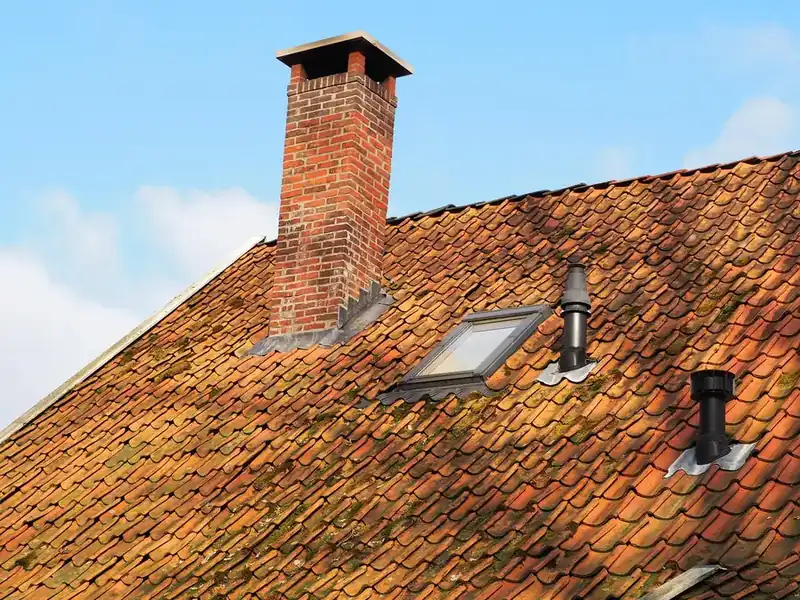
The lead on a typical Hounslow roof is made up of separate pieces, each doing a different job. Around a chimney you will find an apron across the front, stepped pieces running up each side, small soakers tucked under the tiles, and a back gutter on the uphill side. Where a pitched roof meets a wall, which on most houses here means the back extension against the main house, there is a long abutment flashing. Valleys run down the inside corner where two slopes meet. Bay windows often have a lead-covered top. Dormers have lead along their cheeks and across the apron at the bottom.
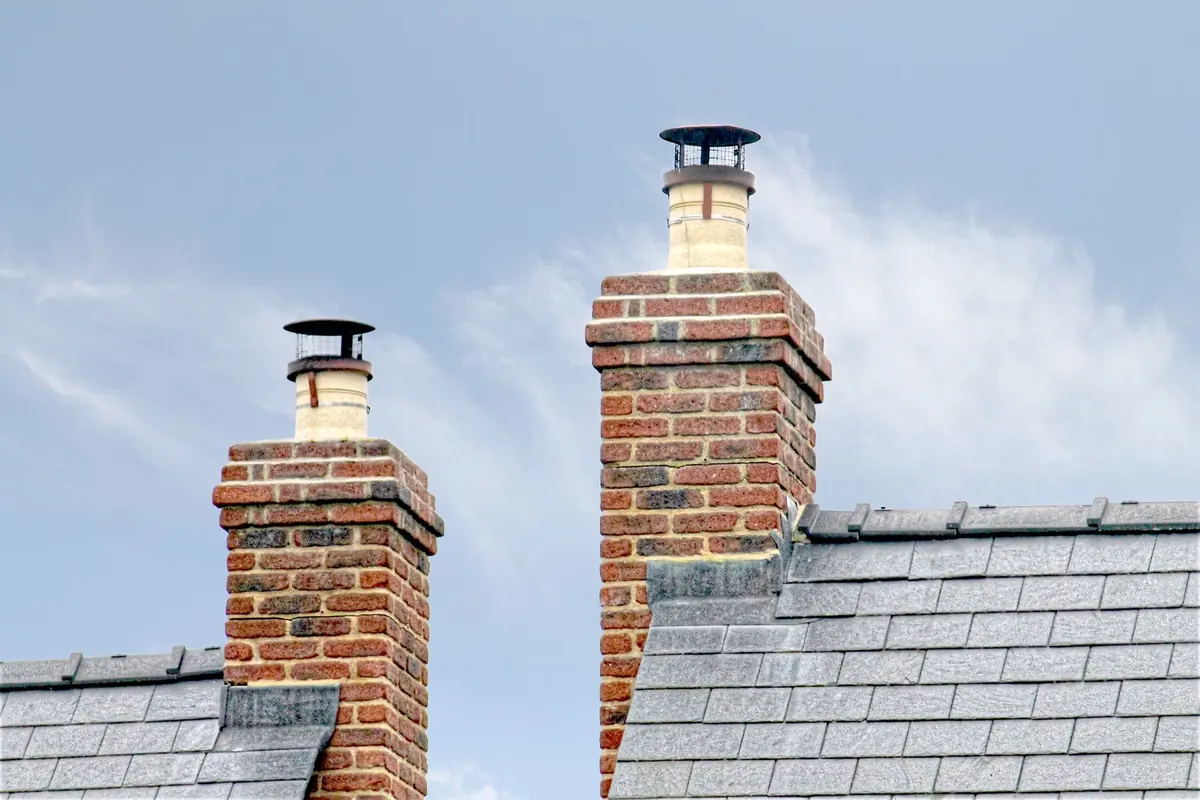
Each piece fails at its own rate. That’s why one damp patch doesn’t mean a whole roof’s worth of lead needs replacing. When we look at a leak for our chimney repairs or general leak-tracing work, the first job is to find which piece has failed and why. A replacement that copies the original fault will fail again just as quickly.
Four ways lead flashing fails
Lead is a soft metal that moves a lot with temperature, and a well-made flashing is designed to let it. Nearly every failure we see on roofs across the borough comes back to one of four mistakes, made either when the house was built or during a cheap repair later on.
Thermal movement with nowhere to go
Lead expands by roughly 3mm across a 1.5 metre length between a frosty night and a summer afternoon on a south-facing slope. Heathrow logged 40.2°C in July 2022, and roof surfaces get far hotter than the air. If a flashing is nailed solid at both ends, or fixed along its length with a bead of sealant, it can’t slide, so it ripples and then cracks along the fold. Those hairline splits are the 1930s chimney leaks that nobody spots from the ground.
The wrong code
Lead sheet is sold by “code”, which is roughly its weight per square foot in the old imperial system. Code 3 is 1.32mm thick, code 4 is 1.80mm and code 5 is 2.24mm. Most flashings want code 4 at the least. A thin code 3 flashing is cheaper and easier to bend, but it fatigues and splits sooner, and on a windy corner it lifts.
Lengths that are too long
Any single piece of lead has a limit on how long it can be before the movement has to be broken up with a lap. Overlong runs are common on DIY abutments along rear extensions, where somebody has unrolled one piece of lead along the whole wall. The middle buckles in its first hot summer.
Mortar where the lead should be
Some flashings aren’t lead at all. A sand and cement fillet trowelled into the angle between roof and chimney is a building tradition, and it shrinks away from the brick within a few years. Mortar also gets used to hold lead into the wall without lead wedges. Once that mortar falls out, the top edge of the flashing is free and the wind peels it back.
What the Lead Sheet Training Academy treats as a proper job
The industry’s reference point is the Lead Sheet Training Academy, which grew out of the old Lead Sheet Association. It trains leadworkers and publishes the trade’s standard manual on rolled lead sheet. In its guidance, flashings go in lengths of no more than 1.5 metres, with a lap between each piece, and the limit drops to 1 metre where a flashing is bonded along one edge to felt or a single-ply membrane. That second rule matters on Hounslow’s flat-roofed back extensions, where a felt roof meets the house wall.

The rest of a proper job is less about the lead and more about the fixings. The top edge is turned into a mortar joint raked out to about 25mm, held there with folded lead wedges, and only then pointed. Long free edges get clips so the wind can’t lift them. Nails go at the top of a piece, never in the part that has to move. New lead gets a coat of patination oil, which stops the white carbonate staining that otherwise washes down the brick or the tiles below it for the first year or so.
If a quote doesn’t mention codes, laps or wedges, ask. A roofer who does this properly answers in one breath. One who can’t is likely to hand you a bead of mastic and call it new flashing.
Hounslow’s terraces and semis: chimneys, abutments, valleys and parapets
The lead details you’ll have depend mostly on when your house was built. The interwar semis that fill much of Heston, Cranford and Hounslow West typically have a hipped main roof with a front gable or a bay. Often there’s a valley where the gable meets the hip, a shared chimney on the party wall, and a lead-topped bay that gets walked on every time someone cleans the upstairs windows. The Victorian and Edwardian terraces closer to the town centre, in Isleworth and down towards Brentford, have narrow back additions whose roofs meet the main roof in short valleys and abut the neighbour’s wall.
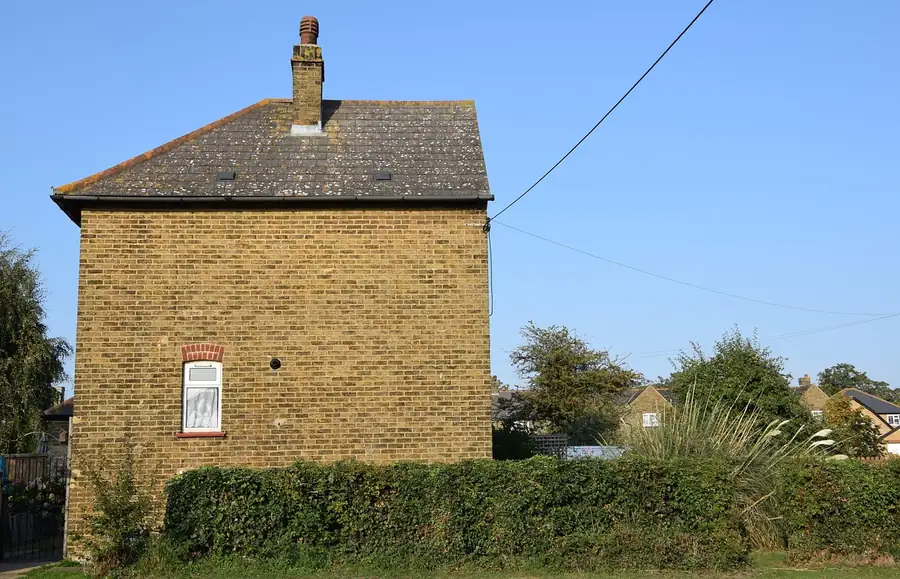
Shared stacks complicate things, because the flashing on your side may tie into lead on next door’s. Repointing, flaunching and whether to keep a stack at all are covered in our earlier piece on chimney stacks in Hounslow and when to repoint, cap or remove them. This post sticks to the lead around the base.
The older streets also have hidden parapet gutters behind the front wall, lined in lead, and those fail in their own ways. If your house has a raised brick front and no visible gutter, read our guide to parapet gutters on Hounslow’s older terraces before anyone quotes for a reline.
Many of these streets are in conservation areas. Hounslow has 29 conservation areas listed on the council’s design and conservation pages, and where flashings are visible from the street, it’s sensible to replace like with like in lead.
Lead alternatives, and the theft problem on low roofs
Lead is worth money as scrap, and low roofs are easy to get onto. Thieves go for bay tops, porch canopies and the abutment along a single-storey extension you can reach from a garden wall. Nobody notices until the next storm, when water is already coming through the kitchen ceiling.
The law has tightened. Under the Scrap Metal Dealers Act 2013, dealers need a licence from their local council and can’t pay cash for scrap metal. That has taken some of the easy money out of it, but it hasn’t stopped it.
Lead-free flashings are the practical answer on those low, reachable details. Products such as Wakaflex and Ubiflex are made from aluminium mesh or reinforced polymer. They have almost no resale value, weigh far less, and can be dressed over tile profiles in a similar way. They aren’t a straight swap everywhere. They don’t take a back gutter or a complex valley as well as lead does. Their life expectancy is shorter than a well-laid code 5. Conservation officers tend to prefer real lead on anything they can see. We use them on extensions and bays and keep lead for chimneys and valleys.
Lead flashing repair prices in Hounslow, job by job
These are the ranges we quote across the borough, assuming the work can be reached from ladders and a roof ladder. Scaffold, where it’s needed, goes on its own line.

The cheapest fix is a loose flashing refitted with new wedges and the chase repointed. That’s £150 to £350, and most fall inside our small-job minimum. New lead all the way round a chimney, meaning apron, steps, soakers and back gutter, runs £250 to £700 from a ladder and roughly double once a scaffold goes up. An abutment where an extension roof meets the house wall is £200 to £500 a run, depending on its length and whether the tiles underneath have to come up and go back down.
Valleys cost more because the tiles either side have to be stripped first. With the boards replaced where they’ve gone soft and new lead laid in proper lengths, a valley is £600 to £1,800. A lead bay top depends on its size and how much of the timber below has rotted. Most interwar bays land around the abutment figure, plus a bit for timber.
Lead is priced by weight, so a heavier code costs more. A quote well below these figures has usually saved money on the code, the lengths or the wedges. On terraced streets where the scaffold has to stand on the footway, the council’s highways licence adds time as well as cost, and our roof repair cost page sets out how access is charged.
Checking your flashings from the ground before you call anyone
You can do a good first check from the garden or an upstairs window with a pair of binoculars or a phone camera zoomed in. Look for lead that has lifted away from the brickwork and shows a dark gap at the top edge. Look for pointing missing from the joint above a flashing, and for grey streaks or fresh white staining under a stack. On a valley, look for tiles that have slipped down into it or moss bridging across it.
Inside, the signs are a damp patch on a chimney breast that comes and goes with the weather, a tide mark on the ceiling below an extension’s wall joint, or a stain in a bedroom corner under a valley. Take photos with the date showing. They tell us more than a description over the phone does, and they show whether the patch is growing.
Please don’t climb onto the roof to check. Lead details sit at the steepest, most awkward parts of the roof, and a roof ladder hooked over a ridge is a two-person job. Send us the photos and we’ll tell you which piece of lead is the likely culprit before we visit.
Frequently asked questions
Can a leaking lead flashing be repaired, or does it always need replacing?
Plenty can be repaired. If the lead itself is sound and has simply pulled out of its chase, or the pointing over the chase has dropped out, we refit it with new lead wedges and repoint the joint, which usually costs £150 to £350. Replacement makes sense once the lead has split, thinned or been cut too short to cover the tiles properly. We will show you photos so you can see which one you have.
How much does it cost to replace chimney flashing in Hounslow?
Replacing the lead around a typical domestic chimney is £250 to £700 when we can reach the stack safely from a ladder and roof ladder. If the stack needs a scaffold, which is common on terraced streets where the front wall sits on the pavement, expect roughly double once access is added. A back gutter behind a wide stack adds to the cost because it is the most fiddly part to form.
Is there a theft-proof alternative to lead flashing?
Yes. Lead-free flashings such as Wakaflex, Ubiflex and similar products have little scrap value, so thieves leave them alone. They suit low, easy-to-reach roofs such as rear extensions and bay tops, where stolen lead is most common. They do not move or last quite like lead, and in a conservation area the council may expect lead on anything visible from the street, so it is worth checking before you switch.
Why does my chimney breast get damp only in heavy rain?
That pattern usually points to the flashing or the back gutter behind the stack rather than to the brickwork. Wind-driven rain gets under a flashing that has lifted or into a back gutter that has split, and the water runs down inside the stack until it shows on the breast. It dries out between storms, which is why it often gets mistaken for condensation. A close look at the lead from a roof ladder normally settles it.
Useful? The survey's even better
Free roof surveys across Hounslow and west London, with photographs and a fixed written quote to follow.