
2 October 2026
Roofers In Twickenham And Richmond: Across The Borough Line, Where The Planning Rules Get Stricter
Looking for a roofer in Twickenham or Richmond? Why Richmond borough's 85 conservation areas, Article 4 directions and listed streets change a re-roof - and what it costs.
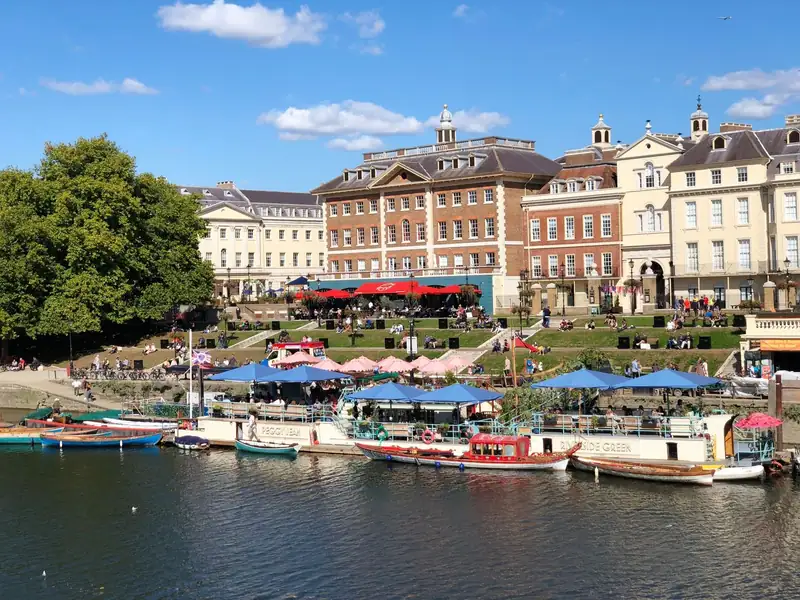
Twickenham and Richmond are a quarter of an hour from our yard in Heston, and we are over the borough line most weeks of the year. That line matters. More than most homeowners realise, in fact. Everything west of Isleworth and Hanworth answers to Hounslow Council; everything from St Margarets and Whitton eastwards answers to the London Borough of Richmond upon Thames, which has 85 conservation areas, the highest count of any London borough, and a planning department that takes an interest in roofs. Add listed Georgian terraces on Richmond Hill and around the Green, the tidal Thames lapping at Twickenham Embankment, and an 82,000-seat rugby stadium that closes the surrounding roads on match days, and a straightforward re-roof becomes a job with paperwork, access planning and a materials list that will not accept substitutes. Here is what changes once you cross the line, and what we do about it.
Which council is in charge, and why it changes the job
The first thing we establish on any enquiry from Twickenham or Richmond is which planning authority we are dealing with, because it is not the one on our van. Richmond Council runs planning, building control, scaffold and skip licensing and parking for the whole of its borough, and its approach is shaped by the fact that the council’s own conservation area guidance lists 85 designated areas covering historic villages, town centres, parkland and the World Heritage Site at Kew. In practice that means a large share of the older housing in Richmond and Twickenham is protected in some form, and the council’s conservation officers expect to see what is going back on a roof, not just that something is.

Hounslow has conservation areas too, but fewer of them, and most of our Hounslow work sits on interwar estates and postwar roads where nobody is counting the tiles. In Richmond borough the balance tips the other way. A terrace in St Margarets, a villa on the slopes of Richmond Hill, a mansion block behind the Green or a Victorian pair in East Twickenham is far more likely to be inside a boundary that carries rules, and far more likely to have neighbours who know those rules and will mention them to the council if a roof comes back wrong.
Eighty-five conservation areas and what they do to a re-roof
A conservation area does not stop you repairing your roof, and it does not usually stop you replacing it. What it does is remove some of the freedoms a householder has elsewhere and sharpen the question of appearance. Nationally, the permitted development right to enlarge a roof with a dormer is switched off on conservation-area land, so a loft dormer in Twickenham Green or Richmond Hill always needs a planning application. The council’s own FAQ also flags raising the ridge or expanding the roof as work that needs permission. A re-covering in the same slate or the same tile, laid to the same detail, is treated as repair and goes ahead without an application.
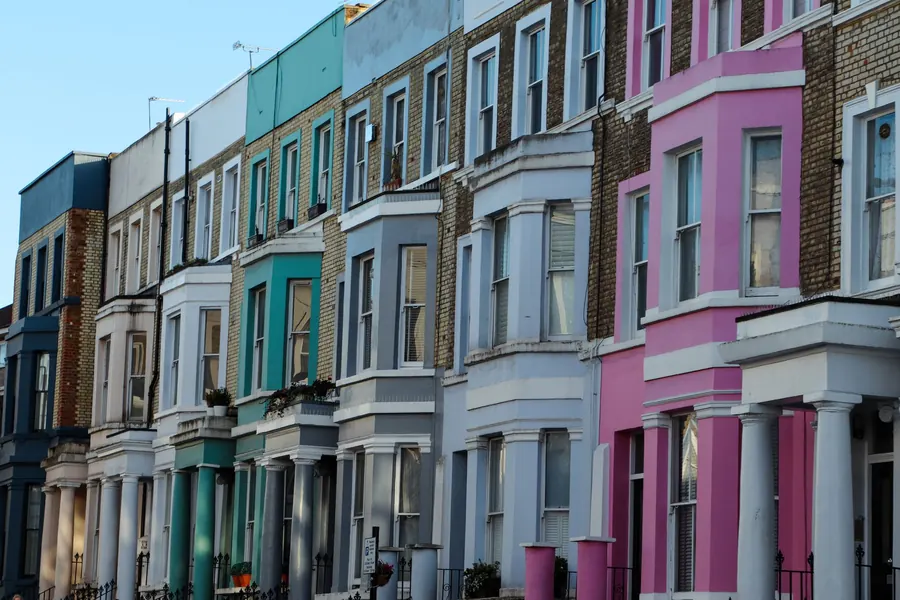
The catch is the phrase “same material”. Once a street is protected, swapping natural slate for a concrete interlocking tile, or a handmade clay plain tile for a cheaper machine-made one in a flatter colour, is a visible change to the building’s appearance and the council can and does treat it as development without permission. Enforcement runs for ten years in England now, so a wrong roof is not something that quietly becomes legal after a few winters. We have been asked to put right re-roofs in Richmond borough that were done cheaply a decade earlier, and the second job costs far more than the saving on the first one.
If you want the official line on what needs an application, the Planning Portal’s guidance on roof work sets out the national position, and Richmond’s conservation team will confirm how it applies to a specific address. Ask before the scaffold goes up. It is a much cheaper conversation.
Article 4 directions: the permitted development rights Richmond has taken away
An Article 4 direction is the tool a council uses to withdraw permitted development rights in a particular place, and Richmond uses it more than most. The borough’s list of Article 4 directions runs to well over a hundred separate directions attached to named streets and conservation areas, including Richmond Road in East Twickenham, several of the Twickenham areas, The Vineyard and Mount Ararat Road in Richmond, and Park Cottages in St Margarets. The works they typically catch are extensions, new doors and windows, painting or rendering brickwork, removing chimneys, paving over front gardens and replacing boundary walls.
Read that list with a roofer’s eye and two items stand out. Chimney removal is the obvious one. On a Hounslow semi, taking down a redundant stack to below the roofline is routine; on an Article 4 street in Richmond borough it is a planning application, and the council’s default is that the stack stays and gets repaired. The second is the front elevation generally. Anything that alters how the house reads from the street, including a new dormer, replacement rainwater goods in a different material, or boxing a timber eaves cornice in plastic, is likely to need consent. Re-covering the roof in matching material is not on the list, which is why most of our Richmond re-roofs still go ahead without an application. We check the direction for the exact street before quoting, because they are attached to named roads rather than whole neighbourhoods.
Listed buildings on Richmond Hill and around the Green
Listing is a separate and stricter layer. The Terrace on Richmond Hill, the houses around Richmond Green, Maids of Honour Row and a good deal of Twickenham’s riverside are listed, and on a listed building there is no like-for-like exemption. Any work affecting the building’s character, including stripping and re-laying the roof, needs listed building consent from Richmond Council, and carrying it out without consent is a criminal offence rather than a planning breach. The council’s listed buildings page explains the consent process. We have done roofs on listed houses in the borough; the job is slower, the conservation officer may want to see the slate sample and the lead detail, and the result has to be put back as it was found. We price the consent drawings separately so you can see that cost on its own.
The roofs themselves: slate, handmade clay and the gutter behind the parapet
The reason Richmond borough cares so much about roofs is that its roofs are worth caring about. The Georgian houses around the Green and up the Hill were built with parapet fronts, the roof hidden behind a brick upstand with a lead-lined gutter running along the back of it, often with a butterfly or M-shaped roof draining to a central valley. Those gutters are the single most common source of leaks we trace in Richmond, and they are invisible from the pavement, which is why they get ignored until a ceiling comes down. We wrote about how these details fail and how they are relined in our piece on parapet gutters on period terraces, and everything in it applies with more force on a four-storey Richmond townhouse than on a two-storey Hounslow one.
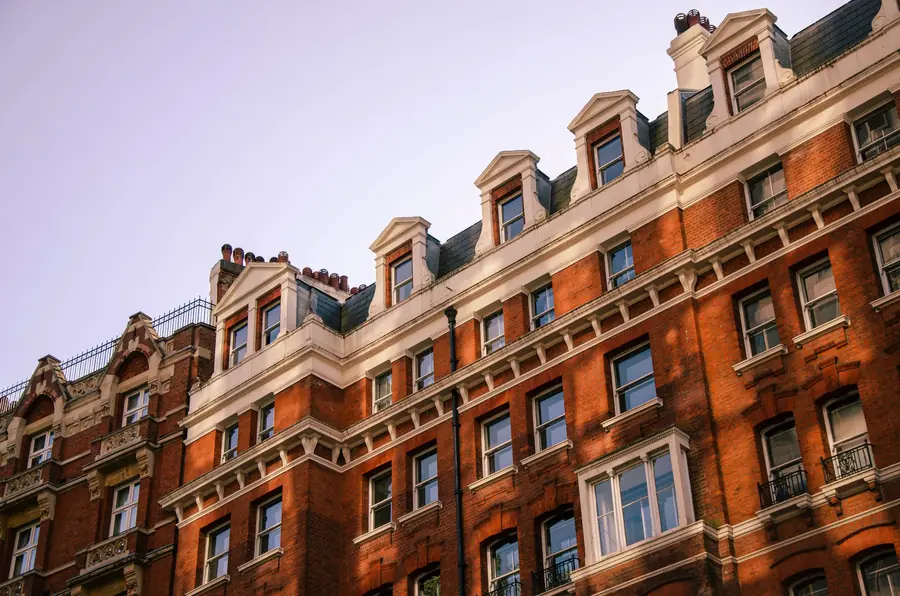
The Victorian and Edwardian terraces in St Margarets, East Twickenham and off Richmond’s Sheen Road carry Welsh slate on sawn battens with iron nails. The slate is usually fine at 130 years old. The nails are not. Nail sickness shows as slates slipping in ones and twos; the fix is a strip and re-lay, re-using the sound slate and making up the shortfall with matching reclaimed or new Welsh slate. Strawberry Hill and the riverside villas bring handmade clay plain tiles, ornamental ridges, finials and valleys that need a roofer who can cut and lay rather than simply replace. Whitton’s 1930s semis, also in Richmond borough, are a gentler proposition: machine-made clay tile that is reaching the end of its life street by street, re-covered in a modern clay tile of the same colour and size.
Scaffold, parking and the tide: getting a roof done on the riverside and near the stadium
Access is where Twickenham and Richmond stop behaving like Hounslow. Richmond Council licenses any scaffold that stands on a public footway, and on the narrow streets off Richmond Hill, around the Green and along Twickenham’s Church Street and Water Lane, there is nowhere else for it to stand. The licence takes time, the council can attach conditions on lighting and footway width, and the scaffold itself is taller than most of what we put up in Hounslow because the houses are. A four-storey Georgian frontage needs a designed scaffold with ties into the brickwork, and on a listed building even the tie positions have to be considered. Discovering any of that on day one is expensive, so it goes into the programme before anything else.
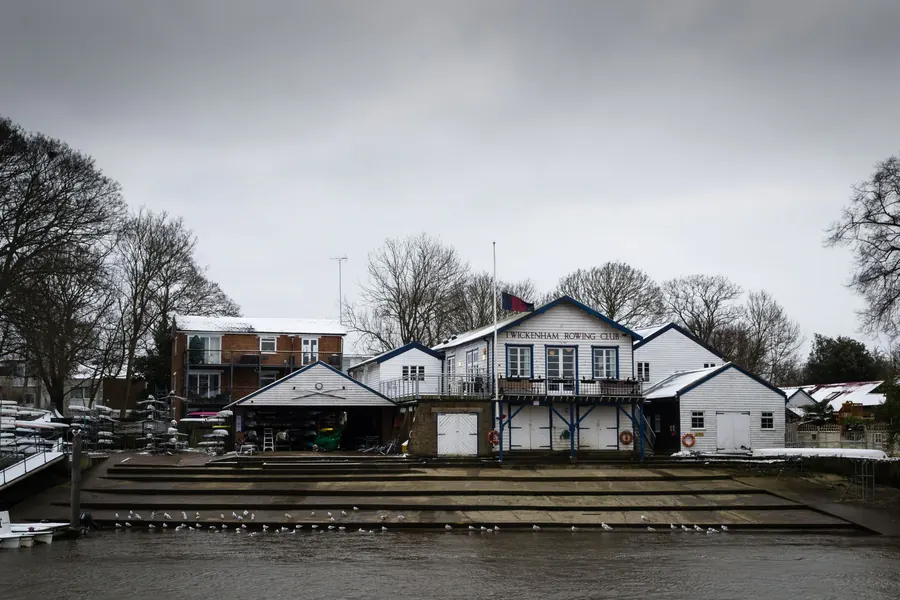
The river adds its own rules. Twickenham sits below Teddington Lock, so the Thames here is tidal, and the Embankment, Eel Pie Island and the lanes around Church Street flood on spring tides as a matter of routine. Skips, tile pallets and scaffold bases on those streets are placed with the tide tables in hand, and anything that cannot get wet goes up to first-floor level before we leave for the night. Eel Pie Island itself is reached by a footbridge, so every slate goes over by hand or by boat and the job is priced accordingly.
Then there is the stadium. Richmond Council operates a Twickenham Event Zone that switches on from 11am to 11pm whenever the crowd at the stadium passes 25,000, with Rugby Road, Whitton Road and the stretch of London Road between King Street and Whitton Road closed for around an hour and a half before and after the match. A tile delivery or a grab lorry collecting the old slate cannot be booked for an event day anywhere between the stadium and the river, and the roads in the zone are full of parked coaches from mid-morning. The fixture list is pinned to the office wall from September to March for exactly this reason. Heathrow’s approach path crosses the same sky, and the jet-wake tile lifts we see across Hounslow turn up in Whitton and St Margarets too; our post on vortex damage under the flight path covers that in full, so we will not repeat it here.
What it costs compared with Hounslow, and why the specification drives it
Homeowners who move from Hounslow into Richmond borough are often surprised by their first roofing quote. The roofer has not changed. The roof has. Our labour rate is the same in Heston as it is on Richmond Hill. What moves the price is the list of things a protected roof is allowed to be made of and how hard it is to reach.
Natural slate is the first driver. Welsh slate costs several times what a Spanish or Brazilian import does per square metre, and in a conservation area or on a listed building the council will often expect Welsh or a close equivalent in colour and thickness, especially where the roof is visible from the Hill, the Green or the river. Handmade clay plain tiles are the second: a thousand handmade tiles cost roughly double a thousand machine-made ones, and a plain-tile roof uses around sixty tiles per square metre against ten for an interlocking concrete tile, so the material bill climbs quickly on a large villa roof. Leadwork is the third, because parapet gutters, valleys and the step flashings to tall stacks all have to be formed in code 5 or 6 lead rather than patched in a liquid system. Scaffold is the fourth, and on a four-storey frontage with a footway licence it can be a quarter of the whole bill.
Put those together and a full re-roof on a Georgian townhouse in Richmond typically comes in at a multiple of what the same roofer would charge for an interwar semi in Hounslow, even though the Hounslow roof might have a larger area. A straightforward repair, on the other hand, is not that different: refixing a dozen slipped slates in St Margarets costs much the same as it does in Isleworth, because the scaffold is a tower and the material is a handful of slates. The gap opens on the big jobs, and it opens because of specification. We itemise every quote so you can see which line is the slate, which is the lead and which is the scaffold, and we will tell you straight if the specification you have been given by someone else is more than the street demands.
How we cover Twickenham and Richmond from Hounslow
Our base is in Heston, which puts St Margarets and Twickenham about fifteen minutes away down the A316 and Richmond a few minutes beyond that over the bridge. We have been working across the borough line for years, and the pattern of the work there has taught us what Richmond borough expects: a sample of the slate or tile before it is ordered, a lead detail drawn rather than described, a scaffold licence applied for in good time and a programme that respects the tide and the fixture list. None of that is exotic, but a roofer who only works on the Hounslow side will not have had to learn it.
For anything in Twickenham, St Margarets, Strawberry Hill, Whitton, East Twickenham or Richmond, the first step is the same as it is at home: a free survey, a written report with photographs of the problem, and a fixed price with the materials named. If the house is listed or sits inside an Article 4 street we say so in the report, explain what the council will want, and quote the consent work as its own line. The council sets the rules for its side of the line, and we have found that the quickest way to get a roof done in Richmond borough is to work with those rules from the first phone call rather than arguing with them from the scaffold.
Frequently asked questions
Is Twickenham in the London Borough of Hounslow?
No. Twickenham, St Margarets, Strawberry Hill, Whitton and Richmond all sit in the London Borough of Richmond upon Thames. Hounslow borough stops at Isleworth and Hanworth. If your roof work needs a planning application, a listed building consent, a building control notice or a scaffold licence on the pavement, it goes to Richmond Council, not Hounslow, and Richmond's planning department applies a noticeably stricter set of rules.
Do I need planning permission to re-roof my house in Richmond?
For a like-for-like re-roof in the same material, colour and profile, normally not, even inside a conservation area. The exceptions are a listed building, where any re-covering needs listed building consent, and any change that alters the roof's appearance from the street, such as swapping slate for concrete tile, adding a dormer or raising the ridge. In a conservation area the permitted development right for roof enlargements does not exist, and several Richmond Article 4 directions also remove the right to take a chimney down.
Can you scaffold a house in Twickenham on a rugby match day?
The scaffold itself can stay up, but the day is best avoided for deliveries, skips and tile drops. Richmond Council switches on the Twickenham Event Zone from 11am to 11pm whenever the stadium crowd passes 25,000, Rugby Road, Whitton Road and part of London Road are closed for an hour and a half either side of kick-off, and a wagon with ten tonnes of slate on it is not getting near the house. We check the fixture list before we book a job in the streets around the stadium.
Why does roofing cost more in Richmond than in Hounslow?
The specification, not the postcode. A conservation area re-roof on Richmond Hill or around the Green means Welsh or equivalent natural slate rather than a cheaper import, handmade or sand-faced clay tiles rather than concrete, leadwork to the parapet gutters, and a taller, licensed scaffold on a four-storey frontage. The same roofer and the same labour rate on an interwar semi in Heston produces a smaller bill because the materials and access are simpler. We itemise all of it so you can see where the difference comes from.
Useful? The survey's even better
Free roof surveys across Hounslow and west London, with photographs and a fixed written quote to follow.