
8 October 2026
Roofers In Feltham, Bedfont And Hanworth: Estate Roofs, Garage Roofs And Which Council Signs Off
Need a roofer in Feltham, Bedfont or Hanworth? Local housing stock, flat-roofed garages, wind off the reservoirs, the Spelthorne boundary and what repairs cost.
Feltham, Bedfont and Hanworth make up the south-west corner of Hounslow borough, and most of their housing went up in two bursts: the interwar years, when the factories and the railway pulled people out from London, and the two decades after 1945, when farmland and worked-out gravel pits were turned into council estates. Heathrow’s southern runway sits a couple of miles from Feltham’s high street. Hanworth’s grass aerodrome ran from 1917 to 1919 and again from 1929 to 1947 before houses replaced it. Bedfont Green has been a conservation area since November 1974, built around a church that has stood there since about 1150. If you are looking for a roofer in Feltham, Bedfont or Hanworth, that history decides what is on your roof, how it fails and who you ask if the work needs permission. Here is what we find on these streets and what we charge to put it right.
Watch: estate hips, flat garage roofs, and the borough line that decides who signs off.
Feltham, Bedfont and Hanworth: where Hounslow stops and Spelthorne starts
The first question on any job down here is which council covers the house, because the borough edge runs right through what people call “Feltham”. Feltham, Lower Feltham, North Feltham, Feltham Hill, East Bedfont, Hatton and Hanworth all came into the London Borough of Hounslow when Middlesex was broken up in 1965. Ashford, Stanwell and Sunbury, a short walk further out, went the other way and became part of Surrey, so they now come under Spelthorne Borough Council. Hampton, on Hanworth’s south-eastern side, belongs to Richmond upon Thames. We work on all of them from our Feltham roof repair base, but the paperwork goes to different offices.
Postcodes do not settle it. TW14 and TW13 are Feltham, Bedfont and Hanworth; TW15 is Ashford; and you get roads along the boundary where neighbours on the same pavement write different towns on their post. Your council tax bill does settle it. If it says Hounslow, anything we need from a council (a planning question, a building control notice for a full roof replacement, a skip on the road) goes to Hounslow. If it says Spelthorne, Spelthorne’s planning and development service handles it. We have covered the Richmond side of the borough line in our post on roofers in Twickenham and Richmond, so this one stays west of the River Crane.
The houses we actually climb on here
Ask a Feltham roofer what a typical local roof is and you will get three answers, depending on which part of town they last worked in. Around the old village centres and the station there are late Victorian and Edwardian houses in brown brick, some in slate and some in clay tile. Spreading out from those are the interwar semis, hipped and bay-fronted, in small clay plain tiles or an early concrete tile. Then come the estates. Bedfont was one of the farming areas picked for low-rise council housing in the middle of the century, and Hanworth’s own conservation area includes a 1950s estate along Elizabeth Way, which tells you how much of the district dates from that time.
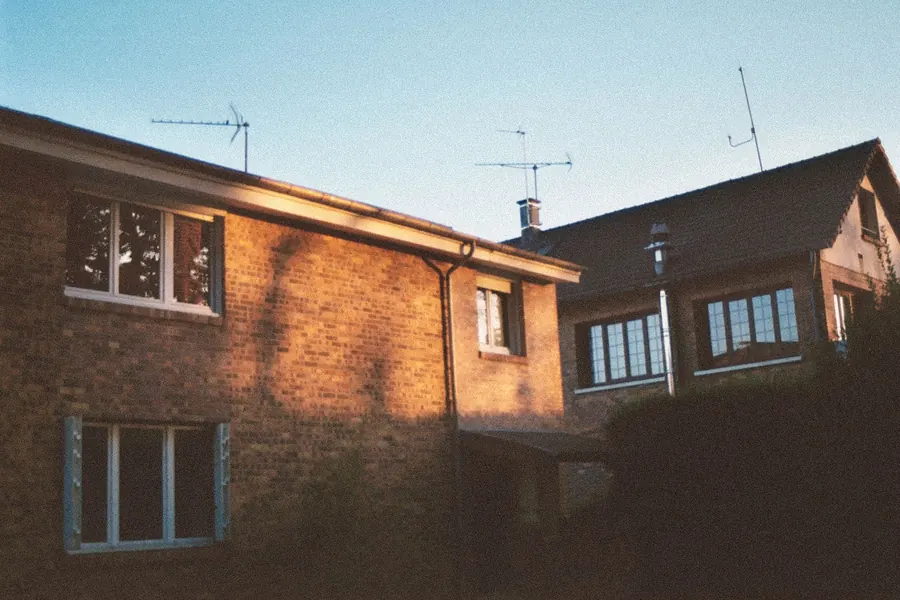
The estate roofs are where most of our calls come from. Houses built in the 1950s often have steep, simple pitched roofs in concrete tile on sawn timber. In Bedfont Green some of the early postwar terraces have tall hipped roofs with gable ends that the council’s own appraisal describes as Arts and Crafts in style. The 1960s and 1970s infill that filled the gaps between estates looks different again. These houses have shallow pitches, factory-made trussed rafters and large interlocking concrete tiles that were made to work at lower angles. They hold up well until the tiles wear, and then a shallow roof gives driven rain very little help. Water gets blown up under the laps, runs along the felt and turns up as a brown stain over a bedroom window. On the older semis the trouble is more often the ridge and hip mortar, which goes to powder after sixty or seventy years and lets the capping tiles rock loose.
What a 1960s or 1970s roof tells us when we get up there
Low-pitched concrete-tile roofs from that time often have felt that has sagged between the rafters, and these days that does more harm than good because it holds water at the eaves. Gutters fitted with the house were often a fragile early plastic that has gone brittle. Bargeboards on gable ends are usually the original timber under paint. None of that means a new roof is due. It means a repair on these houses should cover the eaves and the verges as well as whichever tile is cracked.
Flat-roofed garages, garage courts and the asbestos question
Walk round the back of almost any Feltham or Hanworth estate and you will find a garage court: a row of single-storey brick or concrete garages, usually with a flat roof, sometimes owned by the council, sometimes sold off one by one to residents. Many semis have a garage of their own built at the same time. These roofs see our ladders more often than almost anything else in the area. They sit at head height, they collect leaves from every tree nearby, and most were covered in felt that has long passed its useful life.
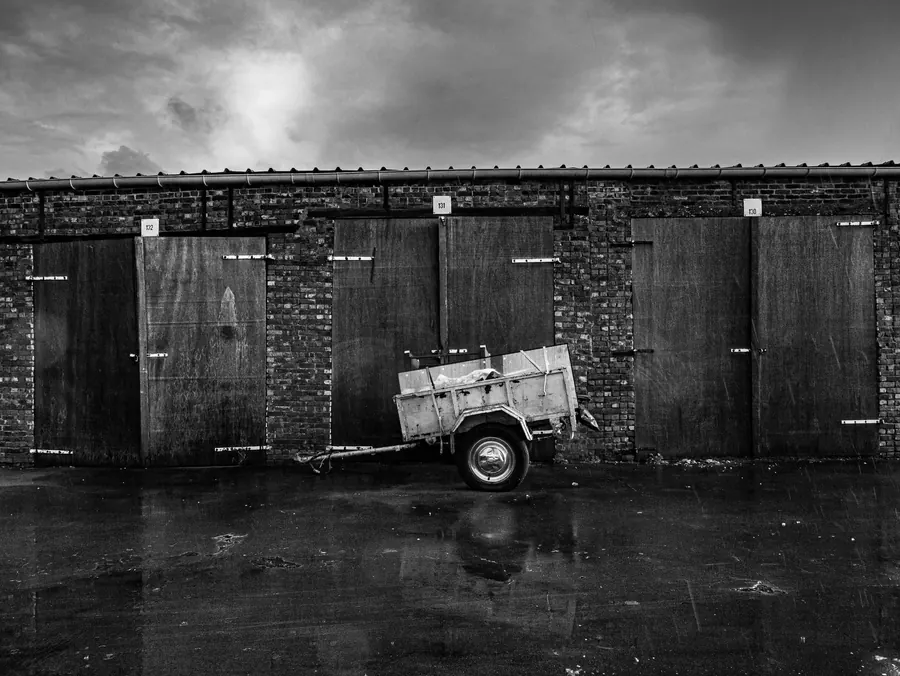
The thing to check before anyone touches one of these roofs is what it is made of. A lot of garages from the 1950s to the 1970s were roofed in corrugated asbestos cement sheet, and some still are, under whatever has been painted or felted on top. Intact and left alone it is low risk. Removal is another matter. The HSE’s guidance on non-licensed asbestos work lets asbestos cement roof sheeting be taken off without a licence when it is handled carefully and kept whole, but it becomes notifiable work once the sheets are going to be broken up. In practice that means sheets unbolted one at a time, wrapped and taken to a site licensed to accept them, not smashed into a skip. A quote that does not mention any of this for an old garage roof is a quote to be wary of.
Where the garage roof is felt or an older asphalt, the choice is the same one we set out for extensions in our guide to flat roofs on Hounslow extensions and garages: patch it if the deck is sound, re-cover it if the felt has had its day, and rebuild if the boards underneath are soft.
Wind across the gravel plain: why Feltham roofs lose ridges
Feltham is flat. The whole district sits on the river gravels west of London, and for a century those gravels were dug out, which is why Bedfont Lakes Country Park and the other lakes to the south and west of Bedfont are there at all. Beyond them lie the big reservoirs in Spelthorne: King George VI and Staines reservoirs near Stanwell, and the Queen Mary Reservoir towards Littleton. That gives you mile after mile of open water, raised embankments and low ground with not much between them and the first rows of houses.

A south-westerly gale crosses all of that and hits the western edge of Bedfont and Feltham Hill without much in the way. In the storm damage jobs we see, the losses on this side of the borough follow a pattern. Ridge and hip tiles go first, usually the end few on the windward side. Next come verge tiles on gable ends where the mortar has dried out, then the leading edge of a flat garage roof, which the wind peels back like a lid. Houses deeper into Hounslow, sheltered by more buildings, tend to lose single tiles in the same storm. Out here it is more often a run of ridge.
That is why we fit mechanical fixings rather than fresh mortar when we rebuild a ridge in Bedfont or North Feltham. A dry ridge system costs a little more than bedding the tiles back in sand and cement. It also means the next gale off the reservoirs is not working against mortar that will be soft again in twenty years.
Under the southern runway
Bedfont and Hatton are the parts of the borough closest to Heathrow’s southern runway, and Feltham’s northern streets are not much further. Noise is the obvious effect and the one we get asked about most. It is not the only one. It brings constant ground-level traffic and vibration around Hatton Cross. It means the area’s roofs were mostly built when nobody thought about acoustic performance. And on occasion the wake from a landing aircraft reaches a roof.

The practical point for a Bedfont or Feltham homeowner is that tiles near the airport should be properly clipped and nailed, not left hanging on their nibs, and a repair should bring a patch of roof up to that standard rather than just slot one tile back. If you think a plane was behind tiles moving on a calm day, do not get them refixed straight away. Our post on Heathrow wake vortex roof damage explains how that claim works and why the evidence matters, so we will not go through it again here.
Conservation areas and planning in Feltham, Bedfont and Hanworth
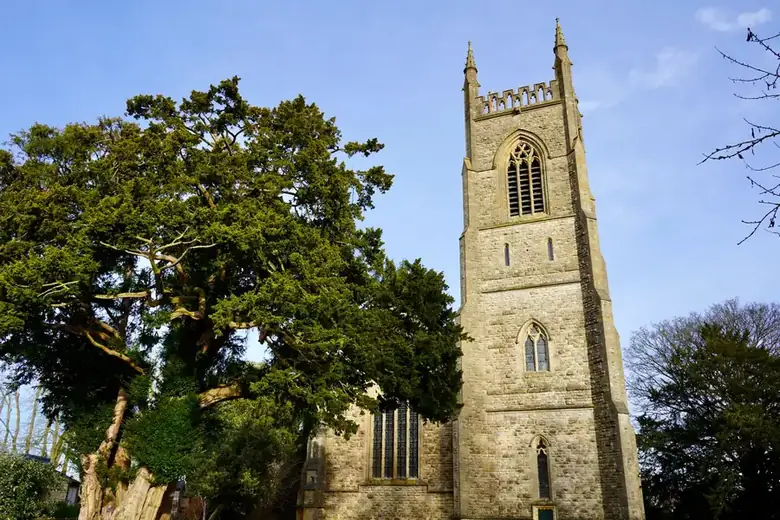
Most roof work in this part of the borough needs no permission at all. Hounslow has 29 conservation areas, and only three of them sit in Feltham, Bedfont and Hanworth. Feltham Green and Town Centre takes in the pond, St Catherine’s tower, the Longford River and the villas on Elmwood Avenue, many of which still have their original slate or clay. Bedfont Green covers the green itself, St Mary’s church with its peacock yews, a 1930s model estate and the houses along Staines Road, including one with a gambrel roof that the council picks out as unusual for the area. Hanworth Park takes in Tudor Court, the old moat, the 1950s estate and Hanworth Park House, which is Grade II listed and on Historic England’s Heritage at Risk Register.
Inside those boundaries a like-for-like re-roof is still treated as repair. What draws the council’s attention is a change you can see: concrete tile replacing slate on an Elmwood Avenue villa, a big box dormer that throws a pair of semis out of balance (the Bedfont Green appraisal names exactly that as harmful), or plastic boxing over a timber eaves detail. You can read each area’s boundary and what the council values in it on Hounslow Council’s conservation area appraisals and maps. For anything outside those three areas, the general rules in our guide to roof work and planning permission in Hounslow apply.
What roof work costs in Feltham, Bedfont and Hanworth
Our prices in Feltham match our prices across the rest of Hounslow. What changes is the mix of jobs. Bedfont and Hanworth get a lot of garage roofs and ridge rebuilds, while the Victorian streets near Feltham station get more slate and leadwork. As rough guides from our own quotes:

- A slipped or broken tile that can be reached from a ladder: about £120 to £280.
- A full ridge rebuilt on an estate semi: about £450 to £1,300, depending on length, whether there is a hip, and whether we fit a dry ridge.
- Re-covering a single garage or extension flat roof: about £1,700 to £4,800, with asbestos cement removal and disposal added as its own line where it applies.
- A full re-roof on a hipped interwar semi: usually £11,000 to £17,000 once scaffold, skips and building control are included.
Access keeps a lot of Feltham work cheap. Most houses are two storeys with a drive or a side path, so towers and ladders do the job where an inner-London terrace would need a full scaffold licence. Where scaffold does go up, we try to finish everything that needs it in one visit, so you pay for the poles once.
Choosing a roofer for a Feltham, Bedfont or Hanworth roof
The roofs here are ordinary, and that brings its own risk: anyone with a van can claim to know them. What separates a good local roofer is knowing how these particular houses fail. That means checking the eaves and verge on a 1970s shallow roof, not just the tile you pointed at. It means asking what an old garage roof is made of before quoting to strip it, and fixing a Bedfont ridge for the wind it actually gets. It means knowing which side of the Spelthorne line a house is on before telling you what the council will say. Put those four points to any roofer you are thinking of using and see how they answer.
We are ten minutes from Feltham, the survey is free, and you get a written report with photographs, a fixed price and a ten-year guarantee on the workmanship.
Frequently asked questions
Is Bedfont in Hounslow or Spelthorne?
Bedfont, including East Bedfont, Bedfont Green and North Feltham, is in the London Borough of Hounslow and has been since 1965. Ashford, Stanwell and Sunbury, just over the line to the south and west, are in Spelthorne and answer to Spelthorne Borough Council in Surrey. Postcodes blur the edge, so the reliable check is the council named on your council tax bill.
Do I need planning permission to re-roof a house in Feltham?
For most houses in Feltham, Bedfont and Hanworth, no. Re-covering a roof in a similar material on an ordinary house is treated as repair. It changes if the house is listed, if it sits in one of the three local conservation areas (Feltham Green and Town Centre, Bedfont Green or Hanworth Park) and the work alters how the roof looks, or if you are changing the shape of the roof. Building regulations can still apply on a full re-roof, which we handle as part of the job.
My garage roof is corrugated cement sheet. Is it asbestos?
If the garage dates from before 2000, and especially if it went up with a 1950s to 1970s estate, there is a good chance the sheets contain asbestos cement. Left alone and intact it is low risk. Taking it off has to follow the HSE rules for asbestos cement, which is why we confirm what it is before quoting and price the safe removal and disposal as its own line.
How quickly can you get to a roof leak in Feltham or Hanworth?
Feltham is around ten minutes from our base in Heston, so an active leak in Feltham, Bedfont or Hanworth usually gets a visit the same day if it comes in before mid-afternoon. We make the roof safe and watertight first, then come back with a written quote for the proper repair.
Useful? The survey's even better
Free roof surveys across Hounslow and west London, with photographs and a fixed written quote to follow.