
6 October 2026
Repair Or Replace Your Hounslow Roof? How To Decide, House Type By House Type
Repair or replace your Hounslow roof? The signs that mean a new roof, when a repair is the honest answer, the half-way options and what each route costs.
Most people asking whether to repair or replace a roof in Hounslow are really asking something narrower: is the money I spend this time going to be the last money I spend for a while? A £250 visit that buys three years is a good deal. A £250 visit that buys three months, followed by another, and another, is how a lot of west London homeowners end up spending a third of a new roof on an old one. The answer depends heavily on what your house is. A Victorian terrace in Isleworth, a 1930s semi in Feltham and a postwar house in Bedfont fail in different ways, at different ages, for different reasons, so this guide works through the borough’s housing one type at a time.
Repair or replace: start with what is holding the roof together
Tiles and slates are rarely what gives up. The covering is a skin hung on a frame of thin timber battens, fixed with nails, sometimes over a layer of felt or membrane, all of it sitting on the rafters. When roofers talk about a roof being finished, they almost always mean the hidden parts are, and the skin is simply the bit you can see failing.
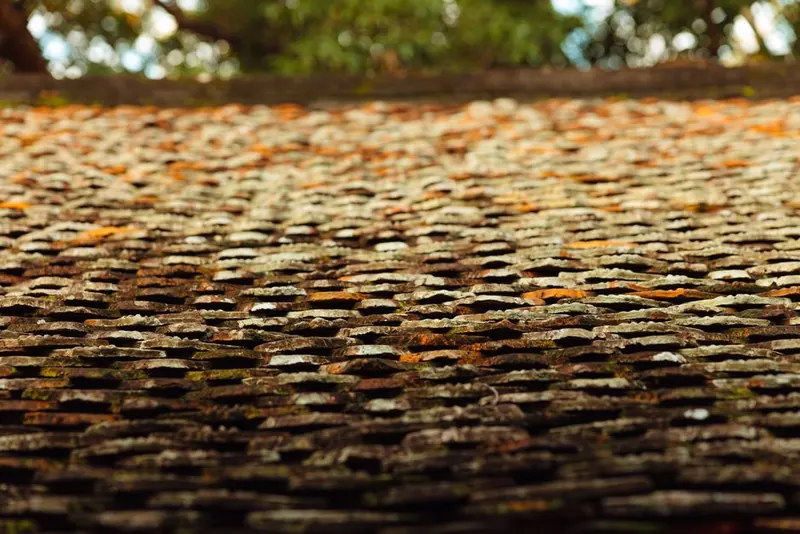
That is why a roof with a dozen broken tiles can be a straightforward repair while a roof that looks tidy from the street can be due for replacement. Five things genuinely point towards a new roof: fixings that have rusted through across a whole slope, battens that are rotten or brittle, an underlay that has perished or was never there, tiles that are breaking down in large numbers, and a roof line that has dropped. One of those on its own, in one area, is usually a repair. Several of them together, spread across the roof, is when our roof replacement service becomes the cheaper option over ten years even though it is the dearer one this month.
Victorian and Edwardian slate: nail sickness and the bare roof
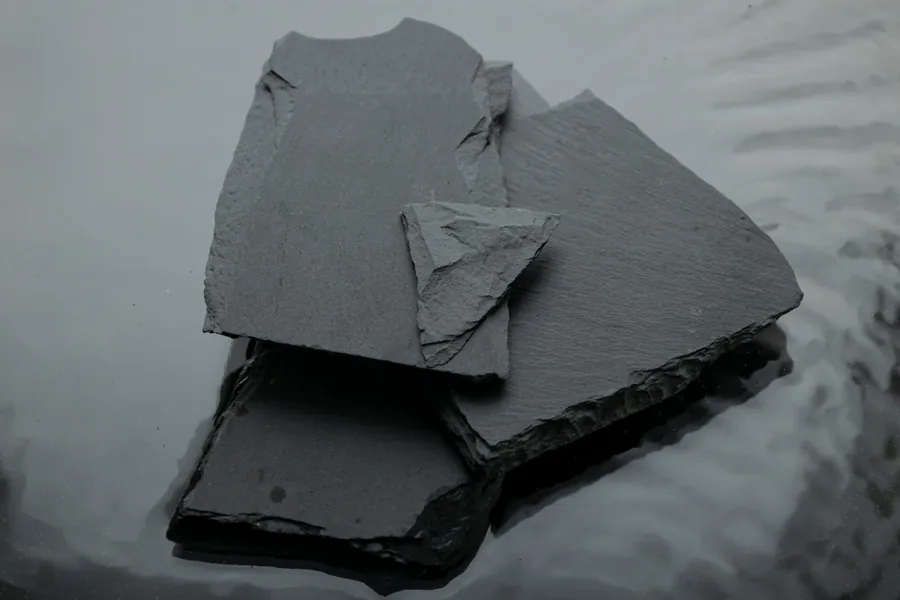
The older streets of Isleworth, Brentford, Chiswick and the middle of Hounslow itself are full of late Victorian and Edwardian terraces, many still under natural Welsh slate. Slate is close to indestructible. The iron nails holding it aren’t. Over a century they rust where they pass through the slate, the heads give way, and slates start sliding out of their courses. Roofers call it nail sickness, and it is the single most common reason an old slate roof gets replaced rather than mended.

You can usually spot it from across the road. Look for slates sitting slightly proud of their neighbours, gaps where one has gone completely, and small strips of lead or copper hooked under the bottom edge of slates. Those strips are called tingles, and each one is a past repair holding up a slate whose nails have failed. Half a dozen across a whole roof is unremarkable. A slope peppered with them is telling you that the remaining nails are the same age and going the same way.
Most of these roofs were also laid with no underlay at all. Look up from the loft hatch and you will see the back of the slates and daylight round the edges. That was normal practice when they were built and it worked for a hundred years, but it means there is no second line of defence when a slate slips. Wind-blown rain goes straight onto the ceiling below.
1930s semis: plain tiles, worn nibs and the missing felt
Hounslow’s interwar estates, from Heston across to Feltham and the streets around Osterley, were mostly roofed in small clay or concrete plain tiles. Plain tiles hang from the battens by two little nibs on the back, and many were never nailed except every fourth or fifth course. After ninety years the nibs wear, snap or simply crumble away, and tiles let go one at a time. The clue is how many come down. A few after a storm is wear. A steady trickle into the gutter every winter means the nibs are giving up across the slope.
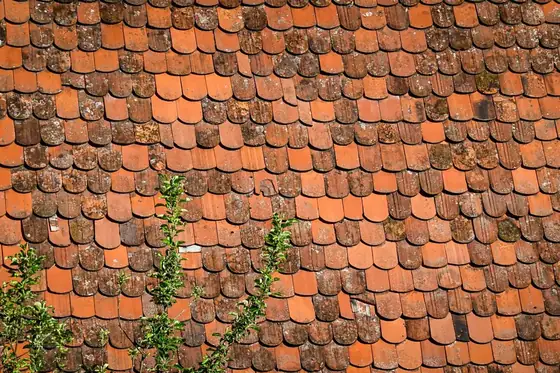
Clay tiles also suffer from frost. Water soaks into a porous tile, freezes and pushes the face off in flakes, a process called spalling or delamination. A spalled tile looks pale and rough where its fired surface has gone. A few are ordinary on a roof that age; whole patches of them mean the batch was underfired and will keep deteriorating. Like the Victorian terraces, most of these semis went up without felt beneath the tiles, and many were later fitted with loft insulation that blocks the little ventilation the bare roof once had, so the battens can stay damp longer than they used to.
Postwar estates and the concrete tile
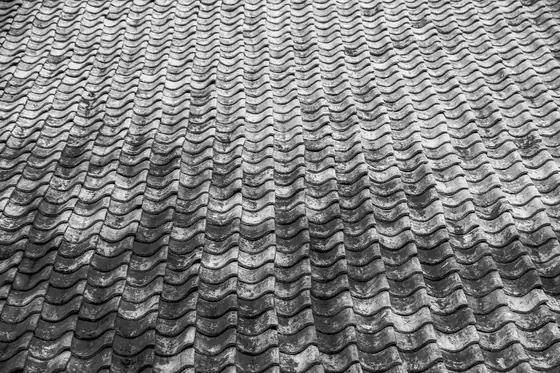
Much of the housing built in the west of the borough after the war, around Feltham, Bedfont and Hanworth, has concrete interlocking tiles - the large, single-lap profiles that cover far more roof per tile than a plain tile does. They are tough, and a good one will last fifty or sixty years. As they age, the coloured surface coat wears away, the tile goes rough and sandy, and the face can start to flake. Moss gets a grip on the rough surface and holds water against it. None of that leaks by itself. It does mean the tiles are approaching the end, and the felt underneath, usually a bitumen type that turns brittle and tears where it sags into the gutter, is often further gone than the tiles.
Concrete tiles also cause trouble on houses that were never built for them. Plenty of Victorian terraces had their slate stripped in the 1960s and 70s and replaced with concrete interlocking tiles, which are considerably heavier. A rafter sized for slate carries that extra load for decades and slowly bows. If you stand at the end of your street and see a ridge line with a dip in it, or a slope that looks faintly hollow in the middle, that is often what you are looking at. Sagging on its own does not always mean the roof must come off, but it does mean the structure needs looking at, and the Planning Portal’s guidance on work to an existing roof notes that switching to a covering 15 per cent or more heavier needs building regulations approval, which is exactly the check those earlier re-roofs often skipped.
When a repair is the honest answer
We see plenty of Hounslow roofs written off that had years left in them. If the trouble is in one place, it is very often a repair. A leaking valley, a cracked mortar ridge, a split lead flashing at the chimney, a handful of slates on an otherwise solid slope: all of these have a single cause you can point to, and fixing it buys years. The same goes for damage from outside. A falling branch, a storm that lifts one corner, or a tile pulled out by a wake vortex from an aircraft on approach to Heathrow damages the covering, not the frame. Our guide to Heathrow wake vortex roof damage covers how those strikes are handled, and they almost never justify a new roof.
A fair test is to lift two or three tiles or slates near the problem and look at what is underneath. Sound battens, nails that still bite and an underlay with no rips mean the rest of the roof is in decent shape and a repair is good value. The other test is your own history. One callout every few years, each in a different spot, is a roof ageing normally. Three in two winters on the same slope is a pattern, and patterns are what replacement is for.
The middle routes: one slope, or strip and re-lay
There are two jobs that sit between a patch and a full new roof, and on a lot of Hounslow houses one of them is the right answer. The first is re-roofing a single slope. On a lot of terraces and semis the rear slope takes the prevailing south-westerly weather, or was re-covered cheaply at some point, while the front is still in fair order. Stripping only the bad slope, fitting a breathable membrane and new battens, and re-covering it costs well over half of a full re-roof once scaffold and setting up are counted, but well under the whole.
The second is a strip and re-lay. The roofer takes every sound tile or slate off, sets them aside, replaces the battens and fits a membrane, then puts the original covering back with new fixings and makes up the shortfall with reclaimed or carefully matched stock. It solves nail sickness, perished felt and rotten battens in one go while keeping the look of the house, which matters on period streets and in conservation areas. It does not save as much as people expect, because labour is the larger part of any re-roof and handling old tiles is slower than opening new pallets. It makes most sense where the covering itself is good, as with Welsh slate or decent clay plain tiles. We went into matching and reusing tiles in more detail in our post on replacement roof tiles in Hounslow.
Either route can bring in building regulations. Once more than half of a roof is re-covered, it counts as renovating a thermal element under Approved Document L, and the insulation should be upgraded where it is practical and pays back. On most interwar lofts that means topping up between and over the joists, which is cheap while the roof is open. It is also the moment to deal with noise from overhead flights, since a new membrane closes gaps that bare slate leaves open; our piece on roofs and aircraft noise explains how much difference that makes.
What each route costs in Hounslow
These figures follow the ones in our roof repair cost guide and our post on what a new roof costs in Hounslow. A single slipped tile or slate refixed from a ladder runs £120 to £280. Re-bedding a mortar ridge on a typical semi is £450 to £1,300, and a full valley rebuild is £600 to £1,800 per valley. Once a scaffold is needed, budget £500 to £1,200 an elevation on top of any of those.

At the other end, a complete re-roof of a two or three bedroom Victorian terrace generally comes to between £9,500 and £15,000 in Hounslow, and a 1930s hipped semi £11,000 to £17,000, including scaffold, disposal, membrane, battens and VAT. A single slope sits between those extremes. A strip and re-lay costs roughly what a new covering does, give or take the difference between buying new tiles and buying in reclaimed ones to fill gaps.
The arithmetic worth doing is over time, not today. If a roof needs a scaffolded repair every year or two at £1,000 to £2,000 a go, you are paying for a new roof in instalments and still living with an old one. If it needs one ladder repair every five years, replacing it would be throwing money away. Our price guide by job breaks the repair side down further.
Getting an honest assessment
The best evidence about your roof is inside your loft, and you can gather most of it yourself. Go up on a bright day with a torch and turn the light off once you are up there. Pinpricks of daylight around slates are normal on an unfelted roof; large patches are not. Look at the battens for dark staining, soft spots and white fungal growth, at the nails for orange rust streaks running down the timber, and at any felt for tears and sagging. Photograph what you find. Then go outside and photograph the roof from the street and the garden, ideally zoomed in.

Send those photos to a roofer before they visit and you will get a much more useful conversation, because they arrive knowing what to look for. A proper inspection should include the loft as well as the outside, and the person doing it should be able to show you, with their own photos, the reason for whatever they recommend. If they suggest replacement, ask what a repair would cost and how long they think it would last. If they suggest a repair, ask what they saw that makes them confident the rest of the roof is sound. If they can’t answer either, keep looking. Larger re-roofing work also needs notifying to Hounslow Council’s building control team or self-certifying through a competent person scheme, so ask which route they use and make sure the certificate comes to you when the job is done.
Frequently asked questions
How old does a roof have to be before it should be replaced?
There is no birthday that makes a roof due. Natural slate can outlast the iron nails holding it by decades, clay plain tiles on a 1930s semi are often still sound after ninety years, and concrete interlocking tiles commonly see out fifty or sixty. What wears out first is usually the fixings, the battens or the underlay, so the useful question is how those are doing. A roofer can tell you that from the loft and a close look at a few lifted tiles far better than a date on the deeds can.
Is it worth repairing a roof I plan to sell within a couple of years?
Usually yes, provided the repair is a genuine fix and not a cosmetic one. A buyer's surveyor will look at the roof from the loft as well as the street, so a fresh patch over failed battens tends to get flagged anyway. Fix the actual fault, keep the invoice and any photos, and you have something to show the buyer. If the surveyor is likely to find a roof at the end of its life, it is often better to get a written assessment and a re-roof quote first so you can price it into the negotiation rather than be ambushed by it.
Can I re-roof just the back of my house in Hounslow?
Yes, and it is often the sensible call on terraces and semis where the rear slope gets the worst of the weather or was re-covered badly in the past. One slope can be stripped, given new battens and a breathable membrane, and finished in new tiles or the original ones put back. If the re-covering takes in more than half the roof, building control needs to be told and the insulation should be brought up to standard where practical, so ask the roofer how they will handle that before you sign.
Will a roofer try to sell me a new roof I do not need?
Some will, which is why the evidence matters more than the verdict. Ask whoever inspects the roof to show you what they saw: photos of the underside from the loft, close-ups of slipped tiles or rusted nails, the condition of the battens. A roofer recommending replacement should be able to point at the reason. If all you are given is a price and a warning that it could go any time, get a second opinion before you commit.
Useful? The survey's even better
Free roof surveys across Hounslow and west London, with photographs and a fixed written quote to follow.